Ever bent a paperclip back and forth until it snapped? Or maybe you've watched a blacksmith shape glowing-hot metal with a hammer? These everyday experiences touch upon a fascinating scientific property called ductility. It's a word that might sound complicated, but the concept is surprisingly simple, and understanding it helps us appreciate the materials that shape our world. Why is it fun to learn? Because it unveils a hidden layer of understanding about why things behave the way they do!
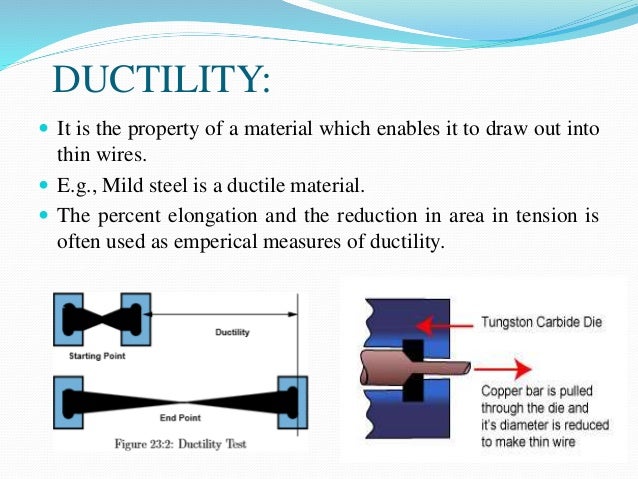
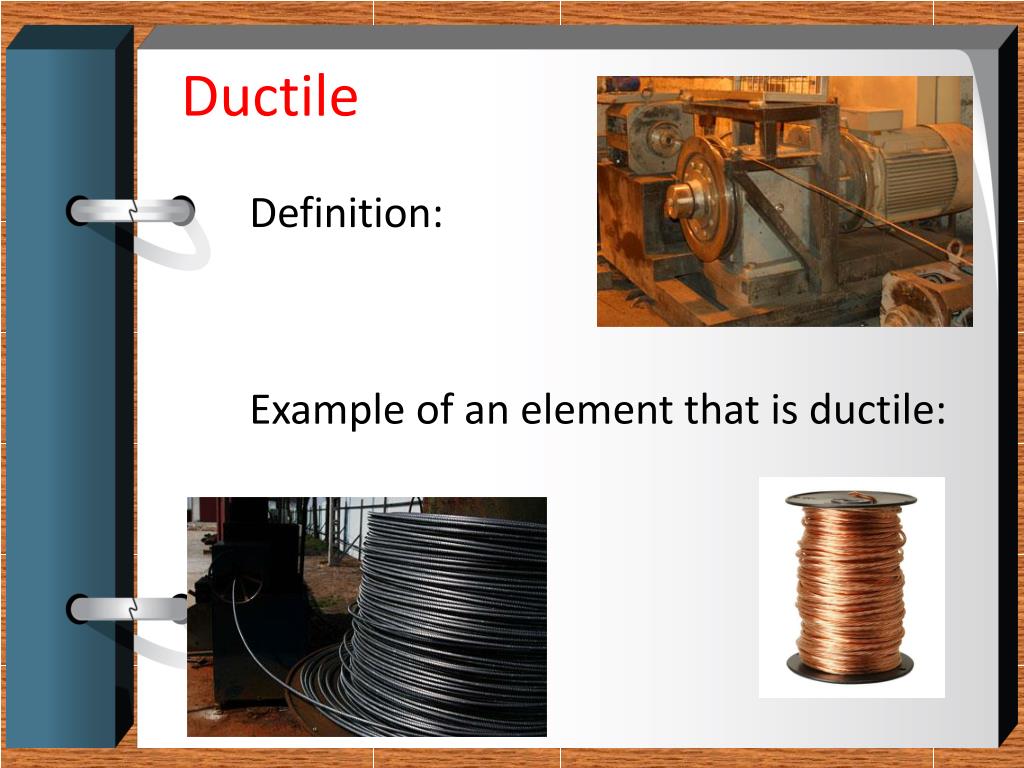
So, what exactly *is* ductility? In essence, ductility describes a material's ability to be drawn into a wire or undergo significant plastic deformation without fracturing. Think of it as a material's willingness to stretch and deform under tensile stress. A highly ductile material can be pulled into a long, thin wire without breaking, while a brittle material would snap under the same pressure. Ductility is closely related to, but distinct from, malleability, which refers to a material's ability to be hammered or rolled into thin sheets.
The purpose of understanding ductility is multifaceted. From an engineering perspective, it's crucial for selecting the right materials for specific applications. For instance, copper is chosen for electrical wiring because of its excellent ductility and conductivity. Engineers wouldn't use a brittle material like glass for wiring, as it would simply shatter when bent or stretched. Similarly, in construction, ductile materials like steel are preferred in earthquake-prone areas because they can deform significantly without catastrophic failure, giving structures a chance to withstand the shaking.
The benefits extend beyond practical applications. Understanding ductility helps us appreciate the artistry involved in metalworking. The beautiful shapes and intricate designs created by blacksmiths and jewelers are only possible because of the ductility of metals like gold, silver, and iron. It also informs our choices as consumers. Knowing that a material is ductile can give us confidence in its durability and longevity.
Where do we encounter ductility in education and daily life? In science class, students might perform experiments to test the ductility of different metals by trying to bend or stretch them. This helps them visually understand the concept. In the kitchen, the aluminum foil you use to wrap food is a testament to the ductility of aluminum. The ease with which it can be shaped and molded is a direct result of this property. Even the plastic used in some disposable containers exhibits a degree of ductility, allowing them to bend without immediately cracking.
Want to explore ductility further? Try a simple experiment at home (with adult supervision, of course!). Take a piece of modeling clay and try to stretch it into a long, thin string. Compare this to trying to stretch a piece of dry clay or a hard candy. You'll quickly see the difference in their ability to deform without breaking. Another idea is to compare different types of wire. Observe how easily copper wire bends compared to, say, a very brittle piece of stiff floral wire.
Ductility is more than just a scientific term; it's a fundamental property that influences the materials we use and the world around us. By understanding it, we gain a deeper appreciation for the science behind everyday objects and the engineering marvels that shape our lives.