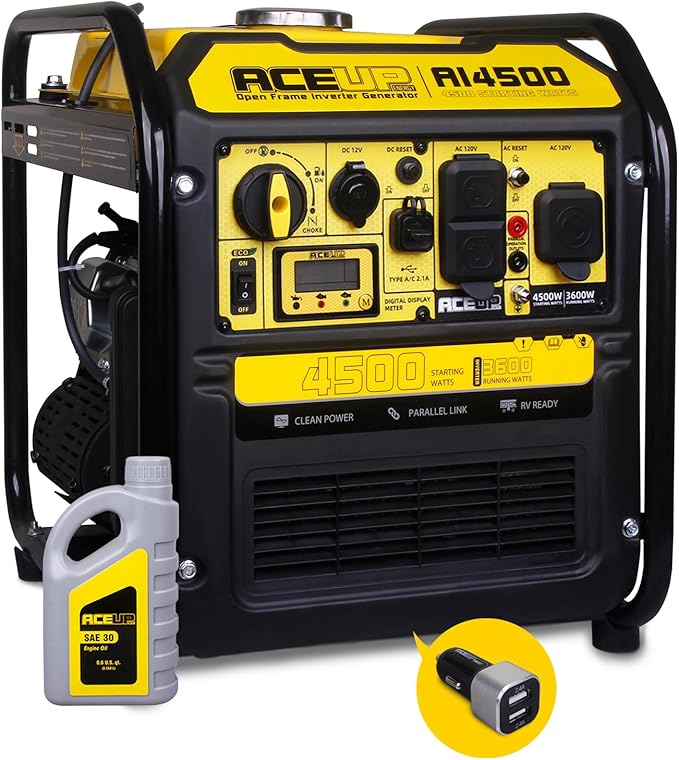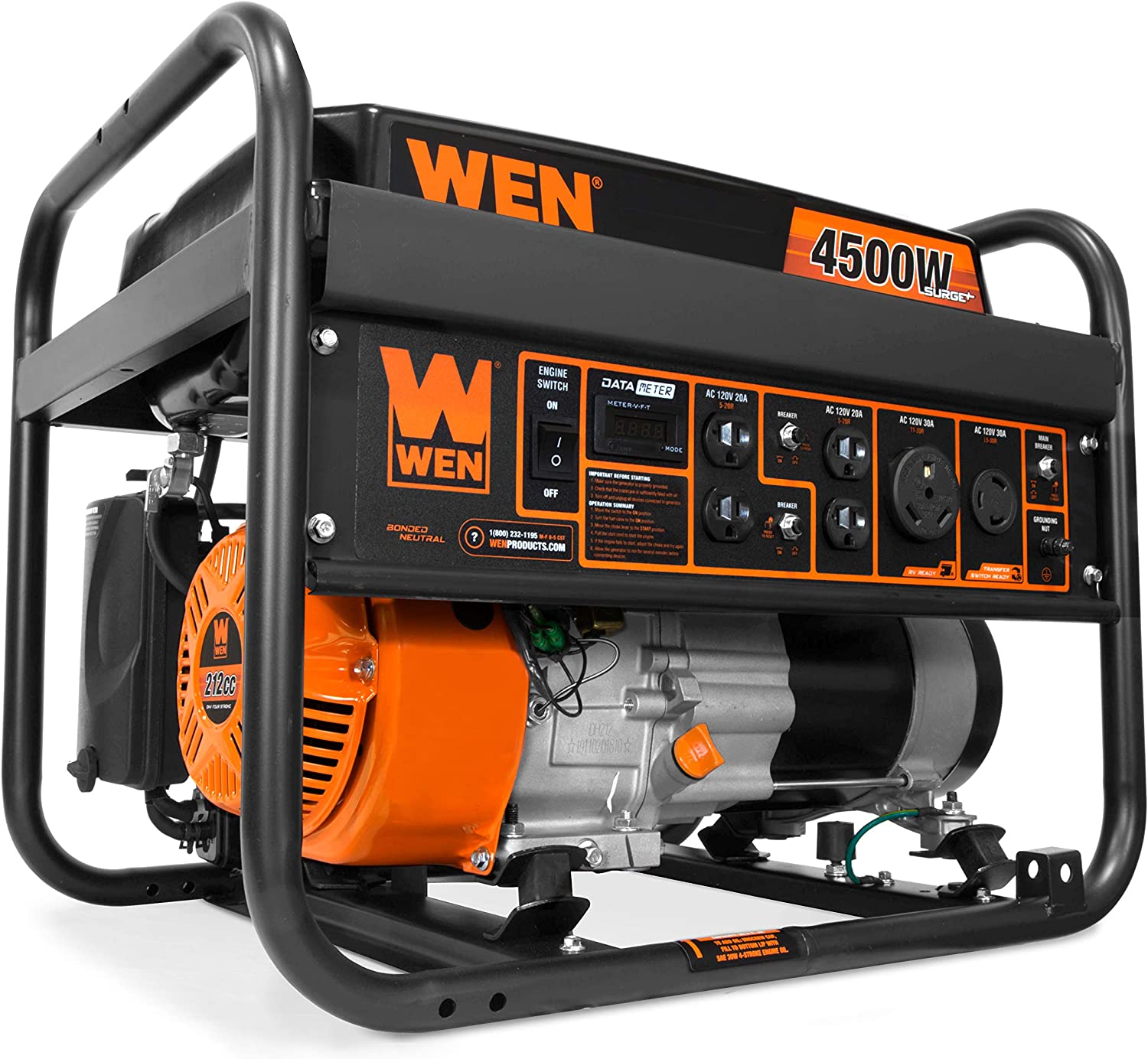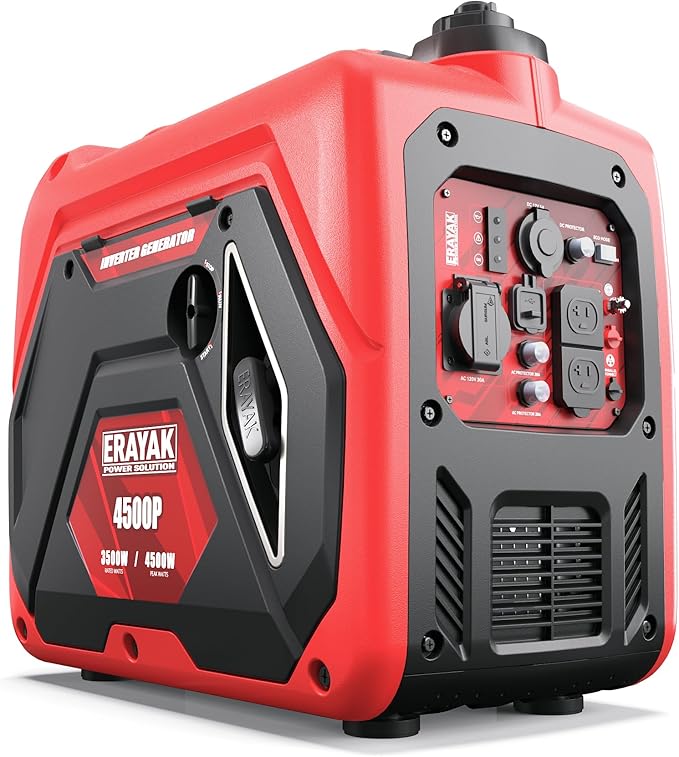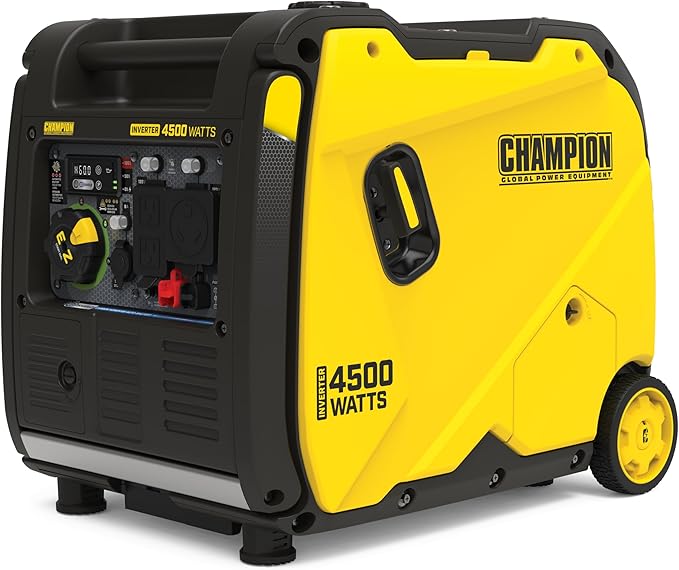
So, you've got a 4500-watt generator. Congratulations! You're practically a power baron. But before you start dreaming of lighting up the entire neighborhood and running a small metal forging operation in your backyard, let's talk about what this little beast can actually handle.
The Obvious Stuff (and Maybe a Surprise)
Okay, the basics. Lights? Absolutely. Your TV? Piece of cake. Charging your phones and tablets? Child's play. A 4500-watt generator laughs in the face of such trivialities. We're talking about powering the essentials to survive a power outage and still watch your favorite show (because, let's be honest, that's crucial).
But here's where it gets interesting. You might think, "Oh, I can run my entire refrigerator!" Well, maybe. Maybe not. Fridges are tricky little gremlins. They have that initial surge when the compressor kicks on, and that surge can eat up a surprising amount of wattage. You'll probably be okay, but watch out for that initial groan. It's the fridge equivalent of saying, "Are you sure you want me to do this?"
The "It Depends" Category
This is where we start venturing into the land of appliances that make you scratch your head and squint at their power labels. Think about your microwave. Is it a dinky 700-watt model for reheating leftovers? Or a behemoth of a convection oven with enough power to launch a small satellite? That makes all the difference.
Same goes for power tools. A small drill? No problem. A high-powered table saw? Ehhh... proceed with caution. Remember that starting wattage! That's the real killer. Many tools can pull three times their running wattage when they first start. It's like a sprinter trying to get off the blocks. They need a huge burst of energy.
And let's not forget the dreaded air conditioner. Window units are notorious power hogs. A small one might be doable, but a larger one could easily trip your generator's breaker faster than you can say, "But it's so hot!" Central air? Forget about it. Just… no.
The Unpopular Opinion Zone
Okay, here it is. My unpopular opinion: Portable generators are overrated for long-term power outage solutions. Hear me out! Yes, they're great for emergencies. But running one for days on end? The noise! The fuel! The constant monitoring! Ugh.
I'd rather invest in a really good battery backup system for the essentials and then… dare I say it… enjoy the peace and quiet of a power outage. Read a book! Play a board game! Actually talk to your family! It's a radical concept, I know.
The "Absolutely Not" List
Let's make this crystal clear. Things you should never try to run on your 4500-watt generator (unless you want a very expensive paperweight): Electric stoves, electric clothes dryers, and anything with a heating element that looks suspiciously like a miniature furnace. These are power vampires, plain and simple.
Also, don't even think about trying to power your entire house. That's what whole-house generators are for. Trying to overload your portable generator is a recipe for disaster. You'll either blow a fuse, trip the breaker, or, worst case scenario, damage the generator itself.
The Bottom Line
A 4500-watt generator is a handy tool. It can keep the lights on, the fridge running (hopefully), and your phone charged during a power outage. But it's not a miracle worker. Be smart about what you plug in, pay attention to the wattage ratings, and don't push it too hard. And maybe, just maybe, consider embracing the darkness (and the quiet) for a little while. You might be surprised at how much you enjoy it.
Now, if you'll excuse me, I'm going to go find a good book to read… just in case.