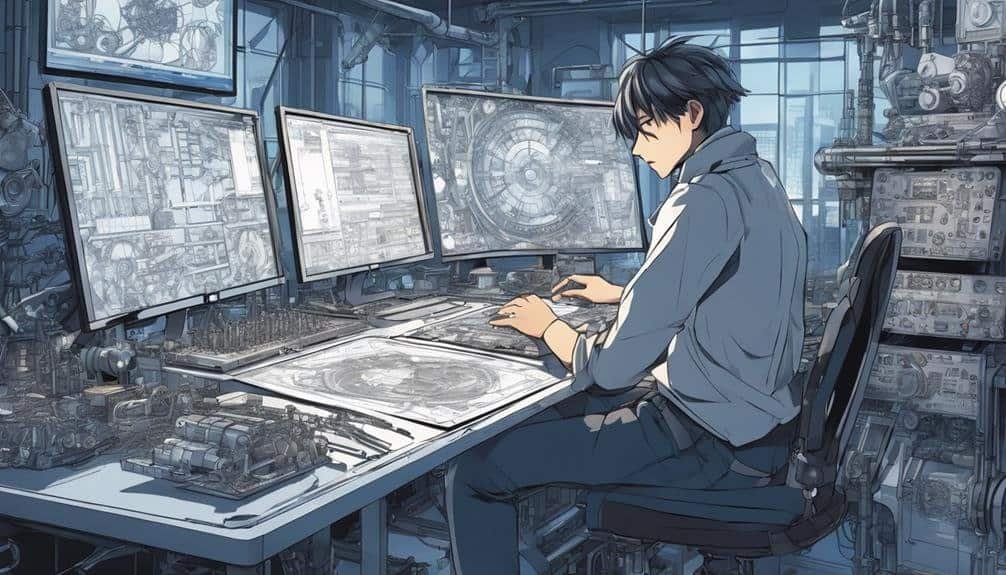
So, you're curious about what mechanical engineers actually do? Awesome! I'm about to spill the tea (or should I say, the oil? Because, you know, machines...). Basically, if it moves, generates power, or involves heat transfer, a mechanical engineer probably had their hands in it somewhere. They're the unsung heroes behind everything from your fridge to rocket ships. No pressure, right?
Designing Things That Don't Explode (Ideally!)
First and foremost, a huge part of a mechanical engineer's job is design. And I'm not talking about picking out cute throw pillows (though, maybe some do that on the side?). We're talking about designing *machines*, systems, and components that actually, you know, work.
This involves everything from sketching initial concepts (sometimes on napkins, because inspiration strikes at the weirdest times!), to running complex simulations to make sure their designs can withstand real-world conditions. Imagine them hunched over a computer, surrounded by equations, muttering about stress and strain. Sounds glamorous, right?
They need to think about materials (Will steel work, or do we need titanium?), manufacturing processes (Can we actually *make* this thing?), and safety (Will it, you know, explode?). Because nobody wants exploding robots. Well, maybe in a movie, but not in real life.
Analyzing All The Things
It’s not enough to just design something. A mechanical engineer also has to be a bit of a detective, constantly analyzing systems to figure out how they work (or why they *don't* work). Is that engine overheating? Is that bridge swaying too much in the wind? They're the ones who dig deep to find the answers.
This often involves using sophisticated software to model and simulate real-world conditions. Think of it like playing a super-advanced video game, but instead of controlling a character, they're controlling the laws of physics. Fun!
Testing, Testing, 1, 2, 3...
So they designed it, they analyzed it, now it's time to test it! Mechanical engineers are often involved in building prototypes and running experiments to see how their designs hold up in the real world. They might be in a lab, surrounded by wires and sensors, or out in the field, monitoring the performance of a machine in action. It's a little like being a scientist, but with more grease under your fingernails.
This includes rigorous testing under a bunch of different scenarios. Can the system handle extreme heat? Extreme cold? What happens if we drop it from a great height (please wear safety goggles!)? These are the questions they ask. And hopefully, they get answers that don't involve catastrophic failure. Though sometimes, those failures are the most educational!
Manufacturing and Production
Once the design is finalized and tested, it's time to actually make the thing! Mechanical engineers often play a key role in the manufacturing process, working with other engineers and technicians to ensure that products are built to spec and that the production process is efficient and safe. They might be optimizing assembly lines, troubleshooting manufacturing problems, or developing new and innovative ways to build things. It’s like being a master builder, but with robots and conveyor belts.
And More! Because Why Not?
The duties of a mechanical engineer don't stop there! They can also be involved in:
- Research and Development: Pushing the boundaries of what's possible.
- Project Management: Keeping projects on track and within budget. (Easier said than done!)
- Consulting: Offering their expertise to other companies.
- Sales: Selling technical products and services. (Who knew engineers could be salespeople?)
Basically, a mechanical engineer can wear a lot of hats. It’s a versatile field with tons of opportunities to learn and grow. Plus, you get to build cool stuff. Who wouldn't want to do that?
So, if you're looking for a career that's challenging, rewarding, and constantly evolving, mechanical engineering might just be the perfect fit for you. It's a chance to make a real difference in the world, one machine at a time. And who knows, maybe one day you'll be the one designing the next generation of robots, rockets, or…dare I say it…exploding throw pillows (kidding!). The possibilities are endless! Now go out there and build something amazing!