Hey! So, we were talking about biomass the other day, right? Like, the whole burning-trees-to-power-our-stuff thing. Sounds kinda cool in theory, like a return to our roots (pun intended!), but… it’s not all sunshine and biofuel, ya know?
Turns out, biomass has a few… quirks. Let's call them drawbacks, shall we? Let's dive in, shall we?
The Pesky Pollution Problem
Okay, so here’s the thing. We think of biomass as "natural," right? Trees! Plants! But burning stuff – any stuff, really – releases pollutants. Like, a lot of pollutants. We're talking particulate matter, carbon monoxide, nitrogen oxides... the whole shebang. Think of it like a campfire, but on a much larger, industrial scale. Mmm, smoky!
And guess what? These pollutants can contribute to respiratory problems, smog, and even acid rain. Not exactly the green image we were going for, huh?
Land Use Lamentations
Alright, let's say we’re super enthusiastic about biomass and want to use it everywhere. Great! Where are we going to get all that biomass? We can't just magic it out of thin air, can we?
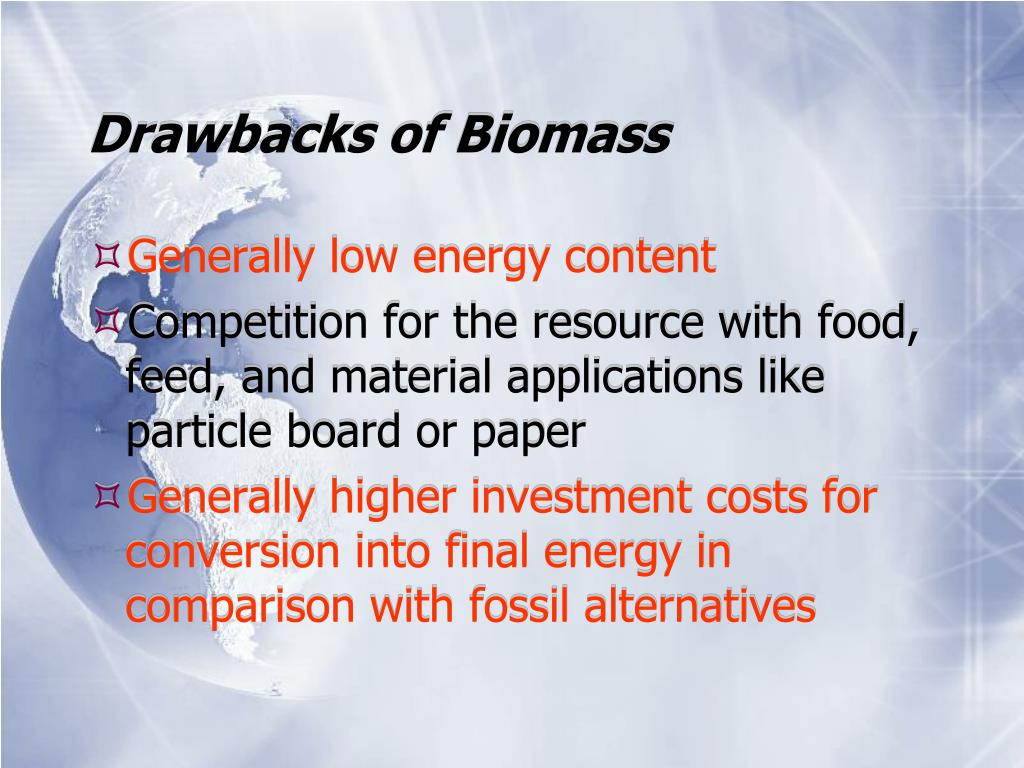
This is where the land use issue pops up. Growing enough crops or harvesting enough trees to feed a biomass plant requires a lot of land. Like, seriously. A LOT. Which then brings up all sorts of considerations.
Are we chopping down forests to plant energy crops? (Bad idea!). Are we competing with food production? (Also, bad idea!). Are we turning valuable habitats into… well, biomass farms? (You guessed it, bad idea!). So, you can start to see why this is a rather thorny issue. It's a classic case of robbing Peter to pay Paul, but with ecosystems!
The Carbon Conundrum
Now, this is the one that really gets people arguing. Biomass is often touted as "carbon neutral." The idea is that the carbon released when we burn the biomass is offset by the carbon the plants absorbed while growing. Seems legit, right?
Well… not so fast. That whole carbon neutrality thing is a bit… complicated. For starters, it takes time for new trees to grow and reabsorb all that carbon. Years, even decades! During that time, we’re still pumping carbon into the atmosphere. Is it better than fossil fuels? Sometimes, maybe. But it's not a magical carbon-free solution, that's for sure!
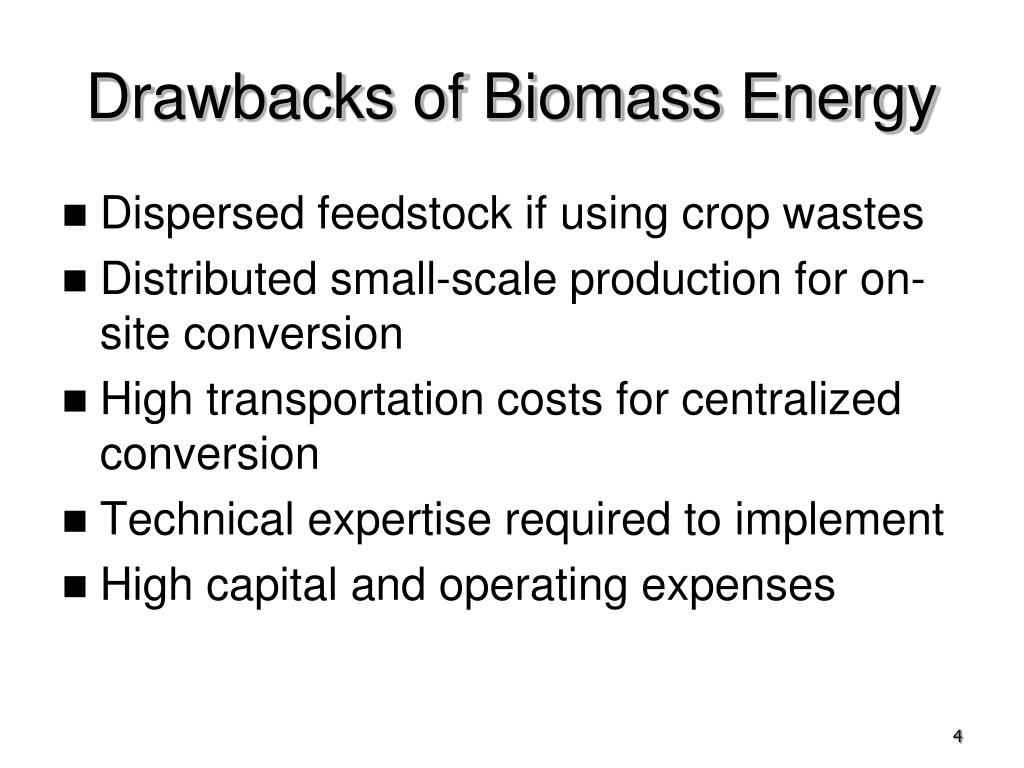
Plus, there's the energy involved in harvesting, transporting, and processing the biomass itself. That all adds to the carbon footprint, doesn't it?
Efficiency… Or Lack Thereof
Let's be honest, biomass isn't exactly the most efficient way to generate energy. Burning stuff (even biomass) just isn't as efficient as, say, wind or solar power. You get less energy out for the amount of fuel you put in. Think of it like trying to power a car with marshmallows. Sure, you could do it, but it wouldn't get you very far.
And let's not forget the cost factor! Building and maintaining biomass plants can be expensive. We're talking infrastructure, specialized equipment, and the ongoing cost of sourcing all that biomass. All those costs can easily add up.
The Takeaway: Not a Perfect Solution, But…
So, yeah, biomass has its drawbacks. It's not a perfect, silver-bullet solution to our energy woes. But… it's also not completely terrible. In certain situations, and with careful management, biomass can play a role in a diversified energy portfolio.
The key is to be realistic about its limitations and to prioritize sustainable practices. We need to ensure that we're not destroying forests, competing with food production, or simply shifting pollution from one place to another. Okay? Okay.
What do you think? Is it worth the risk? Or should we stick to solar panels and windmills? Let's chat more over another cup of coffee!