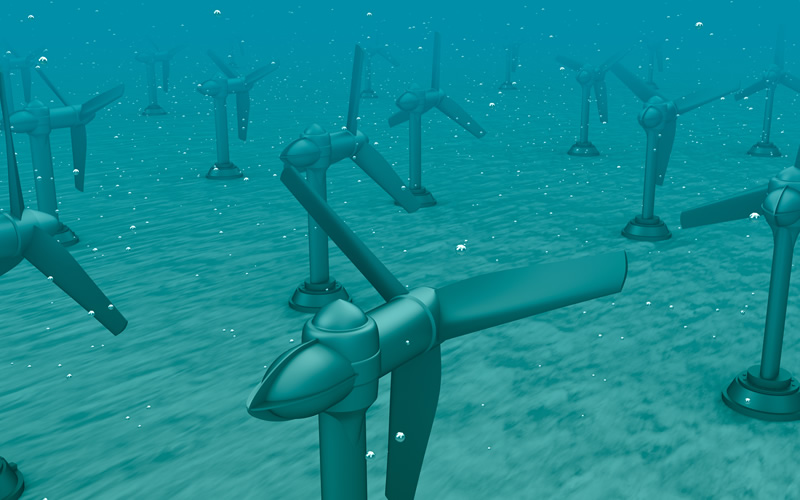
Ever stood on a beach and watched the tide roll in and out, thinking, "Wow, that's a lot of water... someone should do something with that!" Well, someone *has*! That someone is harnessing the power of the tides to generate electricity. It's called tidal power, and like everything in life, from pineapple on pizza to wearing socks with sandals, it has its ups and downs.
Riding the Wave: The Advantages of Tidal Power
Let's start with the good stuff, shall we? Think of tidal power as that friend who's always reliable. You know, the one who actually shows up when they say they will? That's because:
Predictability is Key: Tides are, well, predictable. Unlike solar power, which dips when a cloud rolls in (like that awkward silence at a party), or wind power, which can be fickle (like that friend who only calls when they need something), we know exactly when the tides are coming in and going out. This makes planning our energy needs a whole lot easier. Think of it as having a built-in reminder system that actually works!
Green Power: Tidal power is a renewable energy source. It's basically free energy from the moon's gravitational pull. Mother Nature is providing the muscle, and we're just tapping into it. It's like having a really, really, really slow-moving river, but instead of just staring at it, we're using it to power our lights. This reduces our reliance on fossil fuels, which are basically the grumpy old men of the energy world.
Long Lifespan: Once a tidal power plant is built, it can last for a very long time. We're talking decades. They are built tough! It's like that old cast-iron pan your grandma gave you. It's heavy, a bit clunky, but it’ll probably outlive you.
Relatively High Energy Density: Water is heavier than air, which means tidal energy is more powerful than wind energy. Think of it like trying to push a feather versus trying to push a bowling ball. Which one are you going to get more oomph out of? Exactly!
Crashing Down: The Disadvantages of Tidal Power
Okay, now for the not-so-sunny side. Remember that pineapple on pizza thing? Yeah, even something that sounds great in theory can have its drawbacks. Tidal power is no exception:
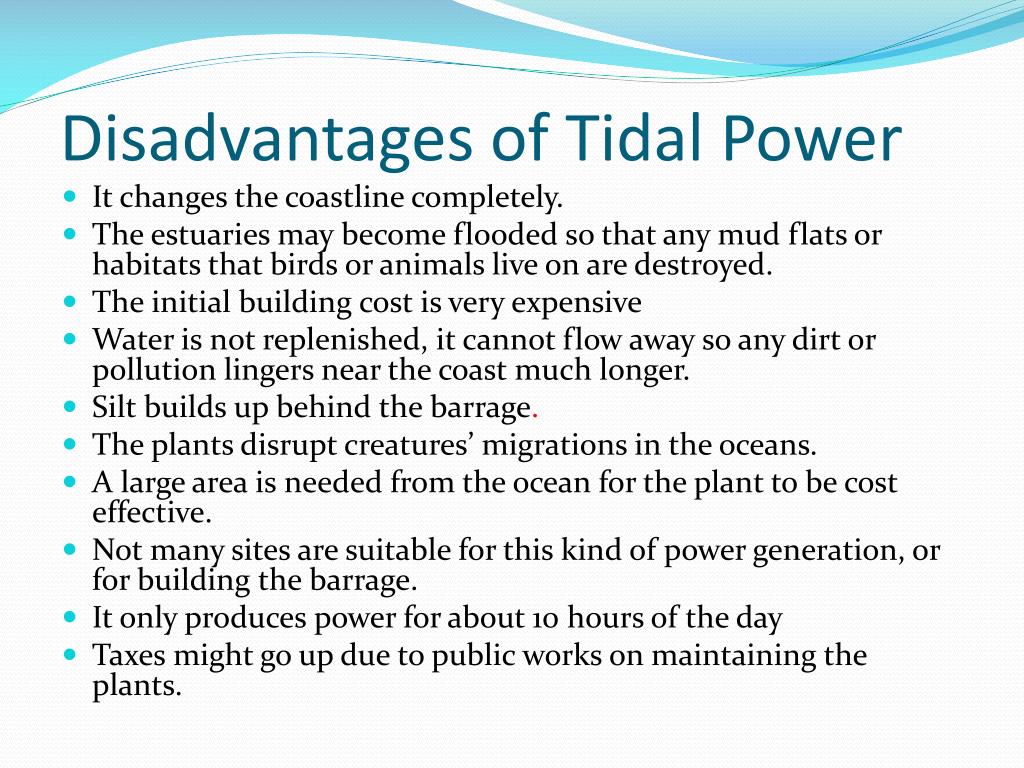
Environmental Impact: Building tidal power plants can disrupt marine ecosystems. It’s like rearranging the furniture in a fish's living room without asking. This can affect fish migration patterns, feeding habits, and the overall health of the ocean environment. Nobody wants a grumpy fish!
High Initial Costs: Building tidal power plants is expensive. Really expensive. Think of it like buying a fancy new car – a really, really big one that goes underwater. The initial investment is huge, which can be a barrier to getting projects off the ground. It’s like looking at the price tag on that gadget you *really* want, then slowly backing away.
Limited Locations: Tidal power plants can only be built in areas with significant tidal ranges. So, unless you live next to a place with major tidal swings (like the Bay of Fundy), you're out of luck. It's like trying to grow mangoes in Alaska. Not gonna happen!
Intermittency (Kind Of): While tides are predictable, they aren't constant. There are periods of slack tide, when the water isn't moving fast enough to generate much electricity. So, you can't always rely on tidal power to be your sole energy source. It’s more of a dependable sidekick than a superhero.
Aesthetic Impact: Let's face it, tidal power plants aren't exactly the prettiest things in the world. Some people find them to be an eyesore, especially those that involve building dams. It's like adding a giant metal block to a beautiful coastline. Not everyone's cup of tea.
The Tide is Turning...Maybe
So, there you have it. Tidal power: a potentially amazing source of renewable energy with some challenges to overcome. It's a bit like that quirky but brilliant idea you have – full of promise but needs some serious tweaking to reach its full potential. Whether it becomes a major player in the future of energy is yet to be seen, but it's definitely worth keeping an eye on!