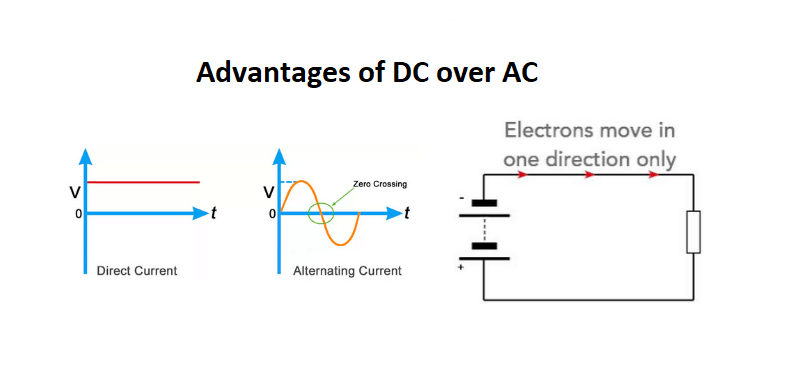
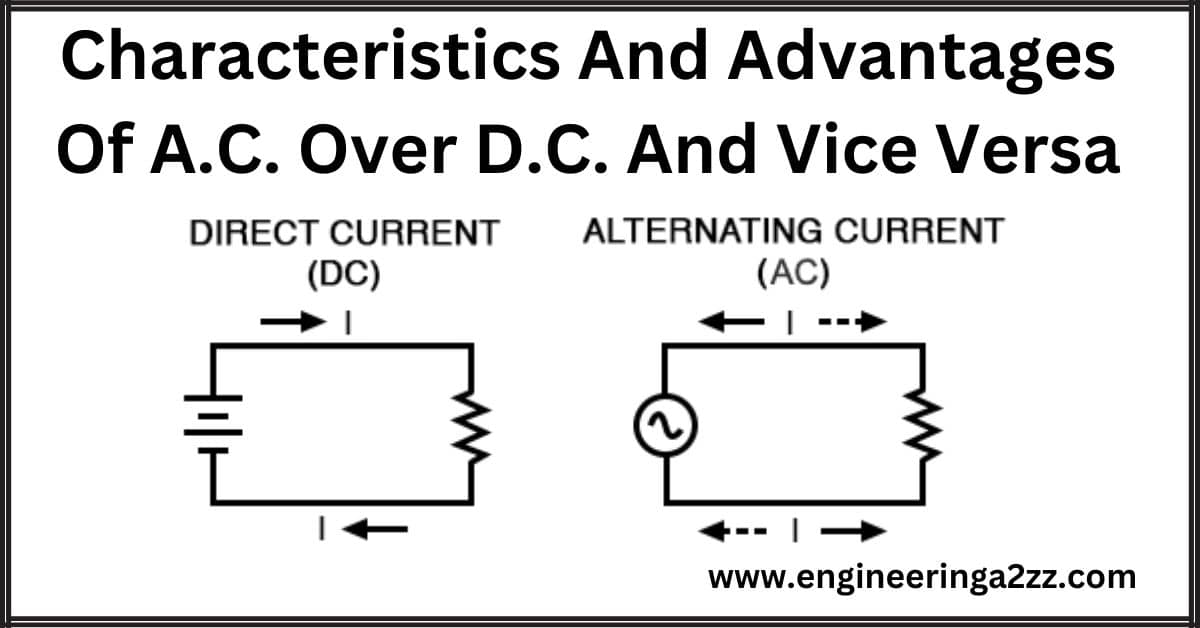
Ever noticed how electricity flows, powering our lives in ways we barely consider? There are two main types: Alternating Current (AC) and Direct Current (DC). While DC is crucial for batteries and electronics, AC reigns supreme in our homes and power grids. But why? What makes AC the superstar of everyday electricity, and how can understanding its advantages be surprisingly useful, even for the artistically inclined?
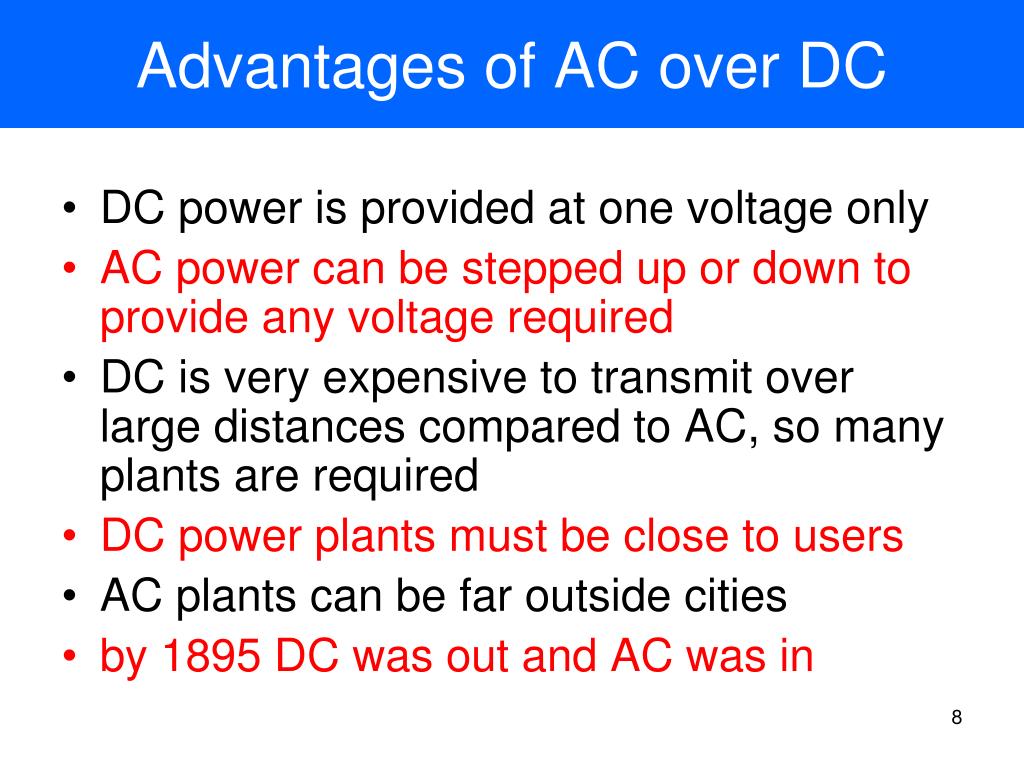
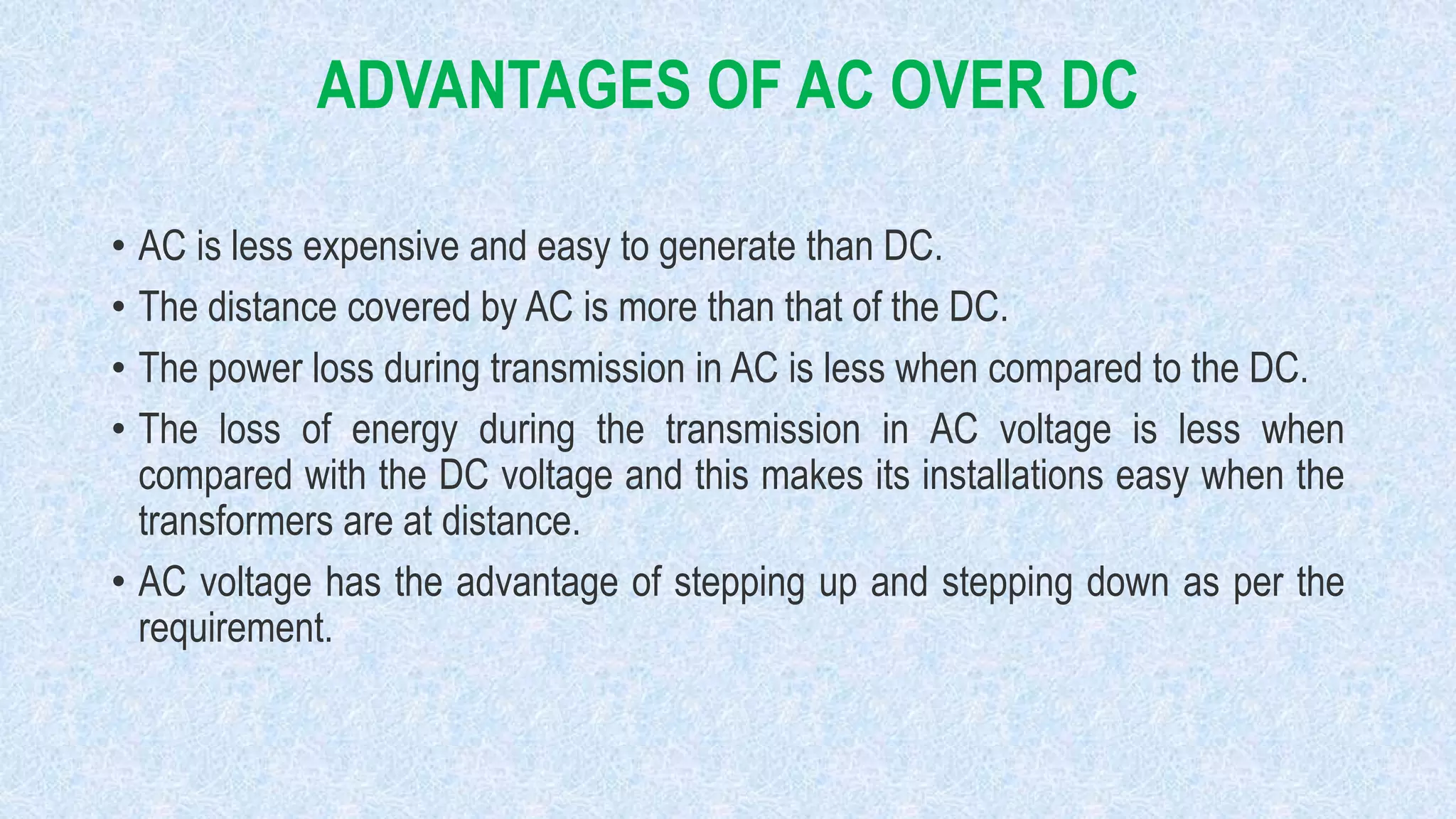
For artists, hobbyists, and anyone who loves tinkering, understanding the benefits of AC can unlock a world of creative possibilities. The biggest advantage is its efficiency in long-distance transmission. Think about it: power plants often sit far from cities. AC can be stepped up to very high voltages for transmission, minimizing energy loss along the way. Then, near our homes, it's stepped back down to safer levels. This is vital for powering energy-intensive tools like pottery kilns, welding machines, or even high-powered 3D printers. Imagine the creative projects you can embark on with reliable, readily available power!
Another key benefit is AC's adaptability. Transformers, those unsung heroes of the electrical world, easily change AC voltage levels. This means a single AC power outlet can feed a variety of devices, from a delicate LED art installation requiring a low voltage to a robust woodworking lathe demanding much more. Consider the possibilities in the art world. You could design a kinetic sculpture powered by a small AC motor, controlling its speed and movement with a simple transformer. Or, a light installation with dozens of individual LEDs, each dimmed using a variable AC transformer for stunning visual effects. Even in crafts, AC-powered sewing machines and crafting tools provide consistent, strong performance.
AC motors are also typically simpler and more reliable than DC motors for many applications. This makes them ideal for devices that need to run consistently for long periods. Think about the spinning platform for a pottery wheel or the oscillating mechanism in a large-scale art piece. They are powerful and simple to maintain.
Want to explore the world of AC at home? Start small! Don't directly tamper with your home's electrical wiring. Instead, focus on understanding how devices you already own use AC. Look for the input voltage printed on the back of electronic devices; many use a power adapter to convert AC from the wall into DC for internal use. Experiment with controlling the brightness of an incandescent light bulb (using a lamp dimmer switch, which manipulates the AC waveform). Build a simple circuit with a small AC transformer and an LED (with appropriate resistors for safety!), demonstrating the voltage transformation process. Safety is paramount; always disconnect power before working on any electrical project and consult with an expert if you're unsure about anything.
Ultimately, understanding the advantages of AC isn't just about technical specifications; it's about unlocking potential. It's about appreciating the reliable power that fuels our creativity and enables us to bring our ideas to life. It’s about understanding the unseen energy that empowers our artistic endeavors. And that, in itself, is incredibly enjoyable.