Hey there, tech enthusiasts and curious minds! Ever wonder how your favorite gadgets are made? Or how that perfectly brewed coffee reaches your cup with such consistent quality? The answer, more often than not, lies in the magic of sensors, diligently monitoring and controlling manufacturing processes. It's way cooler than it sounds, trust me!
Think of a factory like a giant, complex orchestra. Each instrument (machine) needs to play its part in perfect harmony to create a beautiful symphony (product). But how do you ensure all those machines are hitting the right notes at the right time? That's where sensors come in. They're like the conductor's ears and eyes, constantly gathering information and making tiny adjustments to keep everything running smoothly.
The All-Seeing Eyes: Temperature Sensors
Imagine baking a cake. What happens if the oven is too hot? Burnt offering, right? Too cold? A gooey mess. Manufacturing is the same, only on a much larger scale. Many processes are incredibly sensitive to temperature. Too hot when welding? The metal could weaken. Too cold when molding plastic? It might not set correctly. Temperature sensors are deployed to ensure the Goldilocks zone is always maintained. They monitor the temperature of equipment, materials, and the surrounding environment, allowing for real-time adjustments to keep everything *just right*.
It's like having a personal thermostat for the entire factory floor, ensuring no process gets too hot or too cold. Pretty neat, huh?
Feeling the Pressure: Pressure Sensors
Have you ever tried inflating a tire with too much pressure? BOOM! Or too little? Flat tire. Manufacturing processes often involve precise control over pressure, whether it's in hydraulic systems, pipelines carrying liquids, or even the application of coatings. Pressure sensors constantly monitor these systems, detecting deviations and triggering alerts or automated adjustments to prevent explosions, leaks, or inconsistent product quality.
Think of a pressure sensor as the factory's high-five machine, only instead of slapping hands, it's ensuring everything is being squeezed (or not squeezed!) at the perfect pressure. Without them, things could get… well, explosive.
Keeping an Eye on the Flow: Flow Sensors
Picture a chef carefully pouring ingredients into a recipe. Too much of one thing, and the dish is ruined. The same goes for manufacturing. Whether it's liquids, gases, or even powders, controlling the flow of materials is crucial. Flow sensors monitor the rate at which these materials are moving, allowing for precise dosing and consistent product quality. This is especially important in industries like pharmaceuticals, food and beverage, and chemical processing, where accuracy is paramount.
Flow sensors are the factory's bartenders, expertly measuring and dispensing just the right amount of each ingredient to create the perfect concoction every time. They make sure you're not getting a double shot of something when you only asked for a single!
The Eyes and Ears of Production: Vision and Sound Sensors
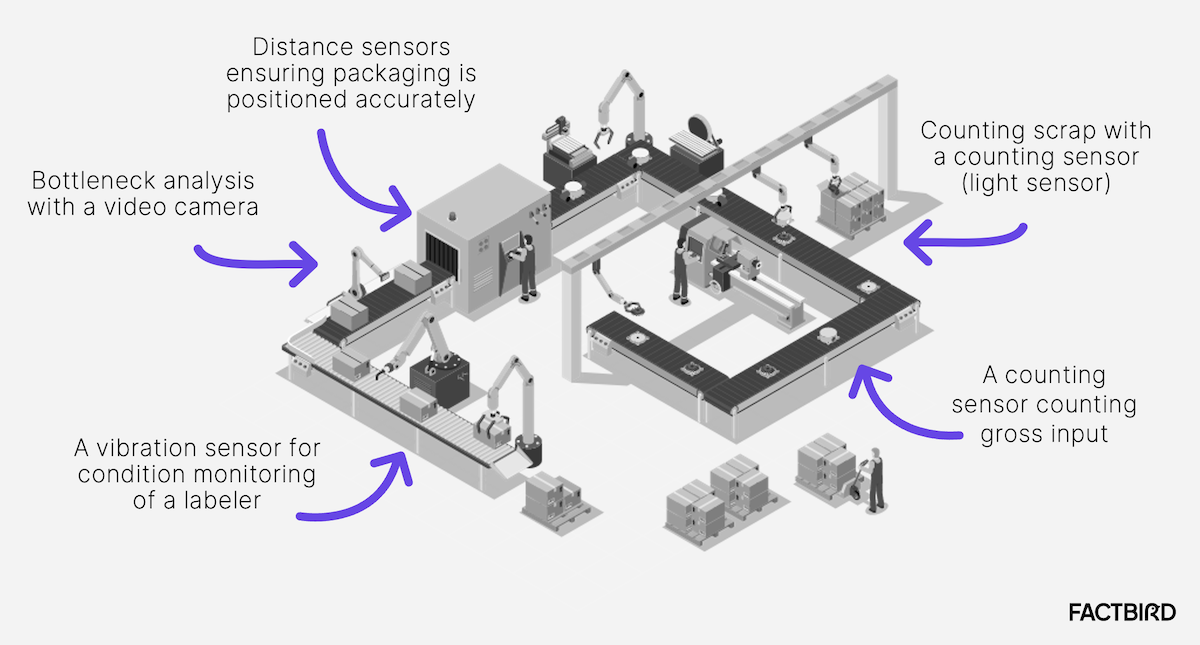
Beyond the basics, there are even more sophisticated types of sensors. Vision sensors, for example, use cameras and image processing to inspect products for defects, verify proper assembly, and guide robots with incredible precision. Imagine a robot assembling a circuit board, using a vision sensor to identify each component and place it exactly where it needs to go.
And then there are sound sensors, which can detect anomalies in machinery. A strange vibration or an unusual whine can be an early warning sign of a potential problem. It's like having a doctor listen to the heart of the machines, catching problems before they become catastrophic failures.
Why is all this so cool?
The use of sensors in manufacturing isn't just about efficiency; it's about a whole lot more. It's about:
- Improved Quality: Fewer defects, more consistent products.
- Increased Efficiency: Less wasted material, faster production times.
- Enhanced Safety: Fewer accidents, a safer working environment.
- Reduced Costs: Less waste, more efficient use of resources.
Ultimately, it's about creating a smarter, more sustainable, and more reliable manufacturing process. Who wouldn't want that?
So, next time you pick up your smartphone or enjoy a delicious snack, remember the unsung heroes of manufacturing: the sensors. They're the silent guardians, ensuring that everything is made to the highest standards, consistently, and reliably. And that, my friends, is pretty darn cool.