Ever wonder where the gas that heats your home comes from? Or powers some of our electricity? Well, buckle up, because we're diving into the wild world of US natural gas production! It's a surprisingly exciting story, filled with booms, busts, and technological leaps.
A Historical Gas Glimpse
Let's go way back. The US has been producing natural gas for a long, long time. Think horse-drawn carriages and gas lamps, not Teslas and smart homes! Early production was pretty small-scale. It mainly served local communities.
The really interesting stuff starts happening in the 20th century. Pipelines became a big deal. This meant gas could travel further, reaching more people and businesses.
And guess what? Production started climbing! It was slow and steady for a while. But big changes were on the horizon.
The Shale Revolution: Game Changer!
Now, hold on to your hats! The shale revolution changed everything. What's shale? It's a type of rock that holds a LOT of natural gas. The problem? Getting the gas out used to be super difficult and expensive.
Enter hydraulic fracturing, or "fracking" as it's often called. And horizontal drilling. These technologies opened up vast shale gas reserves.
Suddenly, the US had access to a LOT more natural gas. Production started to skyrocket! It was like finding a buried treasure.
Production Peaks and Valleys
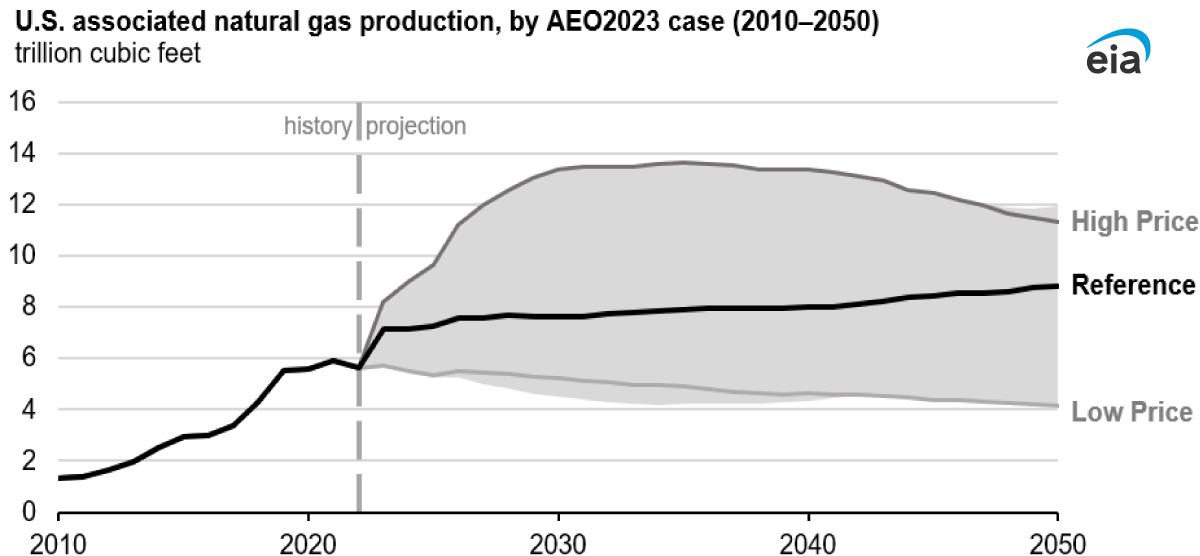
The shale revolution led to a period of huge growth. You'll see a massive jump in natural gas production if you look at the data. It's quite impressive.
But it hasn't been a smooth ride. Natural gas prices fluctuate. Demand changes with the seasons (and the economy!).
Sometimes production dips. Other times, it soars. It's a bit like a rollercoaster!
Visualizing the Data: Why it's So Cool
Okay, let's talk about *seeing* this data. Numbers alone can be boring, right? But when you plot US natural gas production by year on a chart? It becomes a visual story.
Imagine a line climbing steadily upward for decades. That's the pre-shale era. Then, BAM! A steep, almost vertical climb? That's the shale revolution in action!
You can spot the dips caused by economic downturns or weather events. Each point on the line represents a year's worth of activity. It's like reading a history book, but with graphs.
Spotting the Trends
What's so fascinating is spotting the trends. Is production increasing? Decreasing? Staying relatively flat?
These trends tell us about energy policy. They reveal technological advancements. And it highlights global demand.
It provides hints about the future of energy in the United States. It's like being a detective, piecing together clues!
Comparing to Other Countries
Want to make it even more interesting? Compare US natural gas production to other countries. See how we stack up against Russia, Qatar, or other major producers.
This comparison gives you a sense of the US's position in the global energy landscape. Is the US a major player? Absolutely!
And seeing those numbers visualized makes the competition more real. It's like watching an Olympic race, but with energy instead of athletes!
Why Should You Care? (It's More Fun Than You Think!)
Okay, so why should you, a regular person, care about US natural gas production? Well, for starters, it affects your wallet. The price of natural gas impacts your heating bills. And electricity costs.
It also plays a role in energy independence. The more natural gas the US produces, the less we rely on other countries. That's pretty significant.
Plus, it's part of the bigger picture of energy and climate change. Natural gas is often seen as a "bridge fuel." It can help us transition to renewable energy sources. But it still has environmental impacts.
The Energy Mix: A Juggling Act
Think of energy production as a juggling act. We're juggling different energy sources. Coal, oil, natural gas, solar, wind.
Each one has its pros and cons. Natural gas is just one piece of the puzzle. But it's a pretty important one.
Tracking its production helps us understand how the juggling act is going. Are we dropping any balls? Or are we keeping everything in the air?
The Future of Natural Gas
What does the future hold for US natural gas production? That's the million-dollar question! Will production continue to rise? Or will it plateau?
Factors like technological innovation. And environmental regulations. And shifts in global energy demand. These factors will all play a role.
Looking at the historical data gives you a foundation for making your own predictions. It's like becoming a fortune teller for the energy industry!
Where to Find the Data: Become a Data Detective!
So, where can you find this fascinating data? The US Energy Information Administration (EIA) is your best friend. Their website is a treasure trove of energy information.
You can find historical data on natural gas production by year. And by region. And by different types of sources.
They also have charts and graphs that you can explore. It's like having your own personal energy data library!
Digging Deeper: Reports and Analysis
The EIA also publishes reports and analysis on the energy market. These reports can give you even more insights into natural gas production. And consumption.
You can learn about the factors driving production. And the challenges facing the industry. It's like reading the secret diary of the energy world.
Plus, there are tons of other sources out there. News articles, industry publications, academic research. The more you dig, the more you'll discover.
In Conclusion: It's More Than Just Gas!
See? US natural gas production isn't just a bunch of boring numbers. It's a story. A story about technology. About economics. And about the future of energy.
By exploring the data, you can gain a deeper understanding of this important resource. And its impact on your life.
So go ahead, dive in! Become a natural gas production expert (or at least a very informed citizen!). You might be surprised at how much you enjoy it.
It's like solving a giant puzzle. With each piece of data, the picture becomes clearer. And the more you learn, the more fascinating it becomes.
And remember, behind every number, every graph, every chart, there are real people. People working hard to produce and deliver the energy that powers our lives. It's a massive undertaking.
Understanding natural gas production helps us appreciate the complexity. And the importance of this vital industry.
So next time you turn on the stove or adjust your thermostat, remember the story of US natural gas production. It's a story that's still being written, year after year.