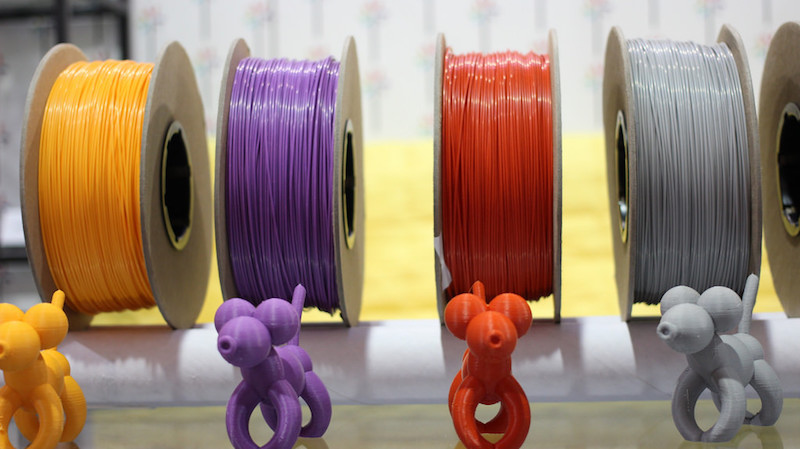
Alright, gather 'round, folks! Let's talk about 3D printing filaments. Think of them as the spaghetti of the future, except instead of ending up in your belly, they become tiny plastic dinosaurs or maybe even a fully functional (but probably flimsy) phone case. Seriously, the possibilities are… well, limited by your imagination, your budget, and your ability to not clog your printer nozzle. But hey, that's half the fun, right?
PLA: The Eco-Friendly Darling (Until You Throw It Away)
First up, we have PLA (Polylactic Acid). This stuff is basically the golden retriever of the filament world. It's friendly, relatively easy to work with, and made from renewable resources like cornstarch. So, you can tell yourself you're saving the planet while printing that seventh Baby Yoda figurine. Just don't think too hard about the energy used to *make* the filament in the first place. We're going for eco-conscious, not eco-perfect, okay?
PLA prints at relatively low temperatures, which means less energy used! Yay! It also smells kinda sweet when it's printing. Like burnt popcorn mixed with… success? However, it's not exactly known for its ruggedness. Leave it in a hot car, and your meticulously printed miniature Eiffel Tower might resemble the Leaning Tower of Pizza by the time you get back. It’s biodegradable! Well, technically. In *very* specific industrial composting facilities that probably don't exist in your town. So, enjoy the peace of mind, and then toss it in the regular trash like everyone else.
ABS: The Tough Guy (With a Nasty Smell)
Next, we have ABS (Acrylonitrile Butadiene Styrene). This is the filament your action figures are made of. It's tough, durable, and can handle a bit more heat than PLA. If PLA is a golden retriever, ABS is a grumpy Rottweiler. It’s stubborn, requires higher printing temperatures, and tends to warp if you look at it funny. Seriously, you need a heated bed for this stuff, or you're going to have a bad time.
And the smell! Oh, the smell! Printing with ABS is like trying to create art in a chemical factory. Make sure you have good ventilation or, you know, maybe wear a hazmat suit. The payoff is worth it, though. Your prints will be stronger and more heat-resistant. Perfect for making car parts, or anything that needs to withstand some abuse. Pro-tip: Enclose your 3D printer in a makeshift cardboard box to keep the heat in, ABS loves warmth. What could go wrong?
PETG: The Best of Both Worlds (Maybe?)
Then there's PETG (Polyethylene Terephthalate Glycol-modified). Think of it as the compromise candidate in the filament election. It tries to be as easy to print as PLA while offering some of the strength and heat resistance of ABS. It's food-safe, too! So, you can print yourself a custom-designed… spoon? I don’t know, a very intricate ice cube mold? Just make sure you clean it thoroughly. Nobody wants 3D-printed food poisoning.
PETG is known for its layer adhesion, making strong, durable prints. One downside is its tendency to string, leaving wispy strands of plastic all over your print. Think of it as a filament that sheds like a husky in summer. You’ll spend a lot of time with tweezers, trust me. Also, it can scratch easily, which isn't ideal if you're printing something you plan to use frequently.
TPU/Flexible Filaments: The Bendy One
Want to print something squishy? TPU (Thermoplastic Polyurethane) is your jam. This filament is flexible, bendable, and can even be used to print things like phone cases or rubber bands. Imagine printing your own custom stress balls! It's like having a personal stress-relief factory right in your living room! Getting it to print can be tricky, as it tends to flex and buckle within your extruder. Print slow, be patient, and maybe say a little prayer to the 3D printing gods. Bonus: If you accidentally drop your printed TPU item, it probably won’t break. Silver linings, people.
Exotic Filaments: When You Want to Get Fancy
Feeling adventurous? There's a whole world of exotic filaments out there! Wood-filled filaments give your prints a wood-like appearance and texture. Perfect for printing tiny wooden gnomes! Carbon fiber filaments are super strong and lightweight. Great for… well, I'm not entirely sure. Maybe drone parts? Whatever it is, it'll look cool. And then there's nylon, which is incredibly strong and wear-resistant. But it's also incredibly hygroscopic, meaning it sucks moisture out of the air like a sponge. Keep it dry, or your prints will be a stringy, bubbly mess. Like a bad sci-fi movie monster made of plastic tears.
So, there you have it! A whirlwind tour of the wonderful world of 3D printing filaments. Remember to experiment, have fun, and don't be afraid to make mistakes. After all, every failed print is just a learning opportunity… and a good excuse to buy more filament!