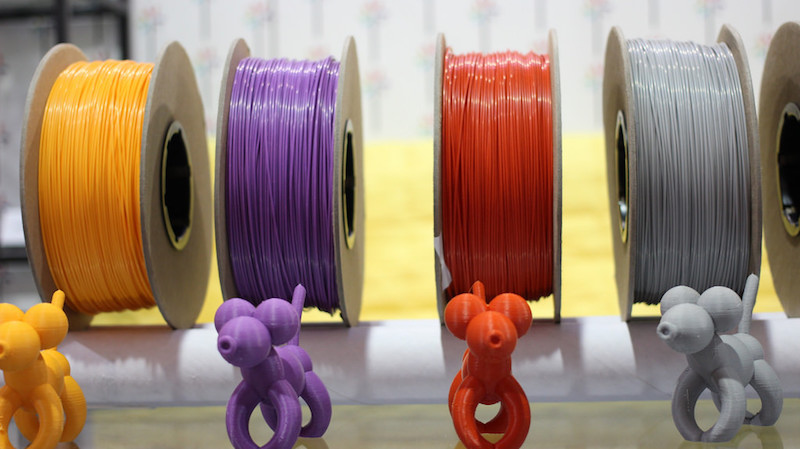
So, you've got a 3D printer, huh? Welcome to the club of magical plastic creators! But hold on, before you start conjuring up tiny T-Rexes and custom phone cases, let's talk about the stuff you feed your machine: filament.
Think of filament like the ink for your printer, but instead of liquid, it's a long, thin strand of plastic (or sometimes, something even cooler!). It's the raw material that gets melted and sculpted into whatever your heart desires.
The Usual Suspects: Everyday Filaments
PLA: The Friendly Neighbor
PLA is like the Golden Retriever of the filament world: friendly, reliable, and generally well-behaved. It's made from cornstarch or sugarcane, which makes it biodegradable – a win for Mother Earth!
Imagine printing a planter for your succulents, knowing that if you ever decide to upgrade, the old one can theoretically decompose (though don't expect it to vanish overnight in your backyard compost). PLA is fantastic for beginners because it's easy to print with and doesn't require a super hot print bed.
Plus, it comes in every color imaginable! From vibrant sunshine yellow to the deepest ocean blue, you can find a PLA to match any project.
ABS: The Tough Guy
Now, ABS is the older, tougher brother of PLA. Think of it as the material used to make LEGO bricks – strong, durable, and able to withstand a bit of roughhousing.
ABS is great for printing parts that need to be heat-resistant or handle some wear and tear. Car parts, durable phone cases, or anything that might live outdoors? ABS is your go-to guy.
Word to the wise: ABS can be a bit trickier to print with. It likes a warmer environment and can sometimes warp if it cools down too quickly, so make sure your printer is properly enclosed!
Beyond the Basics: When Filament Gets Fancy
PETG: The Hybrid Hero
PETG is like the love child of PLA and ABS. It combines the ease of printing of PLA with some of the strength and durability of ABS. It's also food-safe in some cases, so you can print cookie cutters or other kitchen gadgets (just make sure to research the specific filament's safety rating!).
This filament is known for its good layer adhesion. It sticks together very well, making your prints stronger and less likely to split.
Plus, it often has a lovely glossy finish, making your creations look extra professional.
Nylon: The Bendy Badass
Nylon is a strong, flexible, and wear-resistant filament. Think of it as the material used to make ropes or gears – tough and able to handle a lot of stress. It's a little bit like a superhero in disguise!
It’s not as easy to print with as PLA, but the end results are totally worth it if you need something strong and bendy. It tends to absorb moisture, so you’ll need to keep it dry.
Imagine printing hinges, living hinges, or parts for robotics projects with nylon. The possibilities are endless!
The Wild Side: Exotic Filaments That Will Blow Your Mind
Wood Filament: I've Got Wood
This one is exactly what it sounds like! Wood filament is PLA infused with wood fibers, giving your prints the look and feel of real wood. You can even stain and sand it!
Printing with wood filament is like unleashing your inner carpenter, but with plastic. Imagine creating a tiny wooden boat that actually floats (maybe… test at your own risk!).
It’s a fun way to add a touch of rustic charm to your creations.
Metal Filament: Iron Man, Eat Your Heart Out
Metal filament is another composite material, this time combining plastic with metal powder (bronze, copper, steel, you name it!). Your parts will look like real metal when you're finished.
The printing is only part of the story! Many metal filaments require post-processing to achieve the true metallic look and feel – think sintering or polishing.
Imagine printing a miniature suit of armor or a cool, weighty paperweight. Feel the power!
Carbon Fiber Filament: Lightweight Champion
Carbon fiber filament is a high-performance material known for its strength and rigidity. It's PLA or ABS infused with carbon fibers.
This material is for serious projects! Carbon fiber is great for parts that need to be lightweight but super strong, like drone parts or custom tools.
Handle with care though, this stuff can be abrasive and wear down your printer nozzle over time.
Glow-in-the-Dark Filament: Let There Be Light!
This is pure fun! Glow-in-the-dark filament is infused with phosphorescent materials that absorb light and then emit it in the dark. Spooky ghosts!
Imagine printing glowing stars for your ceiling, or a nightlight in the shape of a friendly monster. This filament is sure to bring a smile to your face.
It also makes your projects easier to find when you drop them in a dark room. Bonus points!
Important Considerations: Choosing the Right Filament
So, with all these options, how do you choose the right filament for your project? Ask yourself a few questions:
What will the printed part be used for? Does it need to be strong, flexible, heat-resistant, or food-safe?
What are your printer's capabilities? Some filaments require higher temperatures or specialized nozzles.
And finally, what's your budget? Some exotic filaments can be quite pricey.
A Final Word of Encouragement
Don't be afraid to experiment with different filaments! The world of 3D printing is all about learning and exploring. You might just discover your new favorite material.
And remember, even the best printers can have issues, but with a little patience and troubleshooting, you can overcome any obstacle. You can always search online or ask experienced enthusiasts for help!
Happy printing, and may your creations be ever so slightly more impressive than everyone else’s!