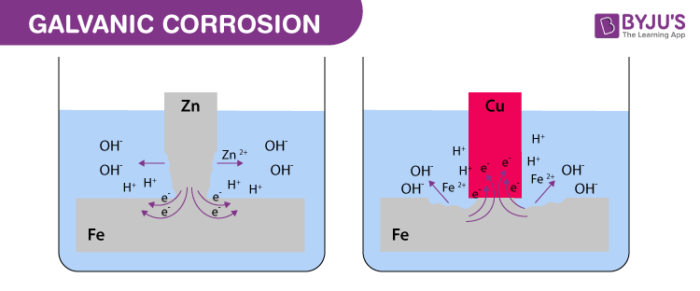
Oh, the drama! We're diving into the thrilling world of galvanic corrosion, and trust me, it's more exciting than watching paint dry... mostly because it *prevents* that paint from sticking around! Now, you might be thinking, "Corrosion? Sounds boring." But hold on to your hats, folks, because we're about to unveil the secret signals that scream, "Galvanic corrosion is HERE!" in your water system. It's like a detective story, but with pipes and a whole lot of electrochemical reactions.
The Case of the Mysterious Metal Meltdown
Imagine this: You're happily washing your hands, and you notice a weird, white, chalky substance clinging to your beautiful brass faucet. Or maybe your copper pipes are sporting a lovely, but completely unwanted, coat of bluish-green. These aren't just design choices gone wrong; they are potential clues! Think of them as the "red flags" of the corrosion world.
Clue #1: The "Where Did All My Metal Go?" Mystery
One of the most obvious signs is the outright disappearance of metal. Seriously! If you've got a zinc anode (a sacrificial piece of metal designed to corrode *instead* of your important stuff) and it's vanishing faster than cookies at a kid's birthday party, then you've likely got a galvanic corrosion party going on. The zinc is bravely sacrificing itself, but it’s a signal that the electrochemical differences are at play.
Clue #2: The "My Water Looks Like Slime" Spectacle
Okay, maybe not *slime*. But discolored water is a major tip-off. Rusty red, greenish-blue, or even a milky white tinge can indicate that metals are dissolving into your water supply. And while a little iron might be good for you, nobody wants to drink "metal soup." It's less superhero origin story and more "potential plumbing disaster." Discoloration is key here. If your water suddenly resembles swamp water, it's time to investigate!
Clue #3: The "My Pipes Are Throwing a Tantrum" Episode
Listen carefully to your pipes! Are they making strange noises? Groaning, creaking, or even the dreaded drip-drip-drip of a leak? Galvanic corrosion can weaken pipes over time, leading to these auditory warnings. A small leak today could be a full-blown flood tomorrow, so don't ignore the sounds of your plumbing system staging a revolt!
Clue #4: The "Everything's Connected, Literally" Conundrum
Remember that galvanic corrosion happens when dissimilar metals are electrically connected in the presence of an electrolyte (like, say, water). So, if you've got copper pipes connected directly to steel pipes, or a brass fitting touching an aluminum component, you've basically created a tiny metal battlefield. Check your connections! Are different metals snuggling up a little *too* close?
Clue #5: The "Taste Test of Terror" (Don't Actually Do This!)
Okay, I'm going to say this *very* clearly: DO NOT DRINK WATER THAT YOU SUSPECT IS CORRODED. However, in extreme cases, you *might* notice a metallic taste. But seriously, use your common sense. If your water tastes funky, get it tested! Your taste buds are not a substitute for proper water analysis. Leave the taste tests to the professionals… and maybe the contestants on that Fear Factor show (but even they probably wouldn’t drink corroded water).
In Conclusion: Be a Plumbing Sherlock!
So, there you have it! The telltale signs of galvanic corrosion, revealed! Remember, it's all about paying attention, being observant, and maybe investing in a good magnifying glass (for inspecting those pipes, of course!). If you see any of these warning signs, don't panic! Call a qualified plumber. They're the experts who can diagnose the problem and prevent your plumbing system from staging its own personal Armageddon. After all, a little bit of detective work can save you a whole lot of headaches (and costly repairs) down the road. So go forth, be vigilant, and protect your pipes from the forces of electrochemical doom!
“Elementary, my dear Watson! It seems we have a case of galvanic corrosion on our hands!”