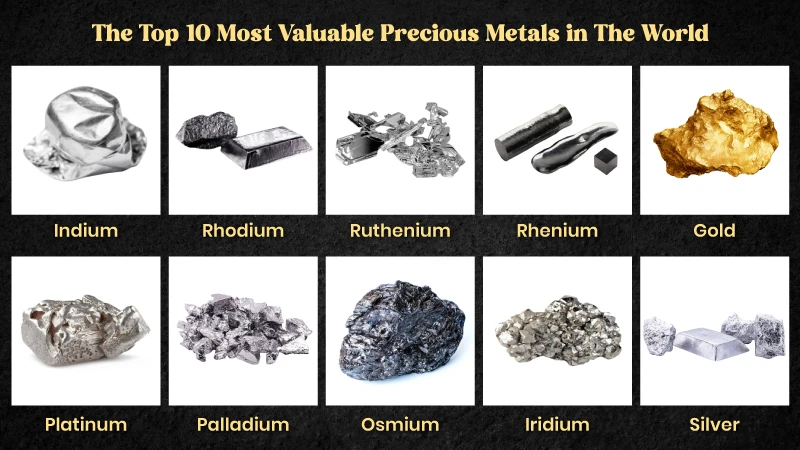
Okay, so picture this: I'm at a fancy dinner party, feeling all sophisticated in my little black dress. I spot this woman across the room, and I'm instantly mesmerized. Not by her dress (though it was fabulous), but by the ring. It was unlike anything I'd ever seen. This subtle, almost otherworldly sheen… I had to know what it was. Turns out, it was made of rhodium. Rhodium! I’d heard of it, vaguely, but I definitely didn’t know it was considered the rarest metal on earth, at least when we're talking jewelry.
That got me thinking, and obviously, led to some deep-dive internet research (as all good dinner party encounters should). I mean, we all know gold and platinum are the jewelry heavyweights, right? But what about those lesser-known, super-exclusive metals lurking in the periodic table? What are they, why are they so rare, and why aren't we all dripping in them? Let’s dive in!
Rhodium: The King of Scarcity
As I mentioned before, rhodium is a serious contender for the rarest metal prize. It's a platinum group metal (PGM), which already puts it in a pretty exclusive club. These metals are typically found together, and extracting them is a whole ordeal. Rhodium is used primarily in catalytic converters in cars to reduce harmful emissions – pretty important stuff! But sometimes, it finds its way into jewelry, usually as a plating.
Think of rhodium plating as a super-shiny, extra-durable shield for your jewelry. It's incredibly hard, highly resistant to corrosion, and gives a brilliant white finish. This makes it perfect for coating white gold, preventing scratches and tarnish. But here's the catch: because it’s so rare, it’s also seriously expensive. We're talking *thousands* of dollars per ounce. (Yeah, I know, ouch!).
Iridium: The Dense and Mysterious
Another PGM vying for the rarity crown is iridium. This metal is known for its extreme hardness and its resistance to… pretty much everything. Acids? Nah. High temperatures? Bring 'em on! Its name even comes from the Greek word for "rainbow," because its salts come in a variety of vibrant colors. Fun fact!
Iridium’s density is seriously impressive. It's actually one of the densest elements known to humankind. Like rhodium, it sees more industrial use than jewelry applications. But because of its hardness, it can be used in some high-end watch components to help reinforce certain points. However, due to its cost and brittleness, finding jewelry that is purely iridium is extremely rare. So, if you see any, feel safe in assuming it is very valuable.
Osmium: The Intriguing Oddball
Osmium, also part of the platinum group, is another contender for the "rarest of the rare" title. It’s also the densest naturally occurring element! (Though iridium might have it beat depending on the crystal structure). Pure osmium is incredibly hard and brittle, and it has a pungent, irritating odor. (Not exactly what you want in a piece of jewelry, am I right?).
Because of these properties, osmium isn't typically used in pure form for jewelry. However, it can be alloyed with other platinum group metals to increase their hardness and durability. You might find it in fountain pen tips, electrical contacts, and, in very rare cases, specialized jewelry designs. Finding jewelry made of osmium is *incredibly* rare. Consider yourself incredibly lucky (and probably wealthy!) if you own some.
Why So Rare? And Why Aren’t We Wearing More Of It?
So, what makes these metals so scarce? It all boils down to their limited occurrence and the complex extraction processes involved. These metals aren’t found in concentrated deposits like gold or silver. They're scattered thinly throughout the earth's crust, often mixed with other PGMs and base metals.
The extraction process is lengthy, complicated, and expensive. It involves multiple stages of chemical processing to separate the different metals. This high cost of production, combined with the limited supply, drives up the price, making these metals too expensive for widespread use in jewelry. Plus, some of them (like osmium) have properties that make them difficult to work with.
Honestly, while the allure of owning something so rare and exclusive is definitely appealing, I think I'll stick to my gold and silver for now. But hey, a girl can dream, right? Maybe one day, I'll stumble upon a rhodium-encrusted treasure at a flea market. (Okay, probably not, but you never know!). And who knows, maybe in the future, we'll find a new way to extract these rare metals making them more accessible (and maybe even affordable!) for everyone. I'd certainly love to see what designers could do with the possibilities!