Okay, buckle up, buttercup, because we're diving headfirst into the electrifying world of… well, electricity! Specifically, we're tackling a question that might sound intimidating, but trust me, it's easier than assembling IKEA furniture (and less likely to leave you with extra screws you can't explain). We're asking: One watt is equal to how many volts?
Now, before your eyes glaze over, let's break this down. Think of electricity like a river. You've got the water itself, right? That's like the current, measured in *amps*. Think of the river's steepness, how forcefully the water is flowing downhill. That's the voltage. It's the 'oomph' behind the current, the potential energy ready to do some work! And the wattage? That's the total power of the river, how much work it can actually do. It's a combination of how much water there is (amps) and how fast it's flowing (volts).
So, can we directly convert watts to volts? Can we say one watt *always* equals a specific number of volts? Drumroll, please… Nope! It's not a simple one-to-one relationship like saying one apple equals one apple. It’s more complicated… but also more interesting!
Why Can't We Just Say "One Watt = X Volts"?
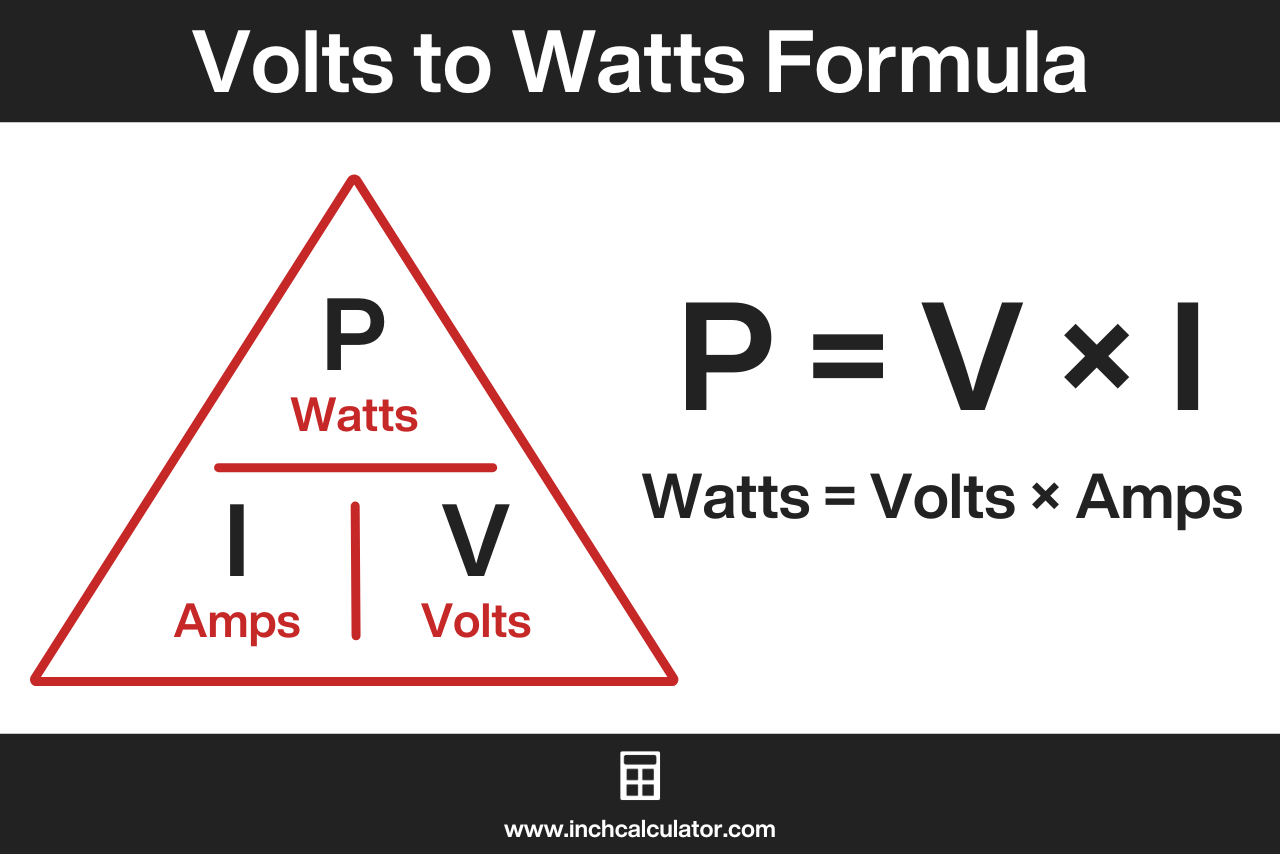
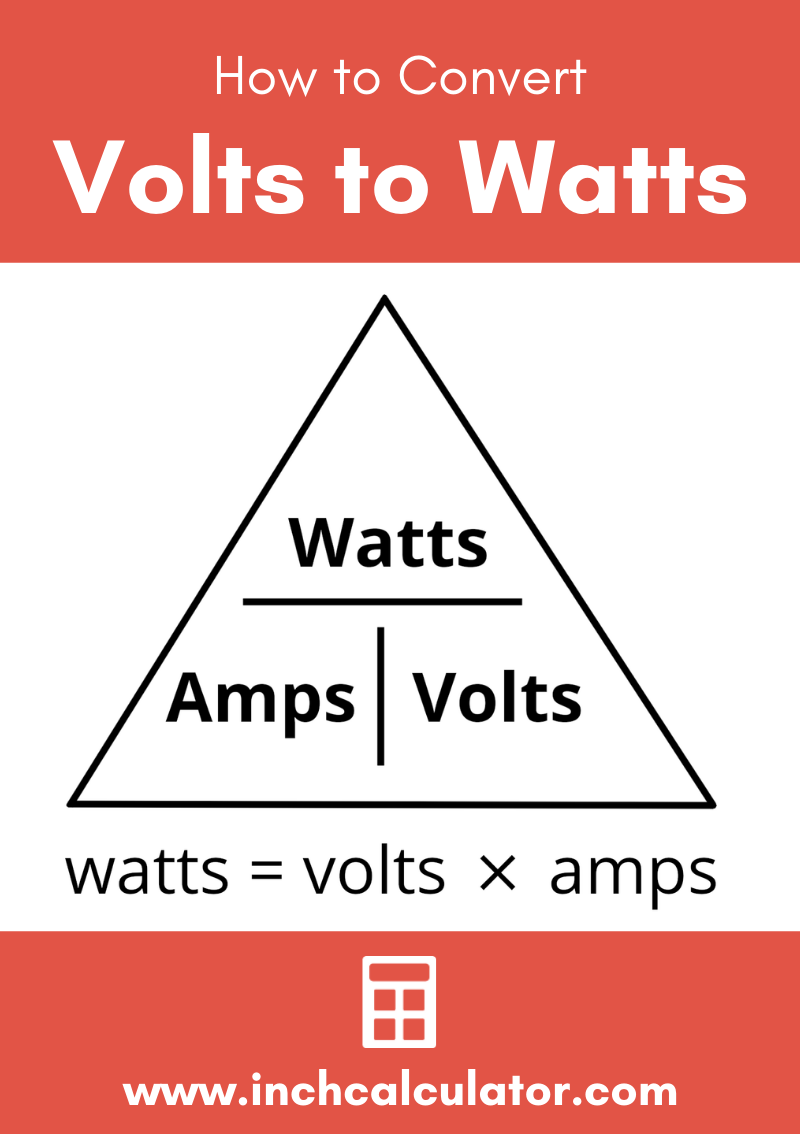
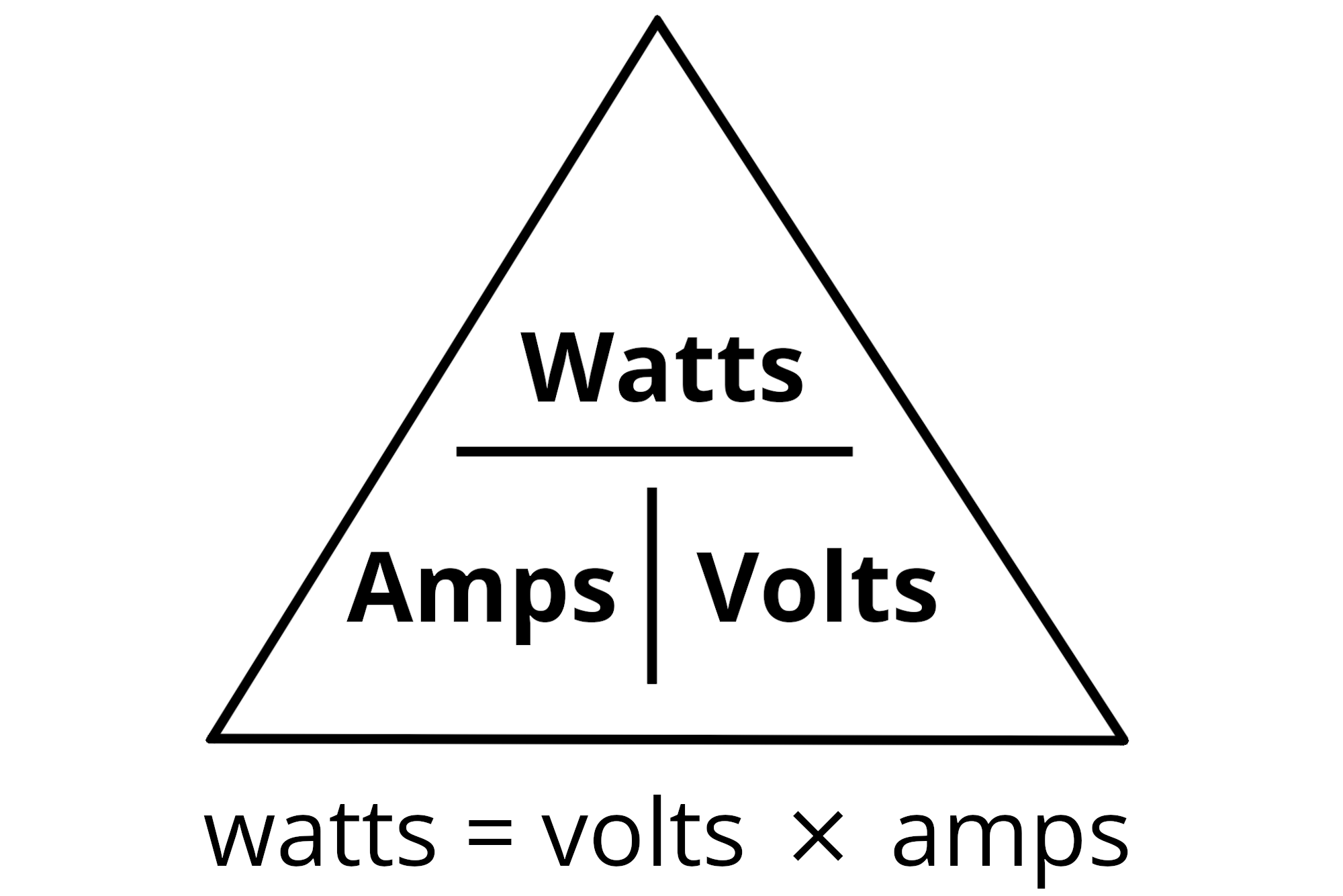
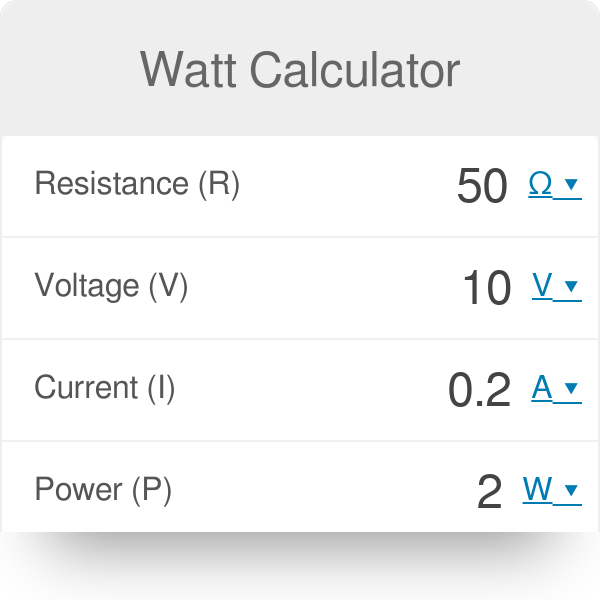
Imagine trying to describe the power of that river just by knowing its steepness! You need to know how wide it is, too, how much water is actually flowing. That's why wattage needs both voltage and current to be calculated. The magic formula is: Watts = Volts x Amps (or, Power = Voltage x Current). This is basically the electrical version of E=MC², only way less scary looking.
Think about a tiny LED Christmas light versus a roaring hairdryer. Both might operate at 120 volts (in the US, anyway). But the LED might only draw a fraction of an amp, resulting in a wattage of, say, 0.1 watts. The hairdryer, on the other hand, might guzzle 10 amps, resulting in a whopping 1200 watts! Same voltage, wildly different wattages because of the current.
Real-World Examples to Light Up Your Life (Pun Intended!)
Let’s say you have a USB phone charger. It might be rated for 5 volts and 2 amps. To find the wattage, you multiply: 5 volts x 2 amps = 10 watts. Simple, right?
Now, let's look at a bigger appliance, like a refrigerator. It might run on 120 volts and draw 5 amps when the compressor is running. That means it's using 600 watts (120 volts x 5 amps). See how the wattage depends on both voltage and current?
Key Takeaway: You can't convert watts to volts without knowing the amps! It's like trying to bake a cake knowing only how hot the oven is, but not how much flour, sugar, and eggs to use. You need all the ingredients!
So, What's the Point of Knowing Watts, Volts, and Amps?
Why should you care about this electrical equation? Because understanding watts, volts, and amps can save you from shocking experiences (literally and figuratively!).
Safety First: Knowing the wattage of your appliances is crucial for not overloading circuits. If you plug too many high-wattage devices into a single circuit, you'll trip the breaker, plunging you into darkness. Or, in extreme cases, you could start a fire. Nobody wants that!
Saving Money: Understanding wattage can help you make informed decisions about energy consumption. Choosing energy-efficient appliances with lower wattage ratings can save you money on your electricity bill. Those fancy LED light bulbs? They use way fewer watts than the old incandescent bulbs, resulting in significant savings over time.
Avoiding Technological Meltdowns: When dealing with electronics, especially when building your own circuits or tinkering with gadgets, knowing the voltage and current requirements is essential to prevent frying your precious components. Imagine plugging a tiny LED into a high-voltage power source! Poof! Instant disappointment.
In conclusion, while you can’t say "one watt equals this many volts" directly, understanding the relationship between watts, volts, and amps empowers you to be a more informed and safer user of electricity. So, go forth and electrify your world (responsibly, of course!). And remember, electricity is amazing… until it's not. So, be smart, be safe, and have fun!