
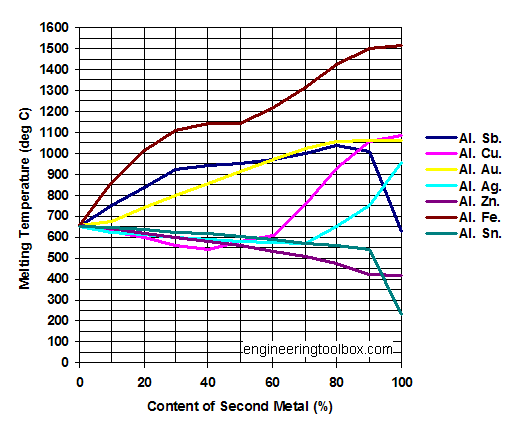
Ever wondered just how much heat it takes to turn a solid piece of aluminum into molten metal? Well, buckle up, because we're diving into the fiery world of 6061 T6 aluminum and its melting point!
Getting To Know 6061 T6 Aluminum
Think of 6061 T6 aluminum as the superhero of the aluminum world. It's strong, it's versatile, and it's used in everything from airplane wings to bicycle frames. It’s basically everywhere!
The "6061" part means it's an aluminum alloy, mixed with other elements like magnesium and silicon to give it extra oomph. The "T6" part signifies that it's been heat-treated to make it even stronger. Kind of like giving the superhero a super-strength serum!
The Great Melt: Unveiling the Temperature
So, what temperature does it take to turn this super-aluminum into a liquid? Prepare yourself... because the answer is...drum roll please... roughly 582°C (1080°F)!
That's hotter than your oven can get, hotter than a really, really hot summer day in Death Valley. It's so hot, you wouldn't want to touch it with a ten-foot pole. Seriously, don't try it!
Why Such a High Temperature?
Well, aluminum, in general, is a pretty tough cookie. It takes a decent amount of energy to break the bonds holding those aluminum atoms together in a solid form.
Think of it like a really strong handshake between atoms. You need to apply a good amount of force (heat) to break that grip and let them roam free as a liquid.
And remember those other elements mixed into the 6061 alloy? They play a role too, slightly tweaking the melting point compared to pure aluminum. It is like making a stew, adding different ingredients will change the outcome.
Putting It In Perspective
Let's try to picture this melting point in a more relatable way. Imagine you're baking a pizza. The oven usually goes up to around 500-550°F.
Now, imagine needing to crank that oven up to *double* that temperature, and then some, to melt the 6061 T6 aluminum frame of your pizza oven. That’s a lot of heat! Your pizza would be charcoal.
Or, think about boiling water. Water boils at 212°F. 6061 T6 aluminum melts at over five times that temperature! Now you're really starting to feel the burn! (Metaphorically, of course. Please don’t burn yourself).
Why Does the Melting Point Matter?
Knowing the melting point of 6061 T6 aluminum is crucial for a bunch of reasons. It's especially important in manufacturing and engineering.
If you're welding pieces of 6061 T6 aluminum together, you need to know the melting point to apply the right amount of heat. Too little, and you won't get a good weld. Too much, and you'll melt the whole thing into a puddle! Not ideal.
Similarly, when casting 6061 T6 aluminum into different shapes, you need to heat it up just enough to melt it without overheating and damaging the metal. It's a delicate dance with fire and precision.
Melting Point and Design
The melting point also affects how engineers design structures using 6061 T6 aluminum. They need to make sure the material won't get too hot in normal operating conditions.
Imagine designing an airplane wing. You wouldn't want the wing to start melting just because the sun is shining really brightly! That would be a *slight* design flaw.
Fun Facts About Aluminum Melting
Did you know that melting aluminum is actually more energy-efficient than creating it from scratch? Recycling aluminum saves a whopping 95% of the energy needed to produce new aluminum! Now that's something to feel good about.
And here's another fun fact: molten aluminum looks surprisingly similar to liquid silver. It's all shiny and reflective, like something out of a sci-fi movie.
But, again, don't touch it! It's still incredibly hot and dangerous. Admire it from a safe distance, like a responsible scientist or a curious bystander.
What Affects the Melting Point?
While we've been focusing on 6061 T6 aluminum, it's worth noting that the exact melting point can vary slightly depending on a few factors. The specific composition of the alloy (the exact amounts of magnesium, silicon, etc.) can make a tiny difference.
Impurities in the aluminum can also affect the melting point. So, while we say around 582°C (1080°F), it might be a degree or two higher or lower in reality. But hey, close enough for rock and roll!
The Magic of Melting
Melting 6061 T6 aluminum (or any metal, for that matter) is a fascinating process. It's a fundamental change in the material's state, transforming it from a rigid solid to a flowing liquid.
It's like watching a block of ice turn into water, but on a much grander and hotter scale. It's a testament to the power of heat and the way atoms behave when they get really, really excited.
So, the next time you see something made of 6061 T6 aluminum, take a moment to appreciate the fact that it started as a molten liquid, carefully shaped and cooled to become the strong and reliable material it is today. You might just feel a newfound appreciation for the magic of melting!
A Final Thought
Understanding the melting point of materials like 6061 T6 aluminum is essential in various fields, especially in engineering and manufacturing. It allows us to work with materials safely and efficiently, creating the structures and products that shape our world.
So, go forth and spread your knowledge! And remember, while the melting point of 6061 T6 aluminum is incredibly hot, the knowledge you've gained today is even hotter! (Okay, maybe not literally. But you get the idea.)
Always remember: Safety first! Don't try melting aluminum at home unless you have the proper equipment and training. Leave it to the professionals. And now, go out there and impress your friends with your newfound knowledge of the fiery world of 6061 T6 aluminum!


