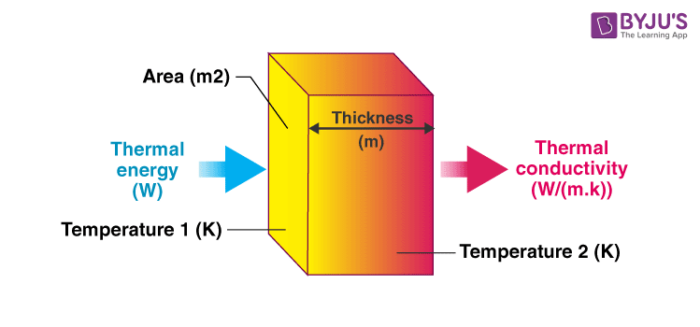
Ever touched a metal spoon that’s been sitting in a hot bowl of soup and yelped? Ouch! That, my friends, is thermal conductivity in action! But what is it, really? And is it a physical property or a chemical property? Let's dive in!
The Great Property Debate: Physical vs. Chemical
Think of properties like superpowers. Some superpowers let you change the very essence of something (chemical!), while others just let you mess with its appearance or behavior without fundamentally altering what it *is* (physical!).
For instance, flammability? That's a chemical property! If something is flammable, it means it can undergo a chemical reaction with oxygen and *poof* – change into something completely different (ash, smoke, etc.). That's a transformation, baby! But boiling point? That's physical. Water turns into steam, but it's still water, H2O, just in a different state. No chemical bonds are broken or formed!
So, Where Does Thermal Conductivity Fit In?
Alright, drumroll please… Thermal conductivity is a ***physical property***! Woohoo! Party time! Confetti everywhere!
But hold on, why? Glad you asked! Let's break it down with some fantastically relatable examples:
-
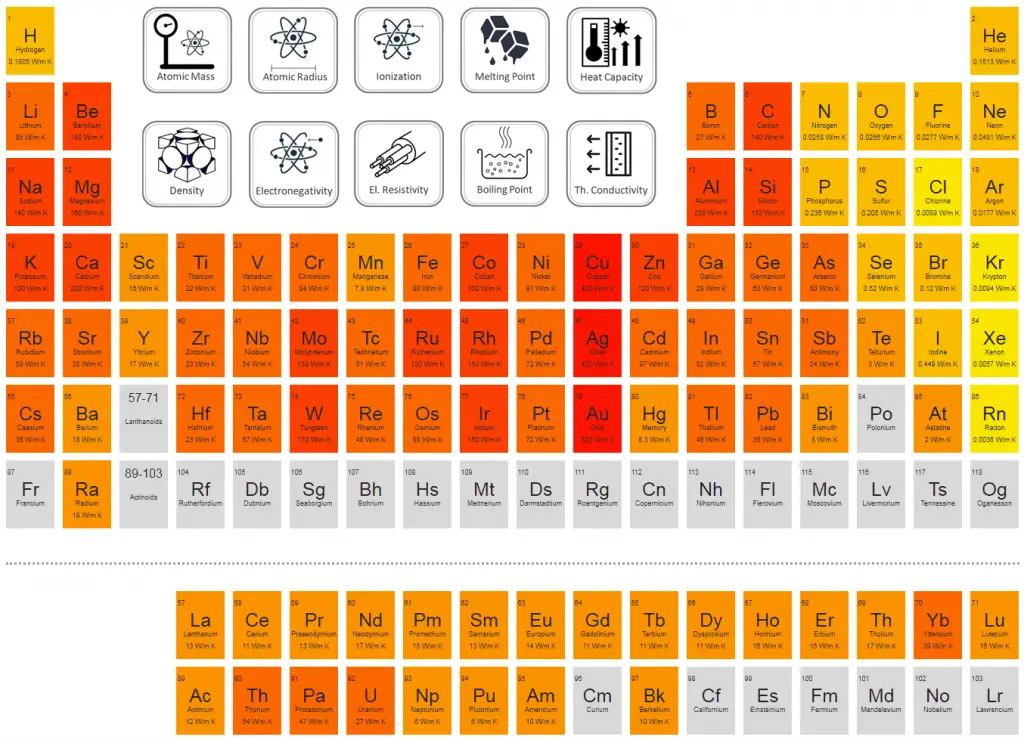
The Amazing Copper Pan: Picture your favorite copper pan, sizzling with deliciousness. Copper is a thermal conductivity superstar! It whisks heat from the burner all the way up the sides, allowing your béchamel sauce to cook evenly and avoid scorching. Now, is the copper *changing* into something else while it's doing this incredible heat-conducting dance? Nope! It's still copper, just a warmer piece of copper. It hasn’t bonded with the béchamel or become a brand new element. It's just lending its heat-carrying abilities.
-
The Sneaky Styrofoam Cup: On the flip side, consider your trusty styrofoam cup holding your morning coffee. Styrofoam is a thermal conductivity slacker. It *prevents* heat from flowing easily. That's why you can hold a cup of almost-boiling coffee without your hand turning into a lobster claw. Is the styrofoam undergoing a radical chemical transformation? Nope! It’s just sitting there, being a heat-insulating hero (or villain, depending on whether you like scalding your taste buds). Again, same styrofoam, different temperature experience.
-
The Marvelous Metal Bench vs. the Welcoming Wooden Bench: Ever noticed how a metal bench on a chilly day feels like it's actively trying to suck the heat right out of you? That’s because metal has high thermal conductivity! It's efficiently whisking the heat away from your behind. But a wooden bench? Wood has lower thermal conductivity, so it doesn't steal your warmth as aggressively. Are the benches chemically changing? Unless you’re leaving them out in the rain for decades, probably not. They're just showcasing their natural ability (or lack thereof) to transfer heat!
See the pattern? Thermal conductivity describes how well a material transfers heat without changing its fundamental chemical composition. It's about the *flow* of energy, not a transformation of matter!
Why Does It Matter? (Besides Winning Trivia Night)
Understanding thermal conductivity is super practical! Engineers use this knowledge to design everything from efficient engines to cozy houses. Chefs rely on it to pick the right cookware. Even fashion designers consider it when choosing fabrics for winter coats! Think of those amazing puffy jackets that keep you toasty warm – they’re filled with materials specifically designed to *inhibit* thermal conductivity, trapping your body heat inside.
So, the next time you're reaching for a hot drink, marvel at the science of thermal conductivity. It’s all around us, silently shaping our world, one degree at a time. And now you know: it's definitely a physical property. High five!
Fun Fact: Diamond has ridiculously high thermal conductivity! In fact, it conducts heat better than many metals. That's why some scientists are exploring using diamond coatings in electronics to prevent overheating. Talk about bling that's also brilliant!