
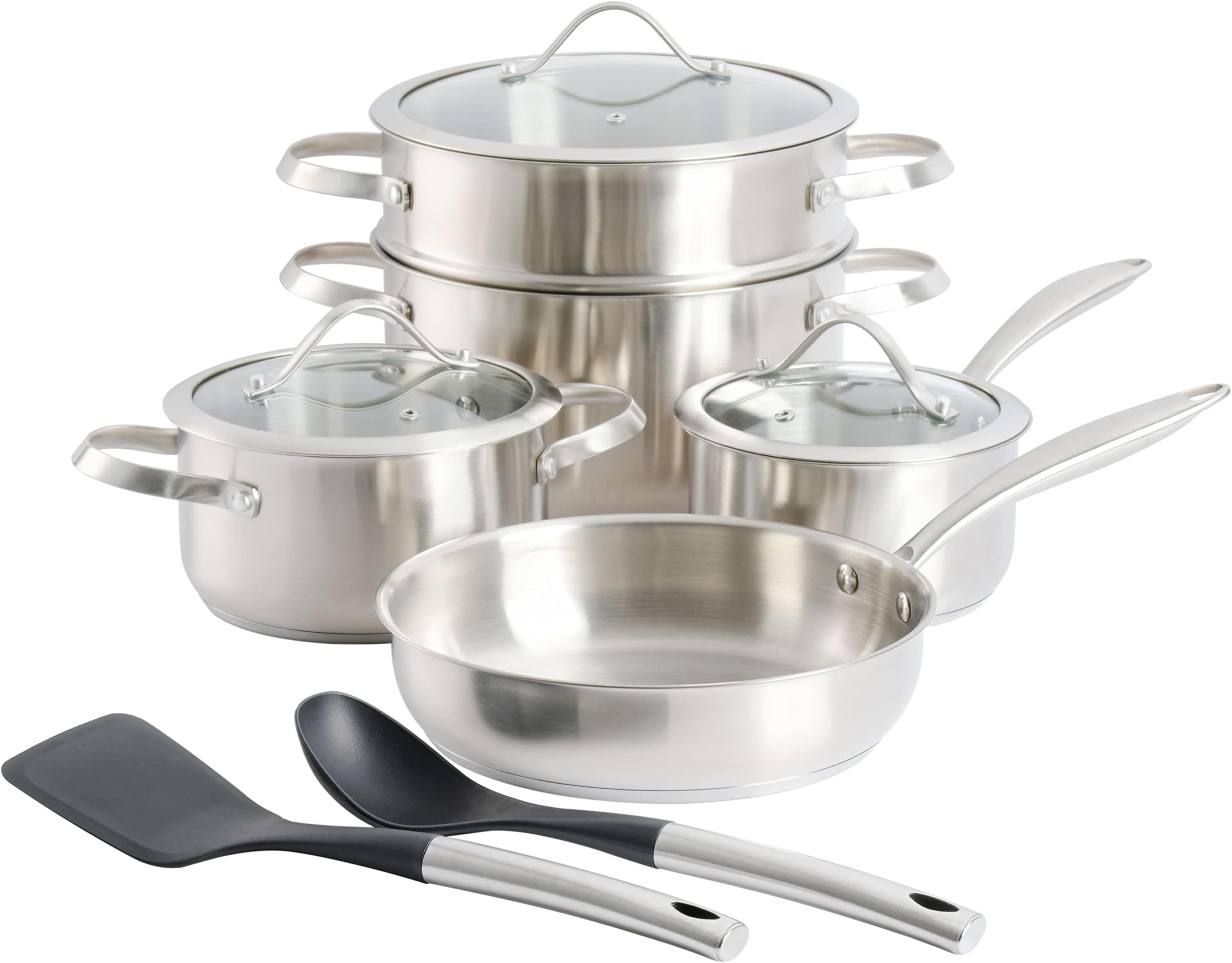
Alright, gather 'round, friends! Let's talk about something thrilling... stainless steel! Okay, okay, maybe "thrilling" is a *slight* exaggeration, but bear with me. Specifically, we're diving deep into the murky waters of 18/8 stainless steel. And the big question on everyone's mind (or, you know, maybe just *my* mind before I looked it up): is it going to poison us all?
Now, I'm no scientist. My lab experience peaked with exploding volcanos made of baking soda and vinegar in 5th grade. But I *can* read (mostly), so let's tackle this "non-toxic" business.
What in the Heck is 18/8 Stainless Steel?
First things first, what even *is* this 18/8 stuff? It sounds like a weird sports score, right? It’s actually a fancy way of saying that the steel contains roughly 18% chromium and 8% nickel. Chromium is the hero that fights against rust – think of it as the tiny, shiny knight in shining armor protecting your precious metal. Nickel helps with corrosion resistance and adds to the overall shine. Basically, it's the steel's glam squad.
These elements mixed with iron (the base of all steel) create a super durable, long-lasting, and yes, *relatively* shiny material. It's the reason your silverware isn't disintegrating in your soup, and why your water bottle isn't actively trying to give you tetanus.
Imagine trying to eat soup with a rusty spoon. Yuck! That’s why 18/8 is a game changer.
The Great Toxicity Debate (Spoiler Alert: It's Not That Great)
So, is this stuff non-toxic? The short answer? Yes, mostly. The slightly longer, more nuanced answer? Well, that’s why we’re here, isn't it?
Under normal conditions (i.e., you're not trying to dissolve your stainless steel spoon in a vat of acid), 18/8 stainless steel is considered very safe for food contact. It's designed to be inert, meaning it doesn't react easily with other substances. Which is great news for your lunchtime leftovers!
However, and there's always a "however," a tiny amount of nickel and chromium can *potentially* leach out, especially if the steel is exposed to highly acidic foods (think tomato sauce or lemon juice) for extended periods. We’re talking about *extremely* small amounts, though. Like, “if you measured it, you’d need a microscope to find it” small. The levels are usually well below any established safety guidelines.
Think of it like this: you *could* technically choke on a single grain of rice. But are you going to stop eating rice altogether? Probably not (unless you *really* hate rice). Same deal here.
But I Heard Nickel is Bad!
Okay, let's address the elephant in the room: nickel. Some people are allergic to it. And those people have my utmost sympathy because nickel allergies are *not* fun. (Imagine breaking out in hives every time you touch a doorknob. The horror!)
If you have a known nickel allergy, you might be more sensitive to any nickel that *might* leach from stainless steel. The good news is that high quality 18/8 stainless steel is designed to minimize leaching. You might also consider using other materials entirely such as glass, ceramic, or higher grade (and nickel-free) stainless steels. Look for stainless steel with a higher number, like 316 or 304, both premium options.
However, for the vast majority of people, the trace amounts of nickel released from 18/8 stainless steel are not a concern. It’s like worrying about the oxygen in the air being bad for you because *technically* it oxidizes things (like rusts metal). It’s true, but not really a thing you need to worry about daily. It’s all about the dose.
The Verdict: Chill Out, It's Just Stainless Steel
So, is 18/8 stainless steel going to turn you into a superhero (or a villain) with weird metal-based powers? Nope. Is it going to give you a third eye? Definitely not (unless that's already in your genetic makeup, in which case, cool!). Is it going to slowly poison you? Highly unlikely. (Unless, again, you're actively trying to dissolve it in acid. Please don't do that.)
In conclusion, 18/8 stainless steel is generally considered a safe and non-toxic material for food contact. Unless you have a specific allergy or are planning on performing bizarre chemistry experiments in your kitchen, you can probably keep eating your soup with that trusty stainless steel spoon without fear.
Now if you'll excuse me, I'm suddenly craving soup…
Disclaimer: I am not a doctor, a scientist, or a stainless steel expert. This is just my (hopefully) entertaining take on the topic. If you have specific concerns about your health or allergies, please consult with a qualified medical professional.


