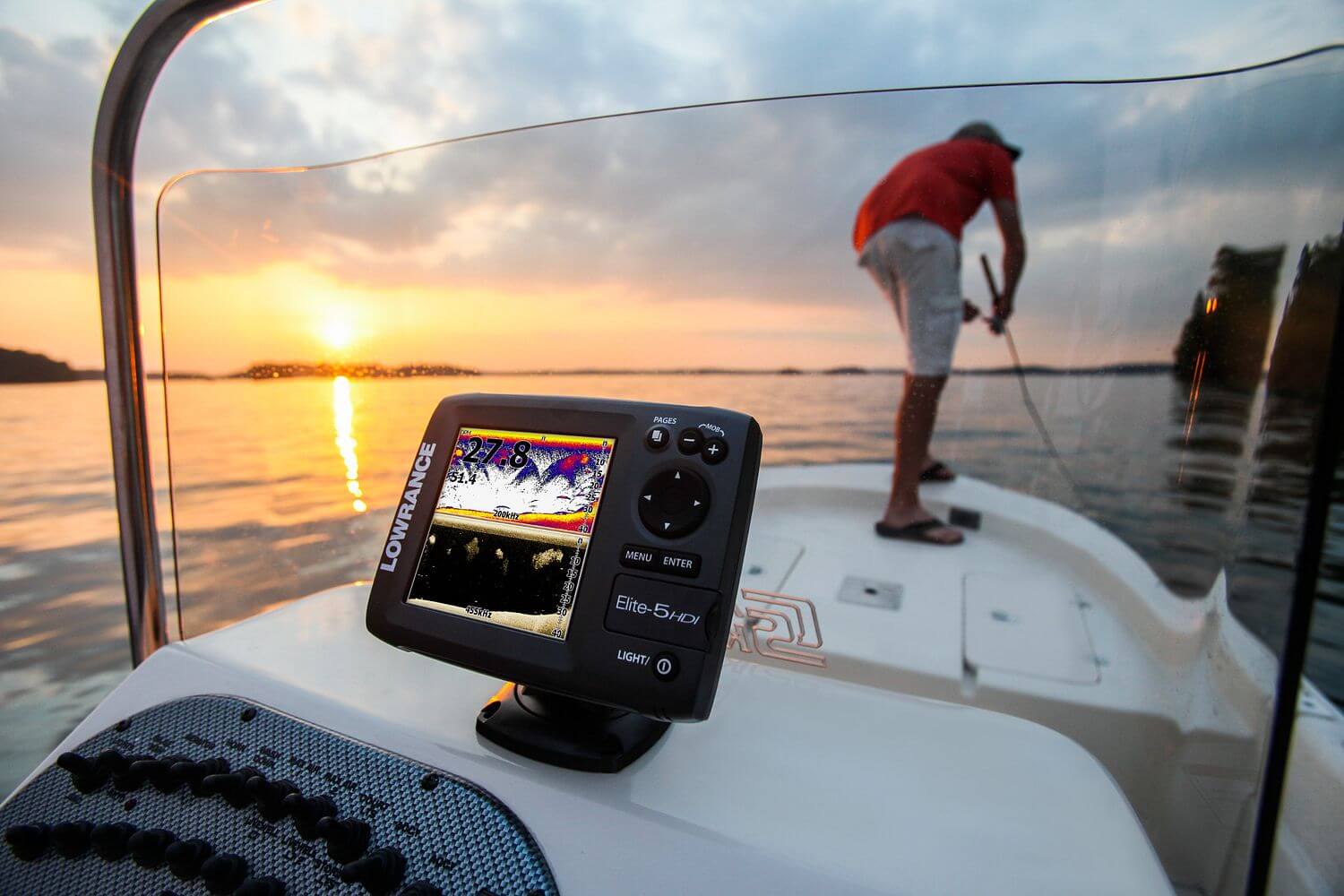
Alright, buckle up buttercups, because we're about to embark on a journey! A journey...into the watery depths! Figuratively, of course. We're talking about adding a fish finder to your trusty boat, and trust me, it's easier than parallel parking a greased watermelon.
Gather Your Gear (and Your Courage!)
First things first: tools! You'll need a drill. Don’t worry, we're not performing open-boat surgery here, just making a few polite holes.
Grab a screwdriver (probably a Phillips head), some wiring connectors (like little electrical hugs!), and maybe some marine-grade silicone sealant (that's the waterproof stuff – we don't want any soggy surprises later).
Of course, you'll also need your brand-spankin'-new fish finder, its transducer (that's the thingy that sends and receives the sonar signals), and the boat itself!
Mounting the Transducer: Where the Magic Happens
This is where we get a little bit… technical-ish. The transducer needs a good spot to “see” into the water.
Usually, this means mounting it on the transom (that's the back of the boat). There are a few ways to do this.
You could glue it on (if you’re feeling particularly brave and have industrial-strength adhesive), or you could use a transom mount bracket – which is the recommended way for a beginner. Think of it as training wheels for transducer installation!
Position the bracket where the transducer will be submerged when the boat is moving, but not so low that it's going to get smashed by every rogue wave that comes along. We want to find fish, not become one with the fishes!
Once you've found the perfect spot (and double-checked, and maybe even triple-checked), mark the holes for the bracket.
Now, comes the drilling! Remember those polite holes? Don't go too crazy! Just enough to get the screws in.
Attach the bracket with the screws, and then attach the transducer to the bracket. Make sure it's snug, but don't overtighten it, unless you enjoy stripping screws and muttering under your breath.
Next, we need to run the transducer cable to the head unit (the screen part of the fish finder). This is where the marine-grade silicone sealant comes in handy!
You'll likely need to drill a hole through the transom for the cable. Now, I know drilling holes in your boat can feel like a major commitment, but trust me, it's necessary. Just think of it as a piercing – for your boat.
Before you thread the cable, put a generous dollop of that silicone sealant around the hole. This will keep water from sneaking in and turning your boat into an impromptu submarine.
Thread the cable through, and then add another dollop of sealant on the inside of the boat, just for good measure. You can never have too much sealant!
Powering Up the Fun: Wiring Time!
Alright, now for the electrical part. This is where things can seem a little intimidating, but fear not!
The fish finder needs power, and that power comes from your boat's battery. Usually, there will be a positive (red) and a negative (black) wire.
Find a convenient spot to tap into your boat's electrical system. It’s often easiest to connect directly to the battery.
Using those wiring connectors we talked about earlier, connect the positive wire of the fish finder to the positive terminal of the battery, and the negative wire to the negative terminal.
Make sure the connections are secure! We don't want any loose wires causing electrical mayhem. If you're unsure about any of this, it's always best to consult a qualified marine electrician.
Mounting the Head Unit: Where the Fish Appear!
Now, let's get that fish finder screen mounted where you can actually see it! Most units come with a bracket or mounting system.
Find a spot on your console or dashboard that's within easy reach and doesn't block your view. You don't want to be doing yoga poses just to see if there are any fish below!
Attach the mounting bracket to the boat using screws. Again, polite holes only!
Then, slide the head unit into the bracket and connect the transducer cable and the power wires.
Make sure everything is securely connected, and then tidy up any loose wires with zip ties or cable clamps. A neat and tidy installation is a happy installation!
Testing, Testing, 1, 2, 3!
Alright, it's showtime! Turn on the fish finder and see if it comes to life. If it does, congratulations! You've successfully installed a fish finder!
If not, don't panic. Double-check all your connections, make sure the battery is charged, and consult the fish finder's manual. Manuals are your friends, even if they sometimes read like they were written by robots.
Once the unit is powered on, you'll need to adjust the settings to get the best readings. Play around with the gain, range, and frequency to see what works best in your local waters.
Now, go find some fish! Head out to your favorite fishing spot and see if your new fish finder can help you locate those elusive underwater creatures.
A Few Extra Tips (Because We Like You!)
Always use marine-grade wiring and connectors. Regular automotive parts can corrode quickly in a marine environment. Trust me, you don't want to be replacing your wiring every season.
Consider adding a fuse to the power wire. This will protect your fish finder from power surges. Better safe than sorry!
Read the fish finder's manual! It's full of helpful information about settings, troubleshooting, and other important stuff. Even if it does sound like a robot wrote it.
Practice makes perfect! The more you use your fish finder, the better you'll get at interpreting the readings and finding fish.
Don't be afraid to ask for help! If you're stuck on any part of the installation process, consult a qualified marine technician or electrician. They're the pros for a reason!
So, there you have it! You're now officially a fish finder installation expert (or at least, you've given it a good shot!).
Get out on the water, find some fish, and have a blast!
Remember, the best part of fishing isn't always catching fish, it's spending time outdoors with friends and family (and maybe a cold beverage or two).
Happy fishing!
Maintenance: Keeping Your Fish Finder Happy
Just like your boat engine and your fishing rod, your fish finder needs a little TLC to keep it performing its best.
After each trip, wipe down the screen with a soft, damp cloth to remove any salt spray or grime. Salt is the enemy!
Periodically check the transducer to make sure it's clean and free of any marine growth. Barnacles can interfere with the sonar signals, and we don't want that!
Inspect the wiring and connections for any signs of corrosion or damage. Replace any worn or damaged parts immediately.
If you're storing your boat for the winter, disconnect the fish finder from the battery and store it in a dry place.
By following these simple maintenance tips, you can keep your fish finder working like new for years to come.
Advanced Techniques (For the Truly Obsessed)
Once you've mastered the basics of using your fish finder, you can start exploring some more advanced techniques.
Learn how to identify different types of fish based on their sonar signatures. Some fish finders even have built-in fish ID features that can help you with this.
Use your fish finder to map the bottom of the lake or ocean. This can help you find drop-offs, ledges, and other underwater structures that attract fish.
Experiment with different sonar frequencies to see what works best for different types of fish and water conditions.
Connect your fish finder to a GPS unit to create detailed maps of your favorite fishing spots. This can help you find your way back to those productive areas time and time again.
Share your fish finder data with other anglers. There are many online communities where you can exchange information and learn from each other.
The possibilities are endless! The more you learn about your fish finder, the more successful you'll be at catching fish.
And remember, even with the best fish finder in the world, there's no guarantee you'll catch fish every time. That's why it's called fishing, not catching! But with a little practice and perseverance, you'll be hauling in those lunkers in no time!
So get out there, explore the underwater world, and have some fun! Tight lines!