Okay, so you've decided to embrace the sunshine and slap some solar panels on your roof. Excellent! You're basically a sun-powered superhero now. But before you start imagining yourself as Captain Planet, there's a tiny, little, minuscule detail to figure out: how to actually wire these bad boys together.
Don't worry, it's not as scary as it sounds. We're talking about wiring them in series here. Think of it like stringing Christmas lights together – one after another, to make a longer, brighter string of holiday cheer. Except, you know, instead of tinsel and questionable eggnog, you get clean, renewable energy.
Imagine you have a bunch of little garden hoses. Each hose gives you a trickle of water. Not exactly enough to fill your pool for that epic summer party, right? Wiring in series is like connecting those hoses together end-to-end. Suddenly, you've got one super-long hose that gives you a much bigger stream of water. More voltage, more power!
Why Bother with Series Anyway?
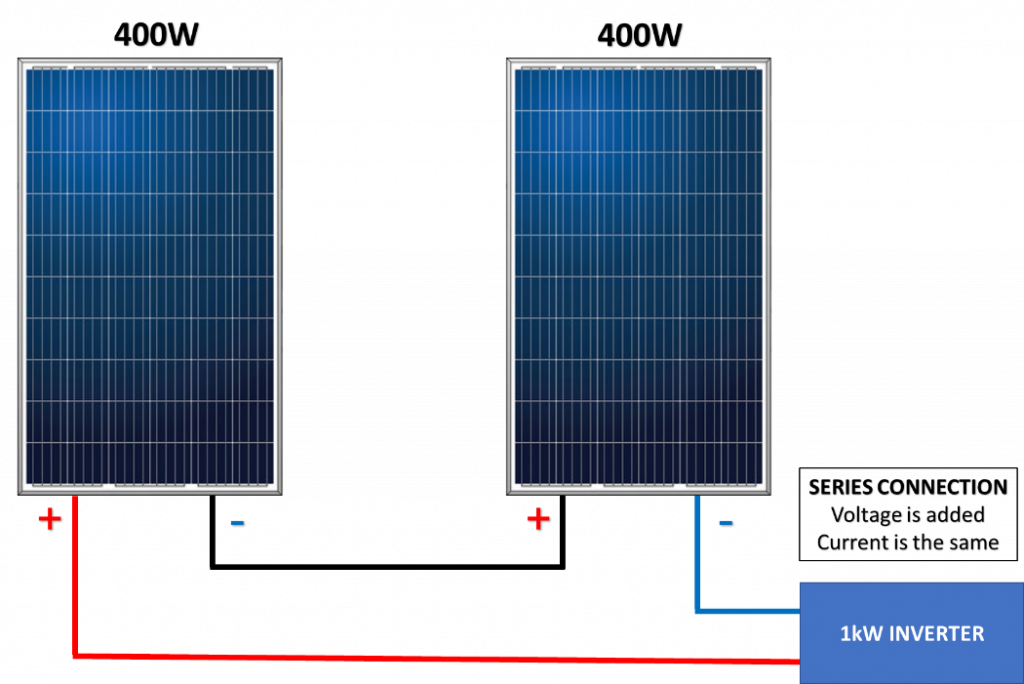
Good question! Why not just connect them all willy-nilly like a toddler with a box of crayons? Well, because that's a recipe for disaster (and probably a lot less power). Wiring in series increases the voltage while keeping the current (amps) the same. In simpler terms, it's like giving your electricity a boost so it can travel further and work harder.
Think of it like this: you’re trying to send a text message to your grandma who lives across the country. A low voltage is like trying to shout that message; she ain't gonna hear you. Wiring in series is like using a really, really powerful megaphone. Suddenly, Grandma is getting the message loud and clear (and probably wondering what you're yelling about).
The Nitty-Gritty: How to Actually Do It
Alright, let's get down to brass tacks. Here's the basic rundown of wiring solar panels in series, without getting too bogged down in technical jargon.
Step 1: Safety First! Seriously, this is important. Treat electricity with respect. Disconnect everything before you start messing around. Think of it like defusing a bomb. Except instead of red wires and blue wires, you have positive and negative terminals. And instead of saving the world, you're just saving the planet... same difference, right?
Step 2: Identify the Positive and Negative. Each solar panel will have a positive (+) and a negative (-) terminal. They're usually pretty clearly marked. If they're not, break out your multimeter and test them. Don't guess! Guessing with electricity is a really bad idea. Like, "lightning strike while holding a metal umbrella" bad.
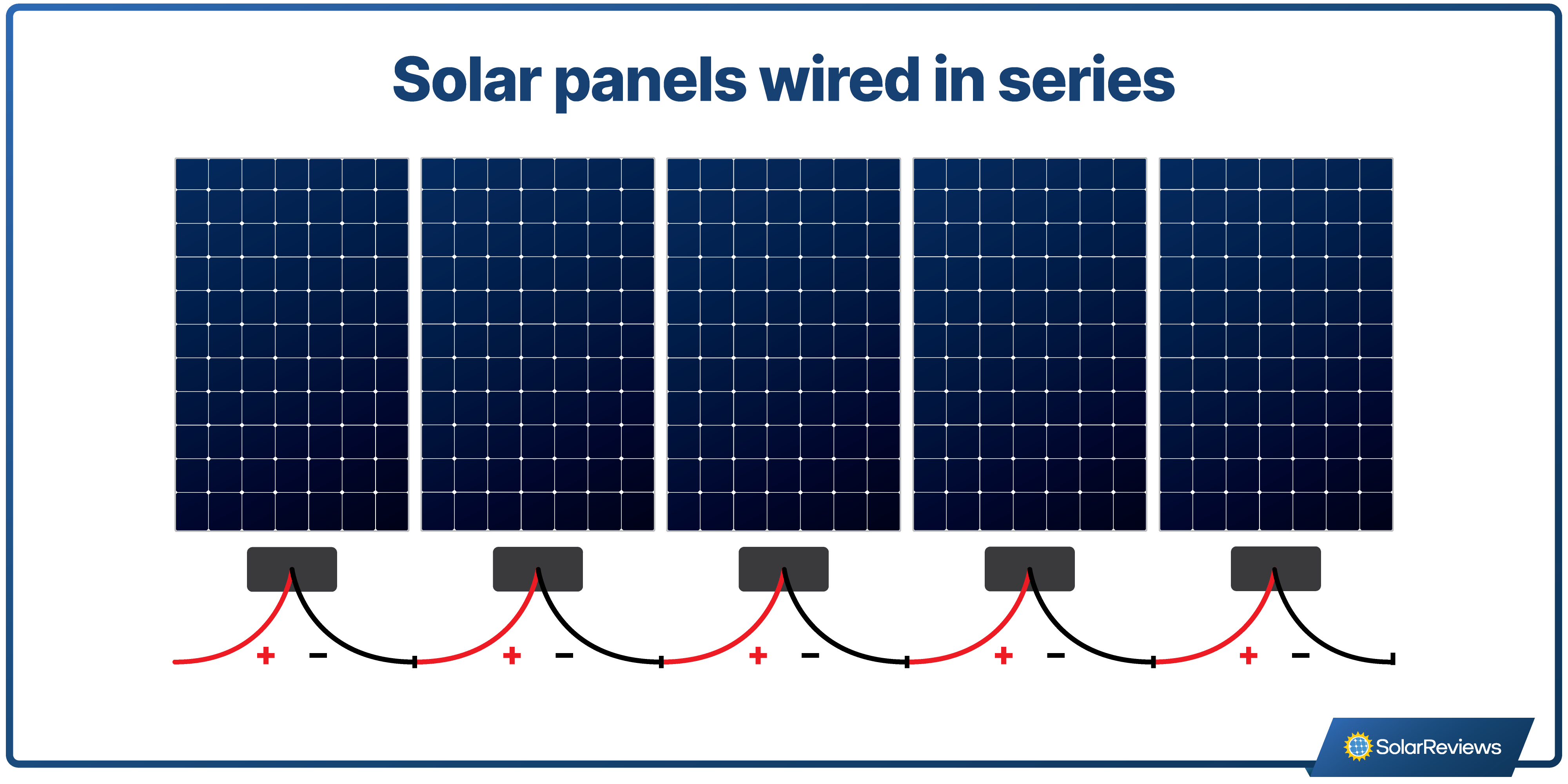
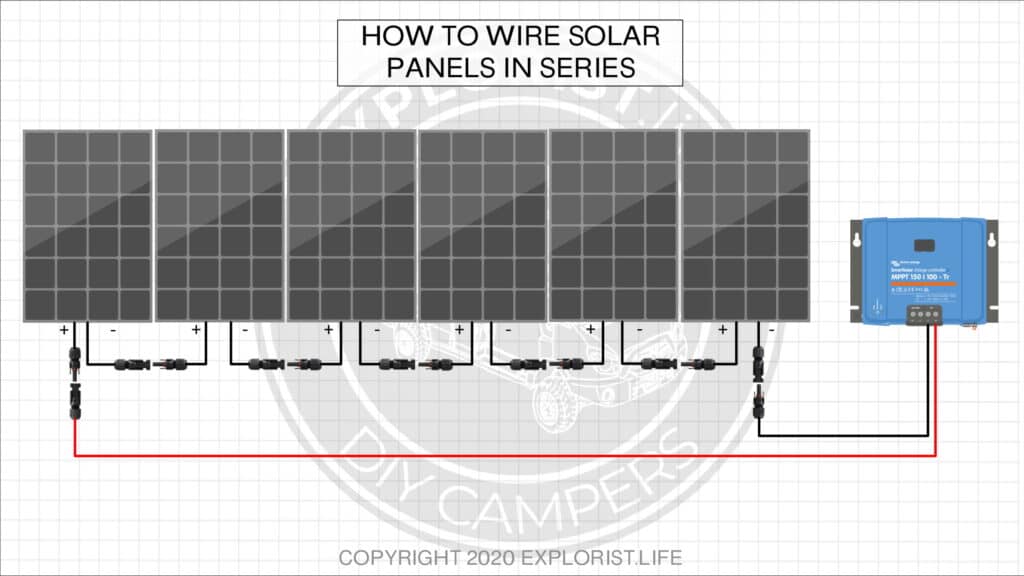
Step 3: Connect Them End-to-End. This is the crucial part. Take the positive (+) terminal of one panel and connect it to the negative (-) terminal of the next panel. Repeat this process until all your panels are connected in a single chain. It's like making a daisy chain, but instead of flowers, you're using electrons. Way cooler!
Step 4: The Loose Ends. You'll have one positive (+) wire and one negative (-) wire left over. These are your output wires. Connect these to your charge controller (if you're using batteries) or directly to your inverter (if you're going straight to the grid). These are your two loose ends.
Step 5: Double-Check EVERYTHING! Seriously, everything. Make sure all your connections are tight and secure. Loose connections are like tiny electrical gremlins waiting to cause trouble. They'll overheat, arc, and generally make your life miserable. Trust me, you don't want electrical gremlins. They're worse than the regular kind.
Important Considerations (aka "Don't Be a Dummy")
- Voltage Limits: Make sure your charge controller and inverter can handle the voltage you're generating. Exceeding the voltage limits is like trying to pour a gallon of water into a pint glass. It's gonna overflow, and you're gonna have a mess on your hands.
- Wire Gauge: Use the appropriate wire gauge for the current and voltage. Skinny wires can't handle high currents. It's like trying to suck a milkshake through a coffee stirrer. It's just not gonna work.
- Fuse Protection: Install fuses to protect your system from overcurrent. Fuses are like tiny electrical superheroes that sacrifice themselves to save the day. Without them, you risk frying your equipment (and potentially starting a fire).
And there you have it! You've successfully wired your solar panels in series. Now you can bask in the glory of your sun-powered creation, knowing that you've harnessed the power of the cosmos to power your toaster oven. Go forth and be energy efficient!