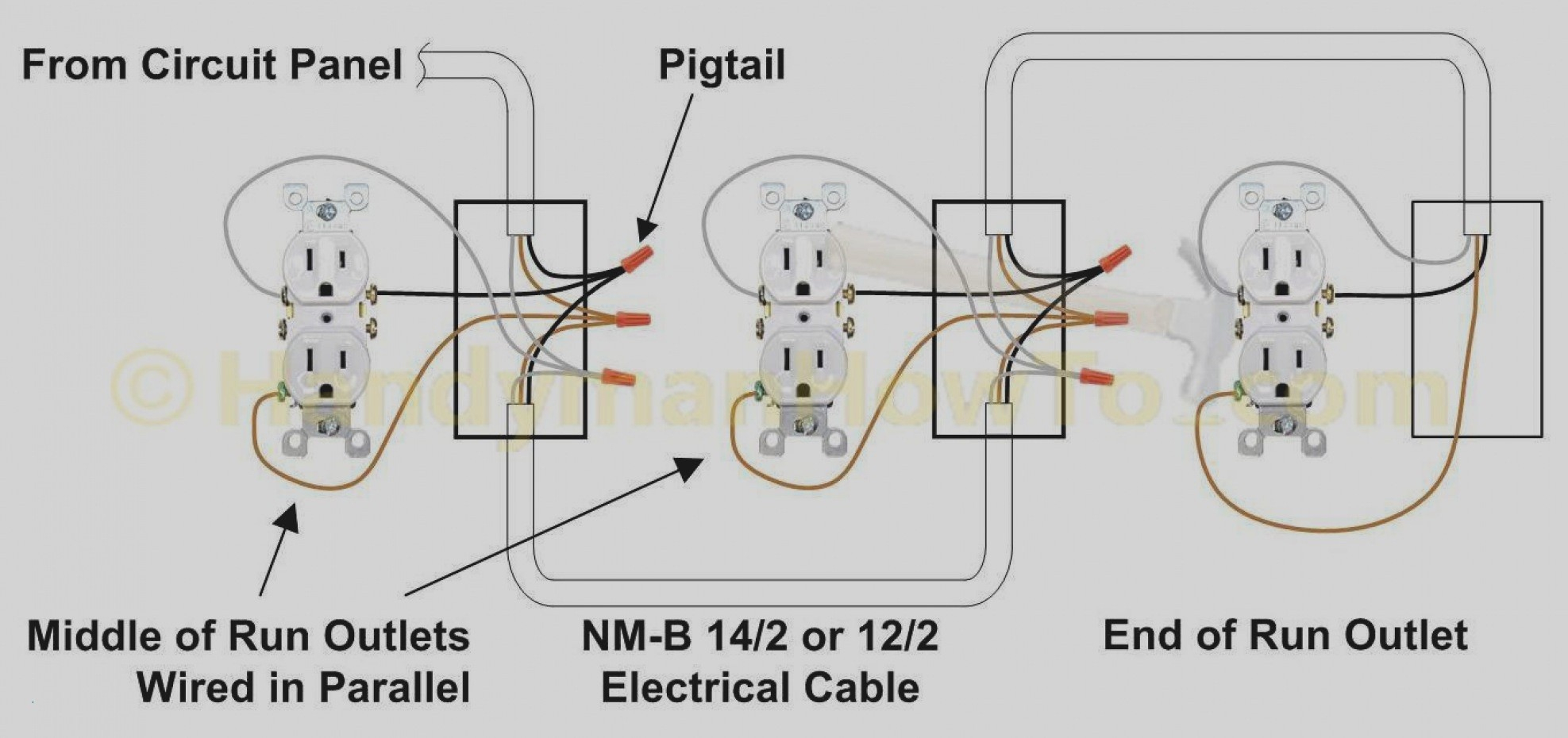
Ever feel like you're living in the electrical dark ages, perpetually battling for outlets? Maybe you're a budding DIY enthusiast eager to conquer new skills, or perhaps you're just tired of extension cords snaking across your living room. Wiring receptacles might sound intimidating, but understanding the basics, like how to wire them in series, can be surprisingly fun and incredibly useful. While parallel wiring is the standard for most household circuits (and much safer for general use!), understanding series wiring can be a fascinating learning experience and has niche applications. Let's dive in!
So, why would you even want to wire receptacles in series? For beginners, it's a fantastic way to grasp the fundamental principles of electrical circuits. You'll see firsthand how voltage and current behave. For families, understanding basic electrical concepts can lead to increased awareness and safety around the house. And for hobbyists – think tinkerers, model railroad enthusiasts, or anyone experimenting with low-voltage projects – series wiring can be the key to creating specific lighting or power distribution setups. It's important to remember that wiring receptacles in series for general household use is highly discouraged and potentially dangerous. The voltage is divided across the receptacles, meaning each appliance receives a fraction of the total voltage, and a fault in one appliance can disable the entire circuit.
Instead of thinking about powering your TV and lamp, consider low-voltage scenarios. Imagine you're building a model railroad and want a row of equally dimmed lights. Wiring them in series divides the voltage evenly, achieving that effect. Or perhaps you're experimenting with LED circuits for a decorative project. By understanding series connections, you can control the brightness of your LEDs with a single resistor.
Here's a simplified conceptual view of how wiring receptacles in series works (again, this is for educational purposes and should NOT be attempted in standard household wiring): Imagine you have two receptacles. In a series configuration, the "hot" wire from your power source goes into one side of the first receptacle. Then, another wire runs from the other side of that first receptacle to one side of the second receptacle. Finally, a wire returns from the other side of the second receptacle back to the "neutral" of your power source. This creates a single loop where electricity flows through each receptacle sequentially.
Important Safety Tips: Always disconnect the power at the breaker before working on any electrical project. Use insulated tools, and double-check your connections. Because series wiring is atypical, and potentially dangerous if misused, consult a qualified electrician for any electrical work in your home. If you're experimenting with low-voltage projects, start small and use appropriate safety equipment like safety glasses and gloves. Never work with electricity if you are unsure of what you are doing.
Getting started is simple: begin with low-voltage DC circuits (batteries, LEDs, resistors). These are safe and allow you to visually understand the flow of electricity. Use a breadboard for easy connections. There are tons of online tutorials and videos to guide you through basic series circuit building. Start with understanding Ohm's Law, which governs the relationship between voltage, current, and resistance – a crucial foundation for electrical understanding.
While wiring receptacles in series isn't typically practical for general household use, the knowledge gained from understanding its principles is invaluable. It's a fascinating gateway into the world of electricity, and by exploring it safely and responsibly, you can unlock a deeper appreciation for the technology that powers our lives.