Ever stared blankly at a kitchen utensil, wondering if it's Silicone or Plastic? Don't worry, you're not alone! It's a modern-day mystery that plagues even the most seasoned home cooks. But fear not, dear reader, because deciphering this material riddle is easier than you think, and dare I say, even a little fun.
Let's ditch the science lesson for a moment and imagine a scenario. You're at a friend's place, and they're serving up a delightful dish. The serving spoon feels... different. Is it that new-fangled Silicone everyone's raving about, or just another run-of-the-mill Plastic spoon? It's time to put your detective hat on!
The Bend and Twist Test
The first and perhaps most playful test involves a little bending and twisting. Pick up the object in question and give it a gentle (emphasis on gentle!) twist. Silicone, bless its flexible heart, is much more pliable than Plastic. It'll bend and contort like a yoga instructor showing off, returning to its original shape with minimal fuss. Plastic, on the other hand, is stiffer and less forgiving. Imagine trying to get a grumpy cat to do yoga – that's about how much flexibility you can expect from Plastic. If it feels like it might snap or permanently deform, chances are you're dealing with Plastic.
The Touchy-Feely Approach
Okay, maybe "touchy-feely" is a bit much, but hear me out! The texture of Silicone and Plastic is surprisingly different. Silicone often has a slightly rubbery, almost velvety feel to it. Think of those fancy phone cases that feel like they're made of clouds (okay, maybe not clouds, but you get the idea). Plastic, however, tends to feel smoother and harder to the touch. It's more akin to… well, a Plastic bag. Which, admittedly, isn't the most poetic comparison, but it's accurate! Closing your eyes and running your fingers over the surface can sometimes be all it takes to solve the mystery.
The Heat Test (Proceed with Caution!)
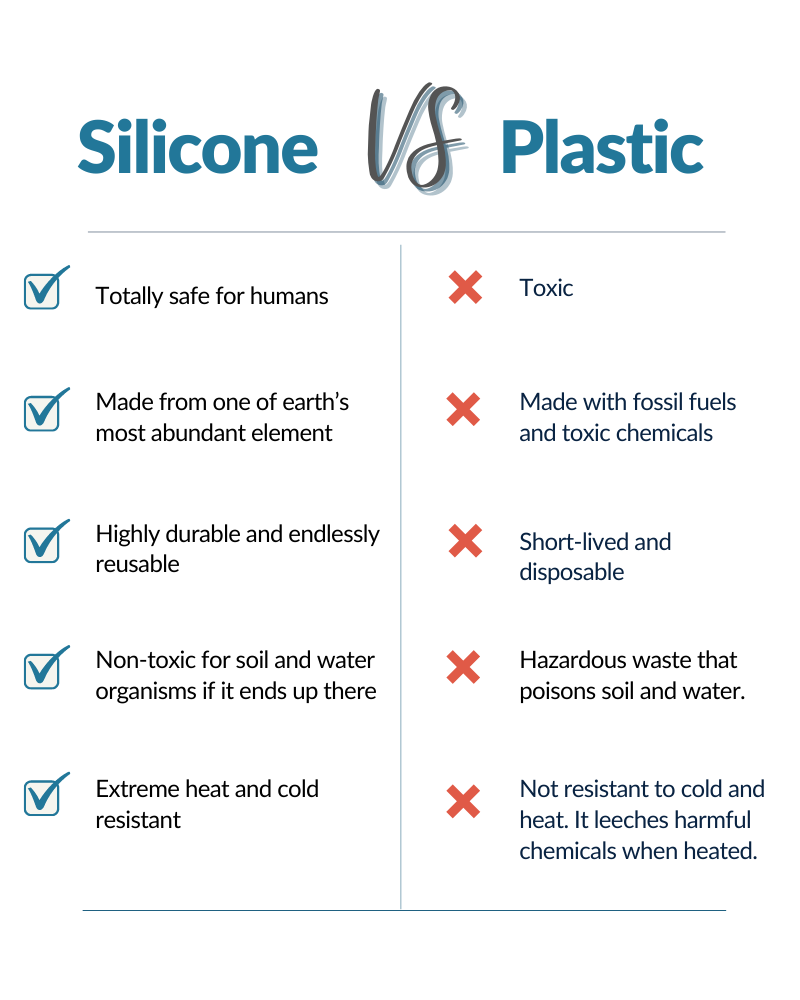
Now, this one requires a bit of caution and should only be attempted if you're absolutely stumped. Silicone is a champion in the heat department. It can withstand high temperatures without melting, warping, or releasing harmful chemicals. That's why it's a popular choice for baking molds and spatulas. Plastic, on the other hand, can be a bit of a drama queen when exposed to heat. It might melt, soften, or even release unpleasant odors.
Warning: Do not set anything on fire!Instead, consider dipping a small, inconspicuous part of the item in hot water for a few seconds. If it starts to deform or smell funny, it's almost certainly Plastic. But please, prioritize safety over material identification!
The Label Lowdown
Of course, the easiest way to tell Silicone from Plastic is to simply read the label! Most manufacturers are kind enough to include this information on the product packaging. Look for keywords like "Silicone," "BPA-free," or "food-grade Silicone." If you see terms like "polypropylene," "polyethylene," or "PVC," you're dealing with Plastic. It’s the equivalent of finding the answer key before taking the test, a sweet, simple victory.
The Squeeze and Release
This works particularly well with things like spatulas or kitchen tools. Give it a good squeeze! Silicone will feel like it has more give, more springiness. It'll bounce back to its original shape with enthusiasm. Think of it like squeezing a stress ball. Plastic will feel more rigid, less forgiving. It might even crack if you squeeze it too hard. So, be gentle, but be firm in your quest for material truth!
So, there you have it! A few simple tricks to help you distinguish between Silicone and Plastic. Now you can confidently navigate the world of kitchen gadgets, baby toys, and everything in between, armed with the knowledge to impress your friends and family. Just remember to proceed with caution, a dash of humor, and maybe a yoga mat for those extra-flexible Silicone items. Happy experimenting!