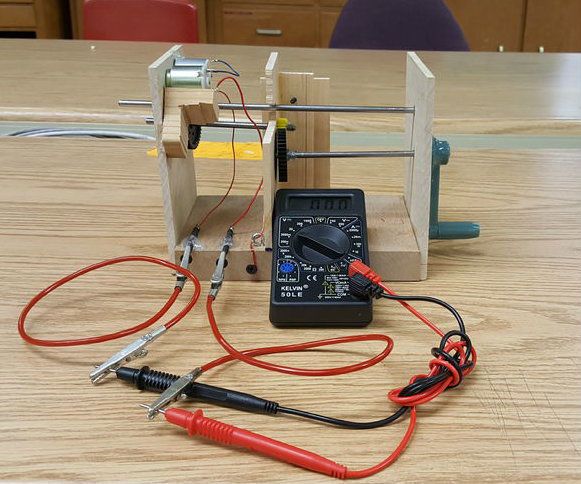
The humble hand crank generator! Once relegated to powering old-timey radios in movies, it's enjoying a real renaissance. From steampunk creations to educational science projects, folks are rediscovering the simple joy and practicality of generating their own electricity, one crank at a time. It's more than just a novelty; it's a gateway to understanding energy, a chance to get creative, and frankly, a pretty cool party trick.
So, why might you want to build one? Well, if you're an artist, imagine incorporating a hand-cranked light source into your sculpture or creating kinetic art that responds to user interaction. Hobbyists can use them to power small electronic projects, creating self-sufficient gadgets and gizmos. And for the curious minds out there, building a hand crank generator is a fantastic hands-on way to learn about electromagnetism and basic electrical circuits. It brings abstract concepts to life in a way that textbooks simply can't.
The beauty of this project lies in its versatility. You can go full-on steampunk with brass gears, polished wood, and vintage voltmeters. Picture a hand-cranked Edison bulb, casting a warm glow on a handcrafted desk. Or, embrace a more modern, minimalist aesthetic with 3D-printed components and sleek designs. Subject-wise, think of powering a miniature Ferris wheel, a tiny wind turbine, or even a miniature electric vehicle that zooms across your desk when you crank. The possibilities are limited only by your imagination! Some folks even incorporate them into emergency preparedness kits for powering small radios or charging phones in case of a power outage.
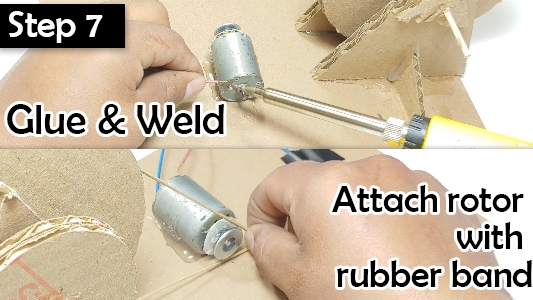
Ready to try building your own? Here are a few essential tips: First, gather your materials. You'll need a DC motor (small ones are readily available online), some wire, a diode, a capacitor (optional but recommended for smoothing the output), and a way to mount the motor securely. A good handle is crucial for efficient cranking – experiment with different shapes and sizes. Safety is paramount! Always work with low voltages and be careful when soldering. There are tons of tutorials available online, so don't be afraid to do your research and find a guide that matches your skill level.
Start by connecting the wires to the motor terminals. The diode will ensure current flows in the correct direction, and the capacitor will help stabilize the voltage. Mount the motor securely to a base, attach your handle, and give it a crank! You should see a voltage reading if you connect a multimeter. From there, you can experiment with different gear ratios to increase voltage or current, and add more sophisticated circuitry to power different devices.
Building a hand crank generator is more than just a technical exercise; it's an opportunity to connect with the fundamental principles of energy generation. It's about taking a handful of simple components and transforming them into something that can produce usable power. And honestly, there's a real sense of satisfaction that comes from knowing you created something with your own two hands (and a little elbow grease!). So, grab your tools, unleash your inner inventor, and discover the simple, rewarding fun of hand-cranked power!