Okay, let's talk power. Not the "power lunch" kind. The real power. The kind that disappears the minute a squirrel looks sideways at a power line. We're talking generators, baby! But not just generators. We're diving into the deep end: transfer switches. Prepare yourselves.
Now, some people are all, "Just run an extension cord!" My unpopular opinion? That's like using a butter knife to perform surgery. Technically, you could. But should you? Absolutely not!
Gather Your Gear (and Your Courage)
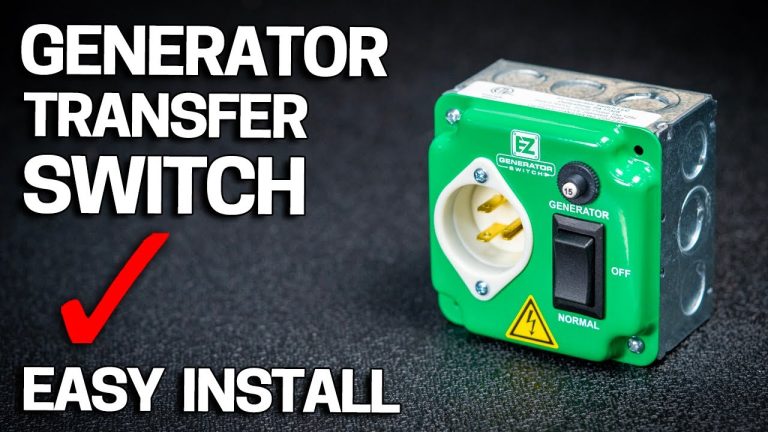
First things first: the stuff. You'll need a transfer switch. Shocking, I know. But not just any transfer switch. Get one that matches your generator's output and your house's needs. Think of it like finding the perfect dance partner. Awkward if they're not compatible.
Next, a generator. Duh. Preferably one that hasn't been sitting in your shed since the Carter administration. Unless you're into vintage generators. Then, rock on.
Don't forget the heavy-duty extension cord. This isn't your Christmas light cord. This is the Dwayne "The Rock" Johnson of extension cords. It needs to handle some serious amperage.
Tools? You'll need some. A screwdriver. Maybe a drill. Possibly a small nuclear reactor. Okay, maybe not the reactor. But definitely a screwdriver. And potentially some bandaids. Just saying.
The Dance of the Wires (Electrical Tango)
Here's where things get a little…electrifying. I highly recommend turning off the main breaker. This isn't a suggestion. This is a commandment. Thou shalt turn off the main breaker. Electricity bites, remember?
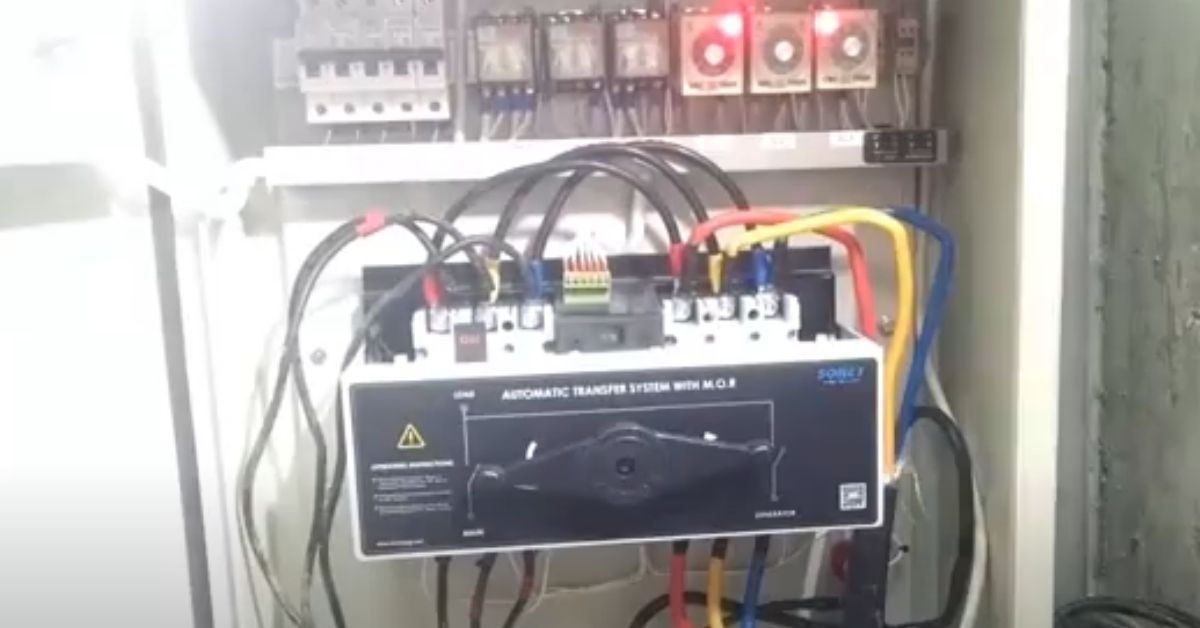
Now, find your breaker box. It's usually gray, metal, and lurking in your basement or garage like a grumpy metal beast. This is where the transfer switch will live. It's about to become the new king of the breaker box jungle.
Follow the instructions that came with your transfer switch. I know, I know. Reading instructions is for squares. But trust me on this one. Unless you enjoy the smell of burning wires and the feeling of regret, read the freaking instructions.
Usually, you'll be disconnecting some wires from your existing breakers and connecting them to the transfer switch. This is where that screwdriver comes in handy. Think of it like untangling Christmas lights, but with more voltage and less glitter.
Pro-tip: Label everything! Seriously. Label those wires like you're marking buried treasure. Future you will thank you. And past you will be a genius.
Connect the transfer switch to your main panel. Usually, there’s a knockout that you will remove from the main panel to connect the transfer switch with a nipple. Use appropriate sized connector for the nipple.
Mount the transfer switch to the wall with appropriate screws. You don't want the transfer switch to fall and damage any equipment.
Testing, Testing, 1, 2, 3…ZAP! (Hopefully Not)
Once everything is wired up, it's time to test. Turn on the generator. Flip the switch on the transfer switch. Observe what happens. Hopefully, lights turn on. If so, congratulations! You are a power wizard!
If nothing happens, or worse, if things start smoking, immediately turn everything off. Back away slowly. And call an electrician. Seriously. Don't be a hero. There's no shame in admitting defeat to electricity.
If all went well, you now have the ability to power select circuits in your house during a power outage. You can watch TV, keep your food cold, and charge your phone so you can post about how awesome you are on social media. It’s a win-win-win!
Remember, this is a simplified overview. Every installation is different. Every house is unique. So, read the instructions. Watch some videos. And if you're at all unsure, hire a professional. It's better to be safe than sorry. And definitely better than electrocuted.
You are ready to keep going even when the grid goes down. Good job, Einstein!