Ever looked at a battery and felt like you were staring at hieroglyphics? Don't worry, you're not alone! All those numbers and symbols can seem intimidating, but understanding one key value – Amp Hours (Ah) – is actually pretty straightforward. Think of it as the battery's stamina, its ability to keep going and going… and going, a bit like that energizer bunny… if he ran on electricity, that is.
Spotting the Amp Hours: It's Easier Than You Think!
Finding the Ah rating on a battery is usually as simple as playing "I Spy"…with numbers! It's almost always printed directly on the battery label. Look for "Ah," "Amp-Hr," or sometimes just "A." It might be followed by a number like 10Ah, 50Ah, or even 100Ah! This number tells you how much electric current the battery can deliver over a specific period.
Imagine you're buying a battery for your kid's ridiculously awesome ride-on monster truck (the one that makes the entire neighborhood tremble). You'll want to know how long that beast can rumble before needing a recharge, right? The higher the Ah rating, the longer the fun!
Where exactly should you be looking? Well, it’s like a treasure hunt! Check these usual suspects:
- The Main Label: This is the most obvious spot. It's usually the biggest and brightest label on the battery.
- Near the Terminals: Sometimes the Ah rating is sneakily printed near where you connect the wires.
- The Battery Casing: Look closely! The information might be molded directly into the plastic casing itself.
- The Fine Print: Okay, maybe not as fine as reading the back of a shampoo bottle, but sometimes it's tucked away in the smaller print.
Deciphering the Code: What Does It All Mean?
So, you've found the "Ah" number! Now what? Let's break it down with a simple (and slightly exaggerated) example.
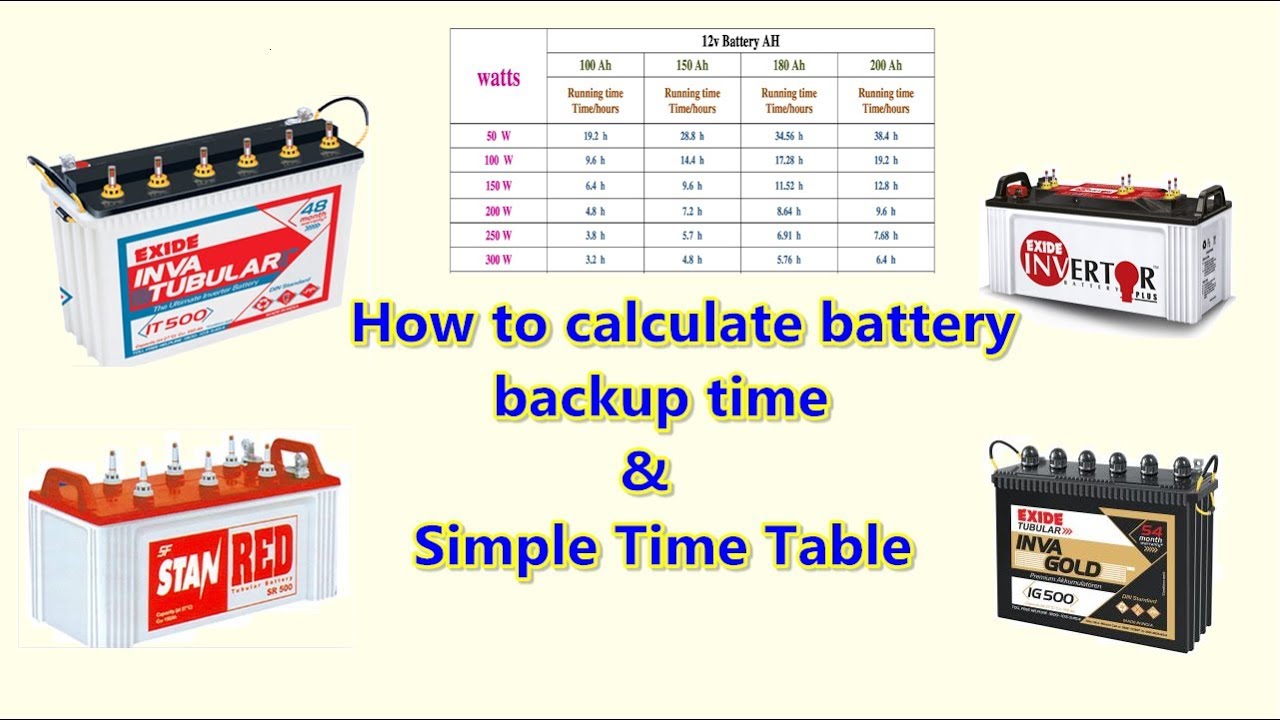
Let's say you have a 10Ah battery. This means, theoretically, it could deliver 1 amp of current for 10 hours. Or, it could deliver 2 amps of current for 5 hours. Or even 10 amps for 1 hour (though that would probably make it sweat a bit!).
Think of it like a water tank. The Ah rating is the size of the tank. The more water (or amp hours) you have, the longer you can run your sprinkler (or power your device).
Important Note: These are ideal scenarios. Real-world battery performance can be affected by factors like temperature, discharge rate, and the age of the battery. Batteries, like us, get a little tired as they get older.
What if You Can't Find the Ah Rating? Don't Panic!
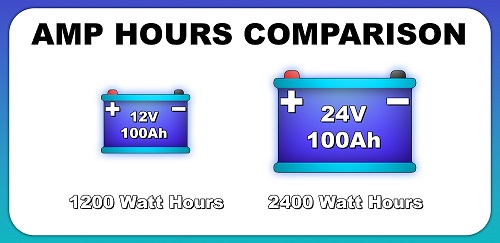
Sometimes, batteries play hard to get. If you can't find the Ah rating printed anywhere, don't despair! You might still be able to estimate it based on other information that is available, like the battery's voltage (V) and its watt-hour (Wh) rating.
The formula is simple: Ah = Wh / V
For example, if you have a 12V battery with a 60Wh rating, then the Ah rating would be 60Wh / 12V = 5Ah.
Of course, if you're still unsure, it's always a good idea to consult the battery's datasheet (if you have it) or contact the manufacturer. They'll be happy to help…or at least, that's what customer service is for!
So, there you have it! Finding the amp hours on a battery is no longer a mystery. Armed with this knowledge, you can confidently choose the right battery for your needs, whether it's powering your kid's monster truck, your camping lantern, or even a *very* sophisticated potato clock. Go forth and conquer the world of batteries!
Remember, understanding Amp Hours is like unlocking a secret code. You're now a battery whisperer, ready to make informed decisions and keep your gadgets humming along happily. Now go forth and impress your friends with your newfound battery knowledge!