Ever wondered why some metals are incredibly colorful while others are, well, more gray? Or why certain metals are amazing catalysts speeding up chemical reactions? A big part of the answer lies in something called valence electrons, and specifically, how we figure them out for those quirky characters on the periodic table: the transition metals.
Now, I know what you might be thinking: chemistry sounds complicated! But trust me, understanding valence electrons, even just a little bit, opens a window into the fascinating world of how atoms interact and form the stuff around us. It’s like understanding the basic ingredients and instructions for baking a cake; you might not become a master chef, but you'll appreciate the process a whole lot more.
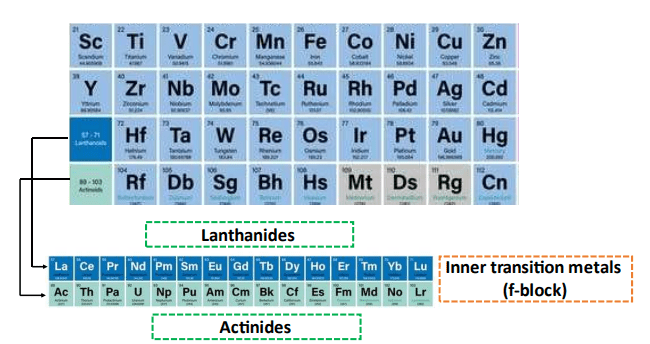
So, what's the big deal about valence electrons anyway? Simply put, they are the electrons in the outermost shell of an atom, and they are the main players in chemical bonding. They determine how an atom will interact with other atoms. For most elements, figuring out the number of valence electrons is pretty straightforward – just look at the group number on the periodic table! But transition metals, those guys in the middle of the table, are a bit different. They're more like the rebels of the electron world!
The purpose of determining valence electrons is to predict how an element will react and form compounds. Transition metals, in particular, often have multiple possible oxidation states, meaning they can lose different numbers of electrons depending on the situation. This flexibility is what makes them so useful in things like catalysis (speeding up reactions), forming alloys (mixtures of metals with enhanced properties), and, yes, creating those vibrant colors we see in paints, ceramics, and even gemstones.
For example, iron (Fe), a transition metal, can have valence states of +2 or +3. This allows it to form different compounds like iron(II) oxide (FeO) or iron(III) oxide (Fe₂O₃), also known as rust! Understanding these different states is crucial in fields like material science, where scientists design new materials with specific properties. In education, grasping valence electrons helps students predict the products of chemical reactions and understand the formation of chemical bonds.
Okay, so how do we actually figure out the valence electrons of a transition metal? The tricky part is that they can use both their outermost *s* and some of their *d* electrons for bonding. A simplified approach is to consider that they typically have two valence electrons from the *s* orbital, and then consider possible contributions from the *d* orbitals. Keep in mind that many transition metals can exhibit multiple oxidation states, meaning they can lose different numbers of electrons depending on the compound they form. Therefore, instead of pinpointing a single number of valence electrons, we identify their common oxidation states using their electron configurations and the compounds they form.
Here's a simple way to explore this: look up the common compounds of a particular transition metal, like copper (Cu) or manganese (Mn). Notice the different charges the metal ion can have (Cu+, Cu2+, Mn2+, Mn4+, etc.). Each charge corresponds to a different number of electrons lost, giving you clues about the possible valence states of that metal. You can also consult textbooks or online resources to find tables of common oxidation states for transition metals.
While it might seem a bit complex at first, remember that understanding the valence electrons of transition metals is like unlocking a secret code to the behavior of many fascinating materials around us. Don’t be afraid to dive in, explore, and let your curiosity guide you!