Okay, let's talk blown speakers. We've all been there. That moment when your favorite jam suddenly sounds…off.
Is it your ears? Is it the song? Nah, probably the speaker. But how do you *know* for sure? Let's dive in, shall we?
The Listening Test (aka, "Does it sound like garbage?")
First, crank it up. (Just kidding! Sort of.)
Play a song you know *really* well. I mean, the kind of song you could sing in your sleep. This is key.
Listen carefully. Does it sound distorted? Rattling? Like a swarm of angry bees got trapped inside?
Those are usually bad signs. Like, really bad signs. But don't panic yet!
Pay attention to the bass. Blown speakers often struggle with low frequencies. Is the bass weak or just plain muddy?
Try a different song. Sometimes it's just the recording. (I have some unpopular opinions about modern mixing techniques, but that's for another time.)
If everything sounds consistently awful, we're getting closer to a diagnosis.
The Scratch Test (aka, "Can you hear the future heartbreak?")
Okay, this one's a bit more hands-on. Gently push on the cone of the speaker.
Feel anything scratchy? Hear any scraping sounds? That's not a good sign, my friend. Not good at all.
This is like listening to your speaker slowly die.
It's a sonic horror movie, basically.
Be careful, though! Don't go poking and prodding like you're trying to disarm a bomb. Gentle pressure only!
If it feels smooth and moves freely, that's a better sign. Maybe your speaker is just having a bad day.
The Visual Inspection (aka, "Is that…a tear?")
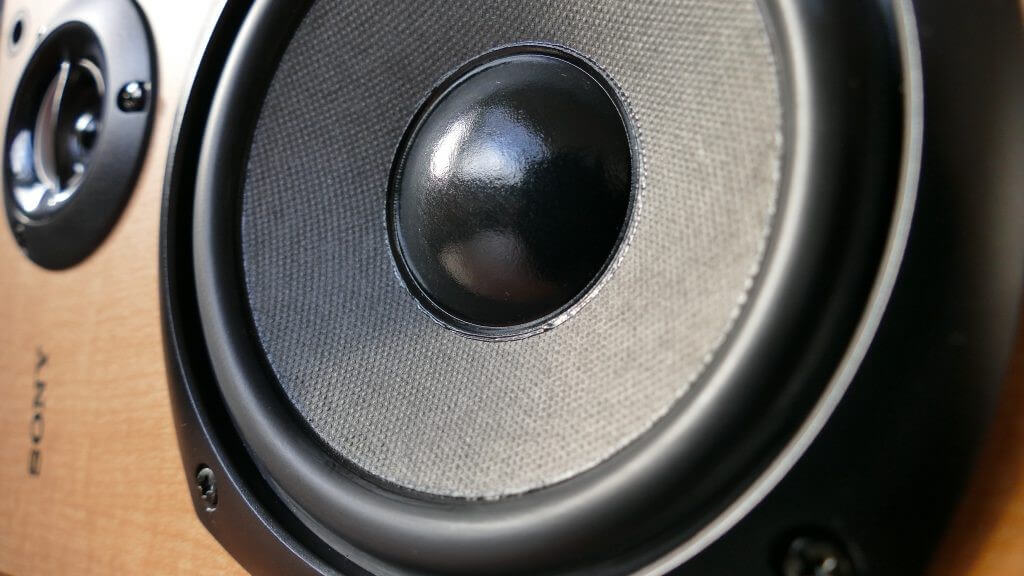
Time to get up close and personal. Grab a flashlight and take a good look at the speaker cone.
Look for any tears, rips, or holes. Even small ones can cause big problems.
Also, check the surround. That's the rubber or foam ring that connects the cone to the speaker frame.
Is it cracked? Crumbling? Detached? These are all signs of wear and tear, and potential trouble.
Sometimes, the damage is obvious. Like, "Oh, wow, there's a giant hole" obvious. Other times, it's more subtle.
Pay close attention to the edges. That's where the surround is most likely to fail.
The Smell Test (aka, "Does it smell like burnt toast?")
This one's a little unconventional, but hear me out. If you've been pushing your speakers hard, they might overheat.
And overheating can lead to a burnt smell. Like, electronics-on-fire kind of burnt smell. Not good.
If you detect a weird, acrid odor emanating from your speaker, that's a major red flag. Unplug it immediately!
Let it cool down completely before you try using it again. You might have just saved it from total destruction.
The Swap Test (aka, "Let's play musical speakers!")
This only works if you have a stereo system with two speakers. But it's a pretty reliable way to diagnose the problem.
Switch the left and right speakers. If the distortion follows the speaker, you've found the culprit. Bingo!
If the distortion stays on the same side, the problem is likely with your amplifier or another component.
This is a simple but effective troubleshooting technique. It's like a speaker version of "follow the bouncing ball."
Remember to turn off your system before you start messing with the wires. Safety first!
The Multimeter Test (aka, "Okay, things are getting serious")
This one requires a multimeter and a little bit of electrical knowledge. If you're not comfortable working with electronics, skip this step!
A multimeter can measure the resistance of your speaker. A healthy speaker will have a resistance close to its rated impedance (usually 4 or 8 ohms).
If the resistance is significantly higher or lower than expected, that could indicate a problem with the voice coil.
A reading of zero ohms usually means a short circuit. A reading of infinity means an open circuit. Neither is good.
There are tons of videos online that show you how to do this test safely and accurately. Use them!
This is probably the most technical method for testing a speaker, so be cautious and consult those videos.
So, Is It Blown? (The Unpopular Opinion)
Let's be honest. Sometimes, you just *know* a speaker is blown. You can feel it in your bones.
But even if you're not 100% sure, it's often better to err on the side of caution. Replace the speaker!
Why? Because pushing a damaged speaker can damage other components in your system. It's like a domino effect of audio doom.
Plus, life is too short to listen to bad sound. Treat yourself to a new speaker. You deserve it!
And here's the unpopular opinion: sometimes, even if the speaker *isn't* technically blown, it's still worth replacing. Maybe it's just old. Maybe you've outgrown it.
Maybe you just want something better. And that's perfectly okay! Don't let anyone tell you otherwise.
Preventing Future Speaker Blowouts (aka, "Don't be *that* guy")
So, how do you avoid this heartbreak in the future? Simple: be nice to your speakers!
Don't crank the volume up to 11. Your ears (and your neighbors) will thank you.
Make sure your amplifier is properly matched to your speakers. Don't overpower them.
Avoid playing heavily distorted music at high volumes. Distortion is a speaker's worst enemy.
And finally, give your speakers a break. They're not designed to run at full blast 24/7.
Treat your speakers with respect, and they'll reward you with years of glorious sound. Maybe.
Ultimately, *speaker health* depends on a complex interaction of factors. Still, don't lose hope!
Bonus Tip: The "Is It Worth Fixing?" Question
So, you've confirmed your speaker is blown. The next question is: is it worth fixing?
The answer depends on several factors. How expensive was the speaker to begin with? How difficult is it to replace?
Is it a rare or vintage speaker that's hard to find? If so, repair might be the best option.
But if it's a cheap, mass-produced speaker, it might be cheaper and easier to just buy a new one.
Do some research. Get quotes from repair shops. Weigh your options carefully.
And remember, sometimes the best solution is the simplest one. Don't overthink it!
After all, your time is valuable. Do you want to spend hours tinkering with a broken speaker, or would you rather be listening to music?
Final Thoughts (aka, "Go forth and listen!")
Checking if a speaker is blown doesn't have to be a daunting task. With a little patience and a few simple tests, you can diagnose the problem quickly and easily.
And remember, even if your speaker is blown, it's not the end of the world. It's just an opportunity to upgrade!
So go forth, my friends, and listen to some great music. Just try not to blow anything up in the process. And maybe, just maybe, consider my unpopular opinion about replacement being better than repair. You'll thank me later!