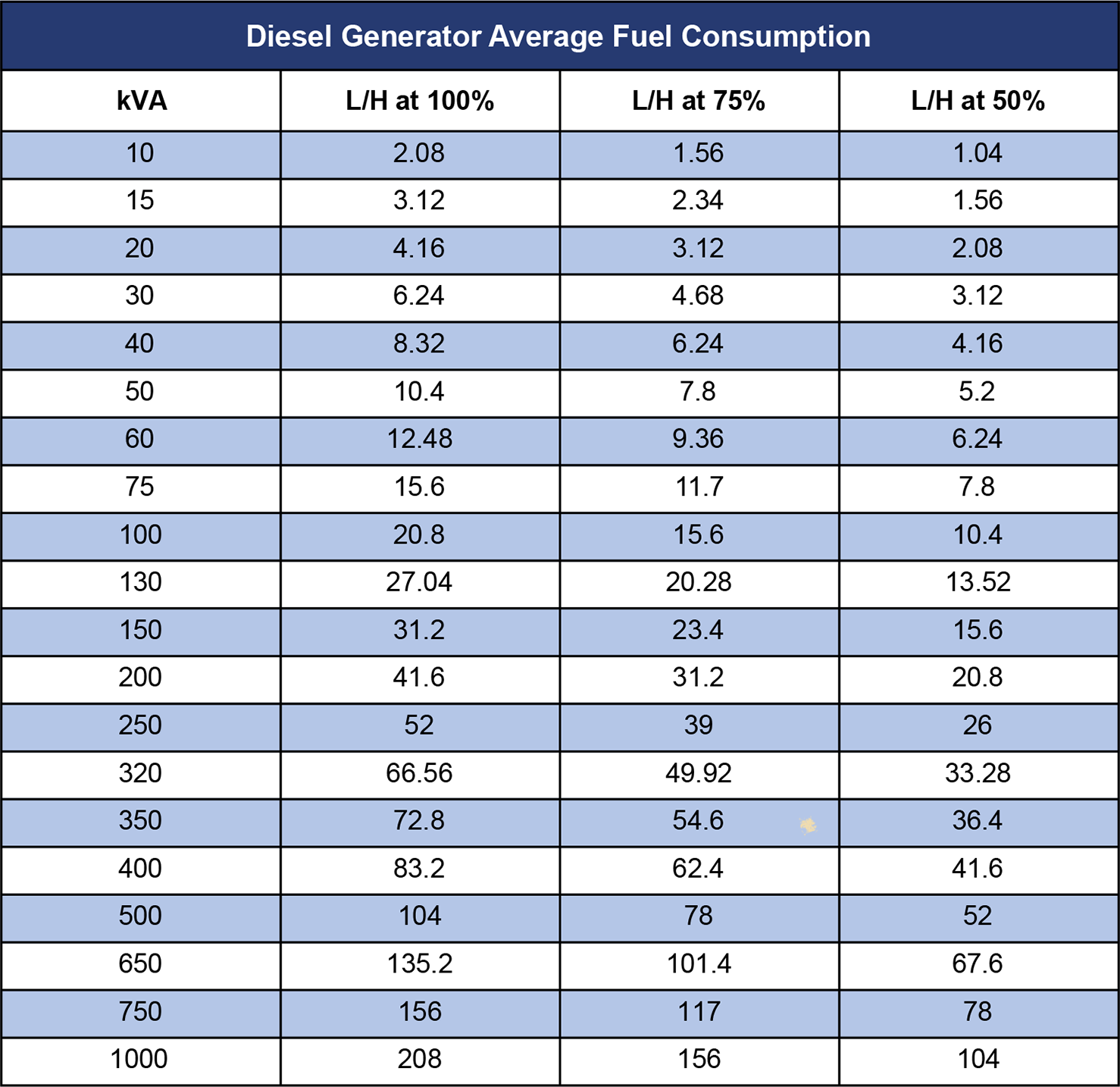
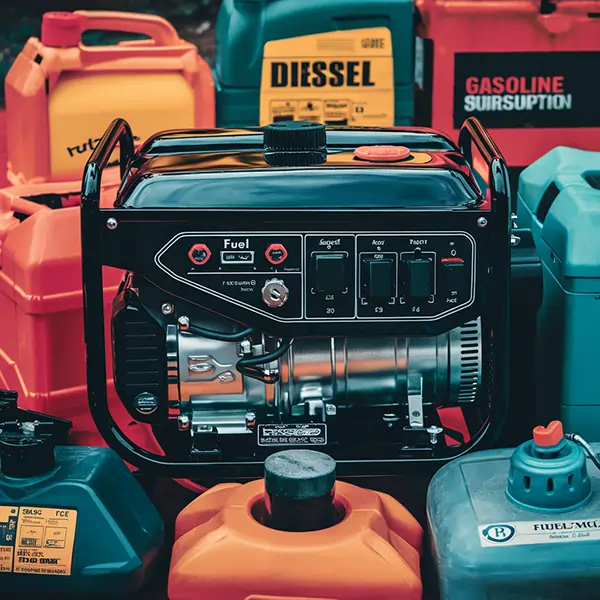
Alright, gather 'round, folks! Let's talk generators, those noisy, life-saving contraptions that kick in when the power company decides to take a nap. Ever wondered just how much liquid gold these things guzzle? Well, buckle up, because it's a bit like asking how long a piece of string is. It depends!
The Thirsty Beast: Understanding Fuel Consumption
Imagine your generator is a particularly thirsty houseguest. Some are polite, sipping daintily; others are, well, they treat your fuel tank like a bottomless mimosa brunch. We need to figure out what determines whether we're dealing with a polite sipper or a fuel-guzzling monster. There are two major determining factors: size and load.
Think of the size like the engine in a car. A tiny generator, the kind you might use for camping, isn't going to burn nearly as much fuel as a behemoth designed to power a small hospital. Smaller portable generators often use about 0.1-0.2 gallons of gasoline per kilowatt (kW) per hour. Think of it as a little hamster wheel of power generation, gently sipping its fuel.
Now, let's talk load. That's how much stuff you're asking the generator to power. Are you just running a lamp and charging your phone? That's like asking your houseguest to make a single cup of tea. Or are you running your entire house, including the air conditioner, the fridge, and your collection of lava lamps? Then you're demanding a full-on cocktail party with gourmet appetizers. The more you ask it to do, the more fuel it'll burn. Duh, right?
Fuel Types: A Chemical Comedy
Generators aren’t picky eaters. They can run on gasoline, propane, natural gas, or even diesel. Each fuel has its own quirky personality and fuel consumption rates. Gasoline, the most common, is like that excitable friend who burns bright but fades fast. Propane is like the reliable uncle, steady and predictable, but you need a big tank to keep him happy. Natural gas is the sophisticated cousin, plumbed directly into the house, but sometimes hard to get.
Here's a very, very rough idea (and I mean ROUGH) of what you might expect. Remember, this depends entirely on size, load, and the generator's mood that day:
- Gasoline: Small generator (1-3kW) might use 0.1-0.3 gallons per hour. A larger (5-7kW) one could easily gulp down 0.5-1 gallon per hour.
- Propane: Propane has less energy per gallon than gasoline, so expect to use more. Think about 0.2-0.4 gallons per hour for a small generator.
- Natural Gas: Consumption is measured in cubic feet per hour (CFH). A typical home generator might use 50-150 CFH.
These are just ballparks, folks. Don't bet your house on them. Always check your generator's manual for the official numbers. It's like reading the fine print on a rental car agreement – nobody wants to do it, but it's better than getting a surprise bill later.
The Great Generator Math-Off
So, how do you figure out how much fuel *your* generator will use? Get ready for some math! (Don't worry, it's not rocket surgery.)
- Find the generator's fuel consumption rate in the manual. This is usually given in gallons per hour at a certain load (e.g., half load, full load).
- Estimate your load. Add up the wattage of everything you plan to run on the generator. Remember to account for starting wattage, which can be much higher than running wattage for appliances like refrigerators. If you are unsure what the wattage is on an appliance, you can normally find it on the product lable or on the manufacturers website.
- Adjust for load. If you're only running at half load, your fuel consumption will be lower than the full-load rate.
- Prepare for the Zombie Apocalypse. Okay, maybe not, but it's smart to have extra fuel on hand. Nobody wants the lights to go out in the middle of their Netflix binge.
Let's say you have a 5kW generator that uses 0.7 gallons of gasoline per hour at full load. You're only running a fridge (500W), a few lights (100W), and charging your phone (5W). That's a tiny load, so you might only be using half the fuel. But still, plan for at least 0.35 gallons per hour. Better safe than sorry (and cold and dark!).
Pro Tips for Fuel Efficiency (and Saving Money!)
Want to squeeze every last drop of precious fuel from your generator? Here are a few tricks, short of hiring a tiny fuel-efficient elf to pedal inside the generator:
- Use energy-efficient appliances and lights. LED bulbs are your friend!
- Don't run everything at once. Stagger your usage.
- Keep your generator well-maintained. A tune-up can work wonders.
- Consider a dual-fuel generator. Propane is often cheaper than gasoline, and it stores better.
- Buy high quality fuel. Your generator will thank you for it.
So there you have it! A (hopefully) humorous and (somewhat) informative look at how much fuel generators use. Now you can impress your friends at the next power outage with your newfound knowledge. Just don't blame me if you run out of gas in the middle of the night. I told you to stock up!