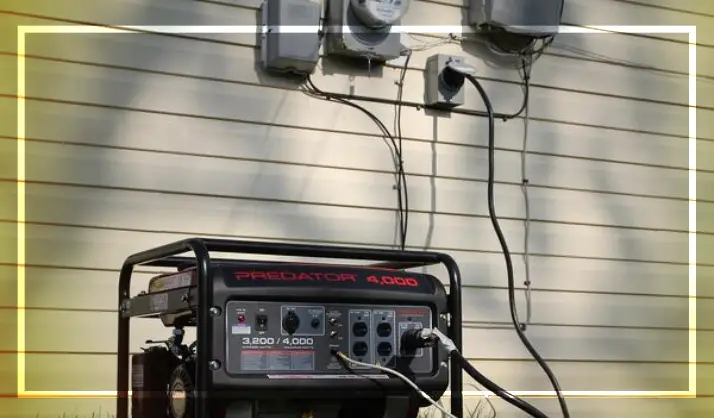
Ever been plunged into darkness mid-binge-watch? Yeah, me too. There's nothing quite like a power outage to remind you how reliant we are on electricity. But before you resign yourself to a candlelit existence every time the wind picks up, let's talk about a potential superhero for your home: a generator transfer switch.
Think of a generator transfer switch as a bouncer for your electrical panel. It's the gatekeeper that allows you to safely connect a portable generator to your home's wiring, powering essential appliances like your fridge (hello, ice cream!), furnace, or even a few strategically placed lights. Crucially, it prevents backfeeding power onto the grid, which is a major safety hazard and illegal.
The Million-Dollar Question: How Much Does This Savior Cost?
Okay, maybe not a million dollars. But understanding the cost involved is essential. The total price tag for a generator transfer switch installation breaks down into a few key areas:
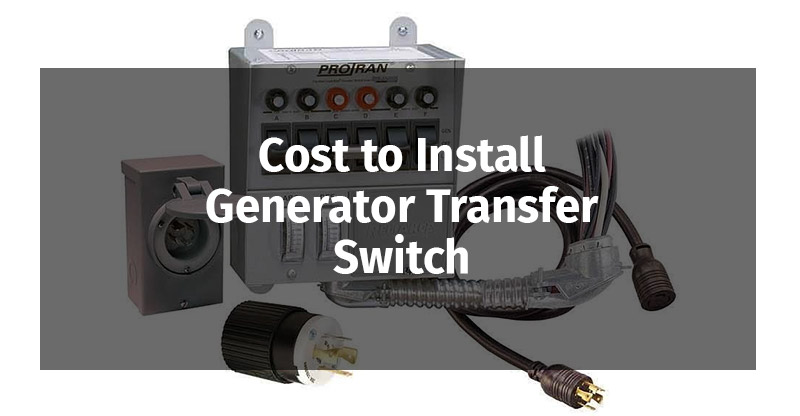
- The Transfer Switch Itself: This is the main component. Prices can range from around $200 for a basic manual switch to upwards of $1,000 or more for an automatic transfer switch (ATS). An ATS is basically a self-operating bouncer – it senses a power outage and automatically switches your home's power source to the generator. Think of it as the difference between having to manually unlock your front door versus having a smart lock that opens automatically when you approach.
- Installation Labor: This is where you'll likely see the biggest variation in cost. Hiring a licensed electrician is non-negotiable. This isn't a DIY project unless you're a qualified electrician yourself! Labor costs typically range from $300 to $800, depending on the complexity of the installation, your location, and the electrician's hourly rate. Get multiple quotes!
- Permits and Inspections: Many municipalities require permits for electrical work. Factor in the cost of the permit (usually around $50-$150) and any required inspections. This ensures the installation meets safety codes and regulations.
- Generator Inlet Box (Optional but Recommended): This is a weatherproof box mounted on the outside of your house that allows you to easily connect the generator's power cord. Expect to pay around $50-$100 for the box itself, plus installation.
In total, you're probably looking at a range of $550 to $2000 or more for a complete generator transfer switch installation. The specific cost will depend on the type of switch, the complexity of the wiring, and your local labor rates.
Pro Tips for Keeping Costs Down
Want to save a few bucks? Here are some tips:
- Get Multiple Quotes: Don't settle for the first electrician you find. Shop around and compare prices.
- Consider a Manual Transfer Switch: If you're comfortable manually switching the power source, a manual transfer switch is significantly cheaper than an ATS.
- Plan Ahead: Don't wait until a hurricane is bearing down on your town to schedule the installation. Electricians are likely to be booked solid and prices may be inflated during emergencies.
- Bundle Services: If you're planning other electrical work, see if you can bundle the transfer switch installation to get a better overall price.
The Automatic Choice: Is an ATS Worth the Extra Dough?
Automatic transfer switches are undeniably convenient. They kick in automatically, ensuring a seamless transition to generator power. This is particularly useful if you're not home during a power outage or if you have critical medical equipment that needs to stay running. However, they come with a higher price tag and may require more complex installation. Think about your specific needs and weigh the cost against the convenience.
A fun fact: Did you know that Thomas Edison's first power station in New York City only powered a single square mile? We've come a long way since then, but the underlying principle of reliable power remains crucial.
Safety First! Remember, dealing with electricity can be dangerous. Always hire a qualified, licensed electrician for any electrical work. This is not a place to cut corners.
Ultimately, the decision to install a generator transfer switch is a personal one. It's about weighing the cost against the peace of mind and convenience it provides. In a world increasingly dependent on electricity, having a backup plan can be a lifesaver (and a binge-watch saver!).
Think about it: How much is a night of uninterrupted sleep worth when a storm is raging outside? How much is it worth to know your fridge isn't slowly turning into a science experiment? Sometimes, the investment in a little security is worth more than we realize.