Ever wondered about those folks who keep ships running smoothly? The ones tinkering below deck, making sure your cruise vacation doesn't turn into a floating headache? They're marine engineers, and their jobs are surprisingly lucrative!
So, How Much Green Are We Talking?
Let's dive into the juicy details: the money. We're talking about a profession where knowing your way around a giant engine can translate into some serious financial rewards. Forget pirate treasure; this is real-world gold!
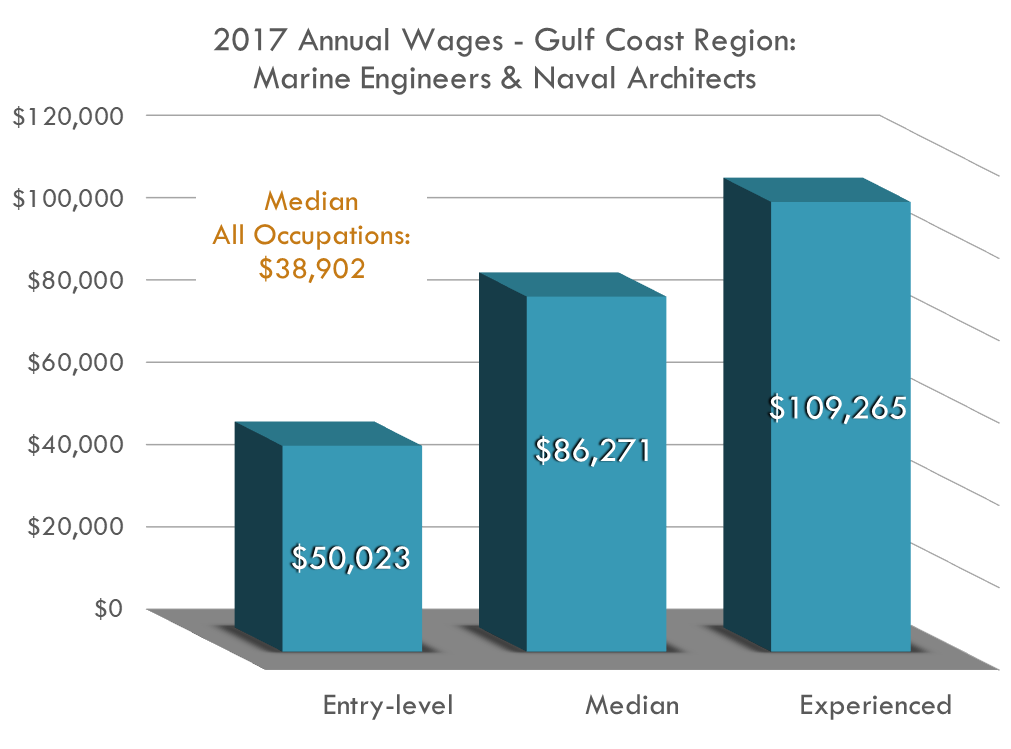
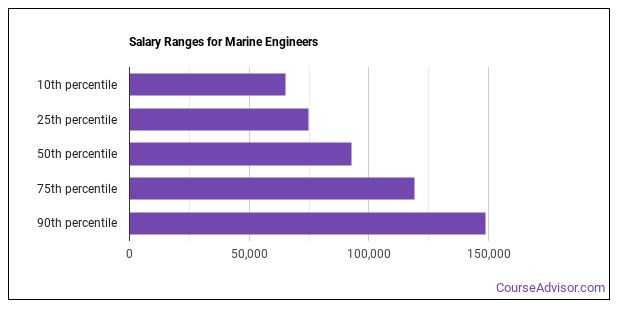
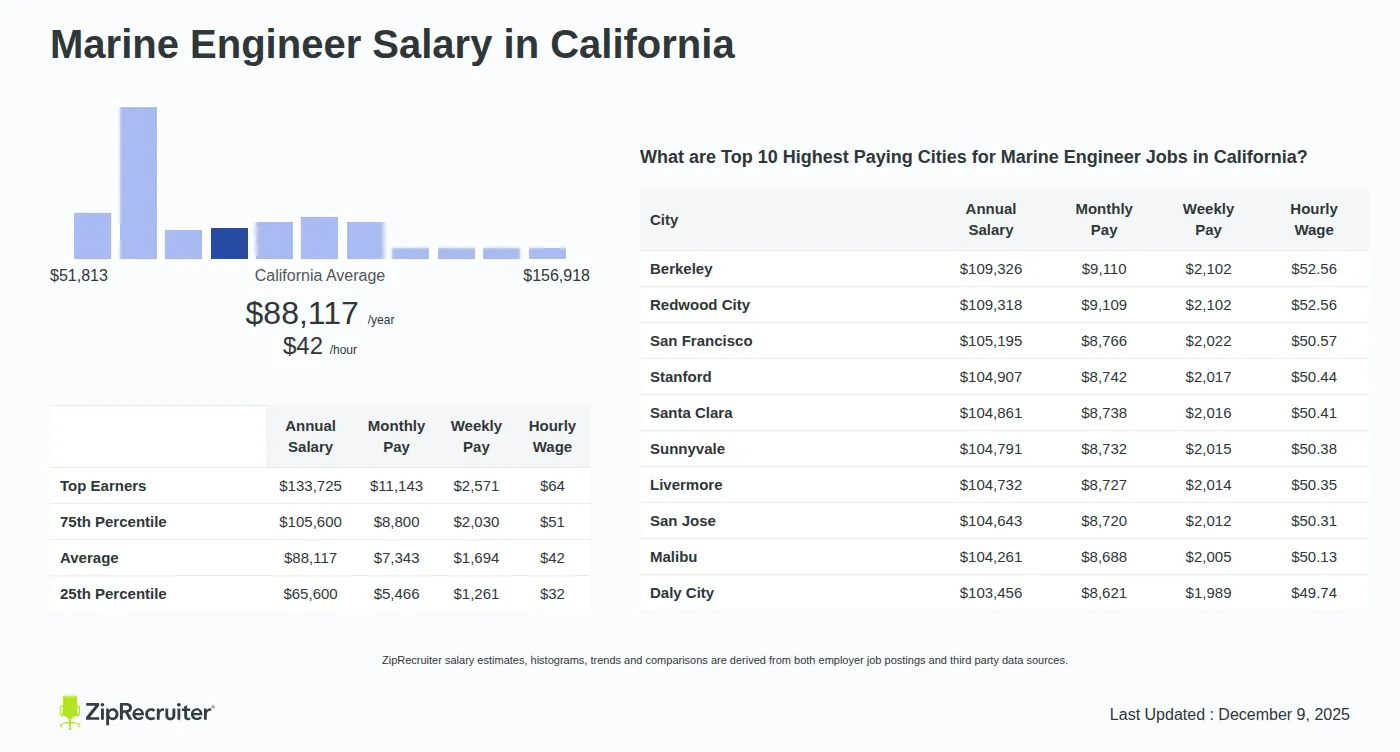
The average salary for a marine engineer in the United States floats (pun intended!) around $80,000 to $100,000 a year. Not bad, right? But hold on, because it gets even more interesting.
Factors That Influence the Paycheck
Just like figuring out the tides, several things affect how much a marine engineer actually pockets. Experience is a big one. The more voyages under your belt, the bigger the paycheck usually becomes.
Think of it as leveling up in a video game. Each year brings new skills and expertise, and your salary reflects that. Location matters too. Working on a ship in a remote area might pay more to compensate for the… lack of land-based entertainment.
Then there's the type of vessel. A cargo ship engineer might earn differently than someone maintaining a luxury yacht. Finally, your qualifications and certifications make a difference. The more you know, the more you're worth.
Experience: The Salty Sea Dog Effect
Imagine two marine engineers: a fresh-faced newbie just out of maritime academy and a grizzled veteran with decades of experience wrestling with massive engines. Who do you think gets paid more?
That veteran has likely encountered every possible engine problem imaginable. They can troubleshoot issues in their sleep. Naturally, their expertise commands a higher price tag.
Entry-level marine engineers can expect a more modest starting salary. However, with hard work, dedication, and continuous learning, their earning potential grows significantly.
Location, Location, Location! (At Sea!)
Where you're stationed can also play a role in your earnings. Some locations offer higher pay to attract skilled workers. This is especially true for remote or challenging environments.
Think about it: would you rather work on a cruise ship sailing the Caribbean or an oil tanker in the Arctic? The Arctic gig is probably going to pay more. You're braving icy conditions and potential polar bear encounters!
Also, different companies have different pay scales. A large multinational shipping company might offer more competitive salaries and benefits than a smaller, independent operation.
Vessel Type: From Tugs to Tankers
The type of vessel you're working on impacts your salary. Different ships have different complexities and demands.
A smaller tugboat might require less specialized knowledge than a massive container ship. Therefore, the engineer on the container ship will usually be more handsomely rewarded.
Luxury yachts are a unique case. While they might not be as complex as commercial vessels, they often require a higher level of service and attention to detail. The pay can be quite attractive, especially if you enjoy pampering millionaires' toys!
Certifications: Your Golden Tickets
Certifications are like badges of honor in the marine engineering world. They prove your competence and expertise in specific areas. They also directly translate to higher earning potential.
Think of it like having a black belt in engine repair. The more advanced your certifications, the more valuable you become. You demonstrate mastery of your craft, and employers are willing to pay for that expertise.
Some common certifications include those related to specific engine types, safety procedures, and environmental regulations. Continuous learning and staying up-to-date with the latest technologies are essential for career advancement.
Beyond the Base Salary: Perks and Benefits
The money's great, but it's not the only perk! Marine engineers often enjoy a range of benefits that sweeten the deal.
One of the most appealing aspects of this job is the travel. You get to see the world while getting paid. Talk about a dream job!
Many companies offer comprehensive health insurance, retirement plans, and paid time off. The specific benefits vary from company to company, so it's essential to do your research.
Room and Board (and Adventure!)
When you're working on a ship, your room and board are typically covered. This can save you a significant amount of money. It's like having a free floating apartment!
This also means you don't have to worry about grocery shopping or cooking. Your meals are provided. You can focus on your work and enjoy the occasional stunning sunset over the ocean.
Plus, the adventure! You're not just working; you're experiencing a unique lifestyle. You're part of a close-knit crew, navigating the world's oceans together.
How to Become a Marine Engineer (and Get Paid!)
So, you're intrigued? You're picturing yourself in a boiler suit, wrench in hand, conquering the high seas? Excellent!
The path to becoming a marine engineer typically involves a combination of education, training, and practical experience. Most marine engineers start with a degree from a maritime academy.
These academies offer specialized programs in marine engineering, naval architecture, and related fields. You'll learn everything from thermodynamics to electrical systems to ship design.
Maritime Academies: Your Launchpad to the Sea
Maritime academies provide a rigorous academic curriculum combined with hands-on training. You'll spend time in the classroom and the engine room. You will also get to experience life at sea.
Many academies require students to complete sea time as part of their program. This allows you to gain valuable practical experience and apply what you've learned in a real-world setting. It's like a super-intensive internship on a ship!
Graduating from a maritime academy is a significant accomplishment. It opens doors to exciting career opportunities.
On-the-Job Training: Learning the Ropes (Literally!)
After graduation, you'll typically begin your career as an entry-level engineer. You'll work under the supervision of experienced professionals.
This is where you truly learn the ropes (and the pipes and the circuits!). You'll gain practical skills and develop your problem-solving abilities. You will also build valuable connections within the industry.
Continuous learning is crucial in this field. Technology is constantly evolving, so you need to stay up-to-date with the latest advancements.
Is Marine Engineering Right for You?
Okay, let's be honest. This job isn't for everyone. It requires a unique combination of technical skills, physical stamina, and a love for the sea.
You need to be comfortable working in confined spaces. You should also be able to handle the demands of a seagoing lifestyle. Long stretches away from home and family are common.
But if you're a problem-solver, a team player, and you're drawn to adventure, marine engineering might be your calling. Plus, the financial rewards are pretty darn appealing!
The Thrill of the Unknown (and the Known Engines!)
There's a certain thrill to being responsible for keeping a massive vessel running smoothly. You're a vital part of the operation.
You're also part of a long and proud tradition of seafaring professionals. You're following in the footsteps of legendary explorers and innovators.
So, if you're looking for a challenging, rewarding, and well-compensated career, consider the world of marine engineering. It might just be the adventure you've been searching for. Who knows, you might just find yourself saying "Aye, Aye Captain!" to a new and exciting career path.