Okay, buckle up, buttercup! We're diving into the dazzling world of LED light bulbs and their sneaky little secret weapon: watts! Don't worry, it's way less intimidating than it sounds, promise!
Think of watts as the amount of energy a light bulb drinks to produce that glorious glow. The higher the watts, the more energy it guzzles.
The Watt's Up, Doc? of LED Bulbs
Now, forget everything you thought you knew about light bulbs! Remember those old-school incandescent bulbs? They were like energy-guzzling dinosaurs, needing a ton of watts to shine even a little bit.
LEDs, or Light Emitting Diodes, are the sleek, energy-efficient superheroes of the lighting world. They're like tiny, efficient disco dancers, putting out a lot of light with very little energy.
So, how many watts are we talking about? Well, it depends! But that's the fun part, right?
Decoding the LED Wattage Mystery
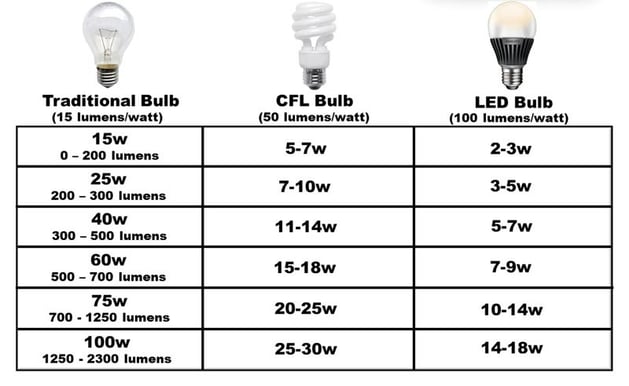
Here's the exciting part: An LED bulb doesn't need a huge wattage to be bright. In fact, it's downright stingy! Think of it like this: An LED bulb can produce the same amount of light as an old 60-watt incandescent bulb, but only use around 8-12 watts.
That's right, you could power several LED bulbs with the same energy it took to power one of those ancient energy hogs. Imagine the possibilities! Think of all the energy you could save!
It's like trading in a gas-guzzling monster truck for a super-efficient electric scooter.
The "Equivalent" Wattage Game
To make things even easier (and maybe a little confusing), light bulb packaging often uses something called "equivalent wattage." This is where things get a tad tricky, but stick with me.
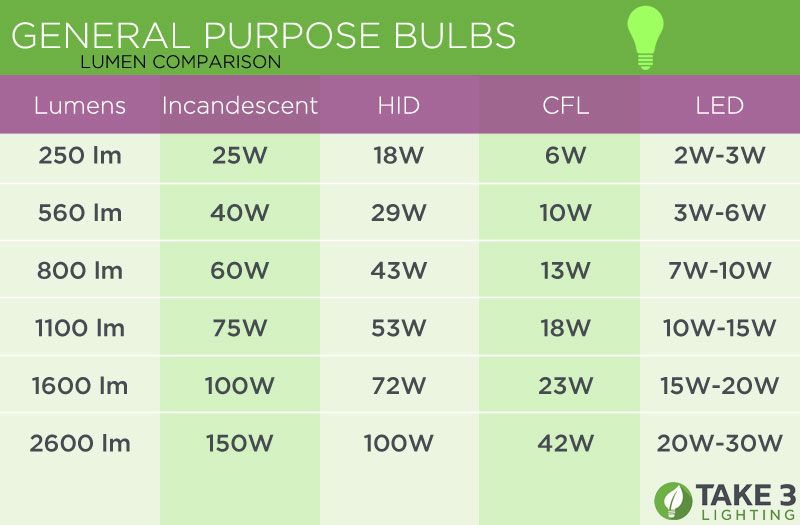
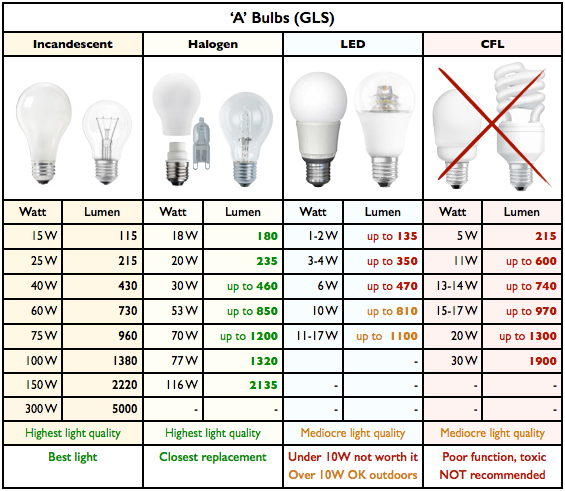
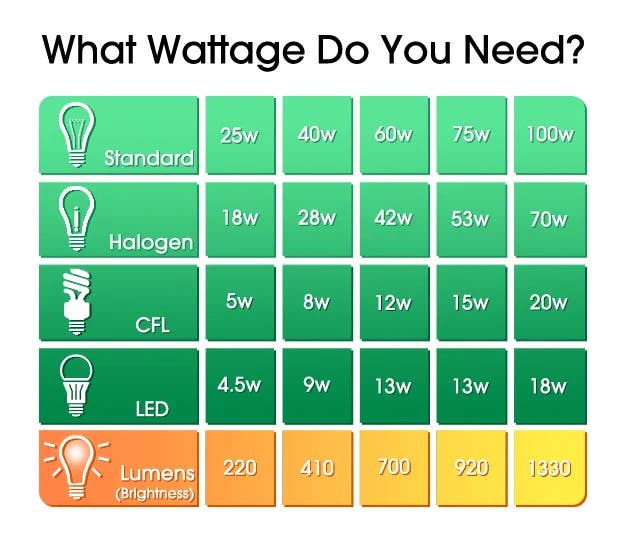
This "equivalent wattage" tells you how bright an LED bulb is compared to an old incandescent bulb. So, an LED bulb might say "60-watt equivalent," even though it only uses 8-12 watts.
Basically, it means the LED bulb shines just as bright as a 60-watt incandescent, but saves you a bundle on your electricity bill.
Examples, Examples, Glorious Examples!
Let's get specific. Here are some typical LED wattage equivalents (remember, these are approximate, so check the packaging!):
A 40-watt incandescent equivalent might be around 5-7 watts LED.
A 60-watt incandescent equivalent could be 8-12 watts LED.
A 75-watt incandescent equivalent could be 10-15 watts LED.
And a 100-watt incandescent equivalent could be 13-20 watts LED.
See the pattern? LEDs are seriously efficient!
Lumens: The Real Brightness Boss
While watts tell you how much energy a bulb uses, lumens tell you how bright it is. Think of lumens as the actual amount of light being emitted.
The higher the lumens, the brighter the bulb. So, when you're shopping for LED bulbs, pay attention to the lumens, not just the wattage.
You want a bulb that delivers the brightness you need, without sucking up a ton of energy.
Wattage and Your Wallet: A Love Story
Let's talk money! Switching to LEDs is like giving your wallet a big, warm hug. They use so much less energy than incandescent bulbs, which means lower electricity bills.
Over the lifespan of an LED bulb, you could save serious cash. Think of it as finding free money hidden in your light fixtures!
Plus, LED bulbs last way longer than incandescent bulbs, so you won't have to replace them as often. Less trips to the store, more money in your pocket!
Debunking LED Myths: Watt's Not to Like?
Some people still think LEDs are too expensive. But guess what? The initial cost is usually offset by the long lifespan and energy savings.
It's like investing in a really good pair of shoes. They might cost more upfront, but they'll last longer and save you money in the long run.
Plus, LEDs come in all sorts of colors and styles now. You can find the perfect LED bulb to match any room in your house.
Choosing the Right LED Wattage: A Quick Guide
Okay, so how do you choose the right LED wattage for your needs? Here are a few quick tips:
For lamps and accent lighting, a lower wattage (and lower lumen) LED bulb might be perfect.
For reading nooks or desk lamps, you might want a medium wattage (and medium lumen) LED bulb.
For kitchens or bathrooms, where you need bright, even lighting, a higher wattage (and higher lumen) LED bulb is usually best.
Don't be afraid to experiment! Try different wattages and lumen levels to see what works best for you.
The Future is Bright (and Energy-Efficient!)
LED lighting is the future, my friends. It's energy-efficient, long-lasting, and it saves you money. What's not to love?
So, next time you're shopping for light bulbs, ditch those old energy hogs and embrace the power of LEDs. Your wallet (and the planet) will thank you!
Go forth and illuminate! Now you know the watt's what! Remember to always check the packaging and make sure the lumens meet your desired brightness!