Ever wondered how much power your stuff uses? Let's talk about watts, amps, and circuits! Think of it as a power party in your walls.
What's an Amp Anyway?
Amps are like the **amount of electricity** flowing through a wire. Imagine a river of electrons! A 15 amp circuit is like a pipe that can handle 15 "electron gallons" flowing per second.
More amps mean more electron-juice! It's the flow rate of electrical current.
The Watt: Power's Unit
Watts are the **unit of power**. It's how we measure the rate at which energy is used. Your light bulb glows thanks to watts.
The higher the wattage, the brighter the bulb, usually! A power hungry appliance like an electric heater uses a lot of watts.
The Magical Formula: Volts, Amps, and Watts!
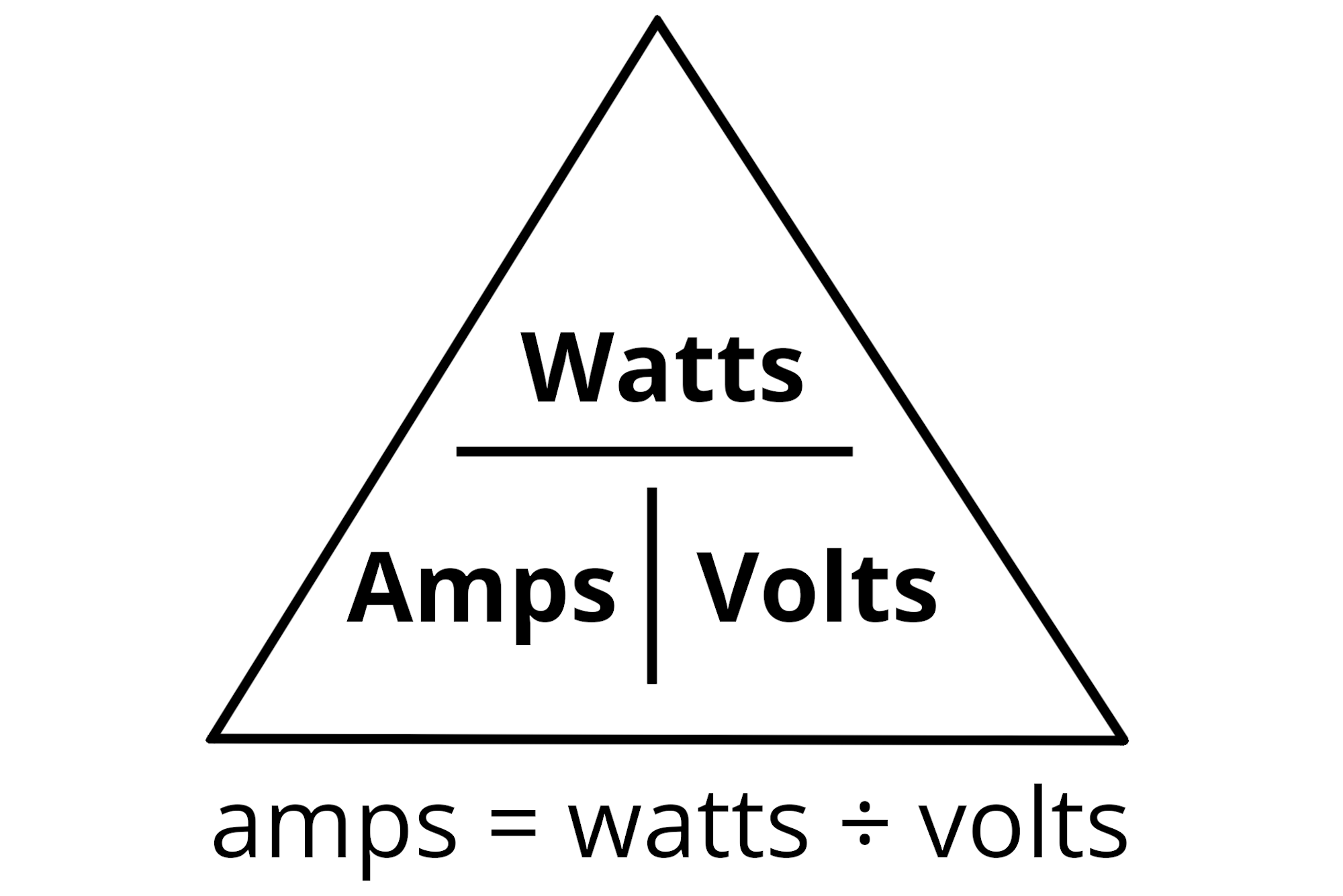
Here comes the secret formula: Watts = Volts x Amps. Keep this formula and your electrical life will be easy!
It's the golden ticket to understanding power. We'll break it down, don't worry.
Volts: The Electrical Push
Volts are the electrical "push" behind the amps. It is like the water pressure in the pipe.
In most homes in the US, the voltage is around 120 volts. Other countries may vary.
Doing the Math!
So, for a 15 amp circuit at 120 volts, we get: Watts = 120 volts x 15 amps. Calculating this will let you know if you can plug something in.
Grab your calculator! Or just keep reading; we'll do it for you.
How Many Watts Can a 15 Amp Circuit Handle?
Drumroll, please… A 15 amp circuit at 120 volts can handle 1800 watts! That's right, 120 x 15 = 1800. This is an important number to remember!
This number determines how many devices you can safely plug into that circuit. Be careful when plugging items in.
Why 1800 Watts Matters
Knowing the wattage limit helps you avoid tripping the breaker. Breakers protect your wiring from overheating.
Imagine overloading a circuit like trying to force too much water through a pipe! The breaker trips to prevent electrical fires. Safety first!
What Can You Plug In?
Think about your appliances! A hair dryer might use 1500 watts. A lamp could use 60 watts.
You can usually find the wattage on the appliance label. Add up the wattages of everything plugged into the circuit to stay safe.
Examples of Appliance Wattage
A microwave might use 1000 watts. A refrigerator could use 150-200 watts (running). A TV? Maybe 100-200 watts.
Remember, these are just estimates! Always check the label on your appliance for the most accurate information.
Staying Under the Limit
Let's say you have a 1200-watt hair dryer and a 300-watt lamp. That's 1500 watts total.
You're still under the 1800-watt limit! But add a 600-watt space heater, and you're in trouble (1200 + 300 + 600 = 2100). The breaker might trip!
What Happens If You Overload a Circuit?
Overloading a circuit is like a power surge party gone wrong! The breaker trips, cutting off the electricity.
This is a safety mechanism to prevent fires! Don't ignore a tripped breaker. It's telling you something.
What to Do When the Breaker Trips
First, unplug some appliances on that circuit. Then, find your breaker box. It is important to locate your breaker box.
Flip the breaker back to the "on" position. If it trips again immediately, you're still overloading the circuit.
More About Circuit Breakers
Circuit breakers are your electrical superheroes! They protect your home from electrical fires.
Think of them as tiny guardians watching over your wiring. A breaker is an inexpensive price to pay for the protection.
Different Types of Circuits
Not all circuits are created equal! Some handle more power than others.
For example, a 20 amp circuit can handle more watts than a 15 amp circuit. Some outlets for stoves and clothes dryers are even more powerful.
Heavy-Duty Appliances
Large appliances like refrigerators, washing machines, and electric stoves often have their own dedicated circuits. These appliances use lots of power.
Dedicated circuits prevent overloading other circuits in your home! It's all about spreading the electrical load.
Safety First! Electrical Tips
Never overload extension cords! They can overheat and cause fires. Extension cords are for temporary use only.
Use appliances with a UL (Underwriters Laboratories) listing. This means they've been tested for safety. Always practice electrical safety.
When to Call a Professional
If you're unsure about your electrical system, call an electrician. They are the experts!
Don't mess with electricity if you're not comfortable. Electricity is dangerous. If in doubt, call a professional!
Understanding Your Electrical Panel
Your electrical panel is the brain of your home's electrical system. Each breaker controls a different circuit.
Familiarize yourself with your panel! It's helpful to label each breaker so you know what it controls.
The Importance of Grounding
Grounding provides a safe path for electricity in case of a fault. Most outlets have a ground.
It helps prevent electrical shocks! Ensure your outlets are properly grounded.
GFCI Outlets: Extra Protection
GFCI (Ground Fault Circuit Interrupter) outlets are often found in bathrooms and kitchens. These outlets are by sinks and water sources.
They quickly shut off power if they detect a ground fault. GFCI outlets provide extra protection against electrical shock.
Saving Energy and Money
Use energy-efficient appliances and light bulbs. This will reduce your energy consumption.
Look for the Energy Star label! Energy efficient options can save you money on your electricity bill.
Phantom Loads
Many electronics consume power even when they're turned off. This is called a "phantom load."
Unplug devices when you're not using them! Or use a power strip with an on/off switch.
Smart Home Technology
Smart home devices can help you monitor and control your energy usage. Smart home systems can help make life easier.
Some smart plugs even track how much energy your appliances are using!
Watts and Your Electricity Bill
Your electricity bill is based on how many kilowatt-hours (kWh) you use. A kilowatt is 1000 watts.
Understanding watts can help you understand your electricity bill! Keep this in mind as you try to use less power.
The Future of Electricity
Electricity is constantly evolving! Renewable energy sources like solar and wind are becoming more common.
The future is bright (and powered by electricity)! Solar power is one of the most popular alternatives.
Recap: 15 Amps and 1800 Watts
So, remember: a 15 amp circuit at 120 volts can handle 1800 watts. Stay safe, don't overload circuits, and have fun with electricity!
Understanding this helps prevent tripped breakers and electrical hazards. Now you are a power pro!
One Last Thing
Electricity is powerful and can be dangerous. Always exercise caution and consult a qualified electrician when needed. Be careful when working with electric components.
Stay safe and keep the power flowing! Now go impress your friends with your newfound electrical knowledge.