Okay, so you're thinking about cooling down your place, maybe upgrading your AC, and you've heard the term "2-ton AC unit." But what does that really mean? And more importantly, how much electricity is that hungry beast going to gobble up? Let's break it down in a way that won't make your eyes glaze over.
Tons of Cooling, Ounces of Understanding
First, the "ton" thing. It's not about the actual weight of the unit. Back in the day, before we had fancy BTU ratings, a "ton" of cooling was how much energy it took to melt a ton of ice in 24 hours. Yep, that's where it comes from! So, a 2-ton AC can remove twice the heat as a 1-ton unit in the same amount of time. Think of it like this: a 1-ton AC is like a small glass of lemonade on a hot day, while a 2-ton AC is like a whole pitcher – much more refreshing!
The Wattage Whirlwind: How Many Watts Are We Talking?
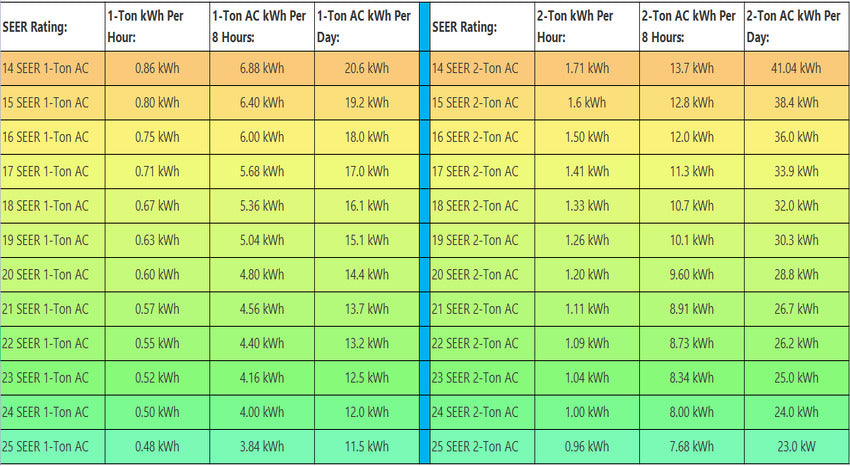
Now, the burning question: how many watts does a 2-ton AC use? The short answer is, it depends. But a good ballpark figure for a standard 2-ton AC unit is somewhere between 1500 and 2000 watts.
Think of a lightbulb. A regular incandescent lightbulb used to be about 60 watts. So, running a 2-ton AC is like having about 25-33 of those old-school lightbulbs burning all at once. Ouch! See why it's good to know?
But hold on! It's not always that bad. Newer, more efficient AC units, especially those with a high SEER rating (Seasonal Energy Efficiency Ratio – we’ll get to that later), can use significantly fewer watts. They're like the LED lightbulbs of the AC world – much brighter, but use way less power.
Why Should You Even Care?
Okay, so maybe you're thinking, "Watts? Tons? Who cares!" Well, you should care because it directly impacts your wallet! The more watts your AC uses, the higher your electricity bill will be. Nobody wants that surprise when the bill arrives, right?
Imagine this: you're hosting a summer barbecue, the sun is blazing, and your AC is working overtime to keep everyone cool. Without knowing how much energy your AC is using, you might be in for a shocking electricity bill at the end of the month. Knowing the wattage helps you budget and be more mindful of your energy consumption.
The SEER Secret: Decoding Efficiency
Remember that SEER rating we mentioned earlier? This is where things get interesting. The SEER rating tells you how energy-efficient your AC is. The higher the SEER rating, the more efficient the unit, and the fewer watts it will use to cool your space.
Think of it like buying a car. A gas-guzzling SUV will cost you a fortune in fuel, while a hybrid will save you money in the long run. Similarly, an AC with a low SEER rating will drain your bank account, while one with a high SEER rating will be much kinder to your wallet.
So, when shopping for a 2-ton AC, always check the SEER rating. Look for models with a SEER of 16 or higher for maximum energy savings. It might cost a bit more upfront, but you'll save money in the long run.
Factors That Influence Wattage
Beyond the SEER rating, several other factors can influence how many watts your 2-ton AC uses:
- The age of the unit: Older AC units tend to be less efficient than newer models.
- The size of your home: If your AC is too small for your space, it will have to work harder and use more energy.
- The insulation in your home: Poor insulation will cause your AC to work harder to maintain a comfortable temperature.
- The climate you live in: Hotter climates will require your AC to run more often, increasing energy consumption.
- Maintenance: A dirty air filter or clogged coils can make your AC work harder.
Think of your AC like your car. If you don't change the oil or get regular tune-ups, it won't run as efficiently and will eventually break down. The same goes for your AC. Regular maintenance, like cleaning the air filter and scheduling professional check-ups, can help keep it running smoothly and efficiently.
Simple Ways to Save Energy (and Money!)
Okay, so now you know how many watts your 2-ton AC might be using and why it matters. But what can you do about it? Here are a few simple tips to save energy and money:
- Use a programmable thermostat: Set it to raise the temperature when you're not home or when you're sleeping.
- Close your curtains and blinds: This will help block out the sun and keep your home cooler.
- Use fans: Ceiling fans and portable fans can help circulate air and make your AC more effective.
- Seal any leaks around windows and doors: This will prevent cool air from escaping and warm air from entering.
- Schedule regular maintenance: Clean the air filter and have your AC unit professionally inspected at least once a year.
Think of it like this: every little bit helps! Even small changes can make a big difference in your energy consumption and your electricity bill.
The Bottom Line
Understanding how many watts your 2-ton AC uses is essential for managing your energy consumption and keeping your electricity bill under control. By choosing an energy-efficient unit, practicing good maintenance, and implementing simple energy-saving tips, you can stay cool and comfortable all summer long without breaking the bank. So go forth and conquer that summer heat, armed with your newfound knowledge!