Alright, settle in, grab your metaphorical coffee, because we’re about to tackle a question that’s shocked (pun intended) more people than a cat encountering a cucumber: How many volts does an outlet have? It's not as simple as shouting "One million!" and running for the hills, though I admire the enthusiasm.
Think of your electrical outlets like little energy faucets. You plug in your phone charger, your toaster oven, your disco ball (because who doesn't need a disco ball?), and they all happily slurp up the electricity. But how much juice are we talking about?
The American Standard: 120 Volts-ish
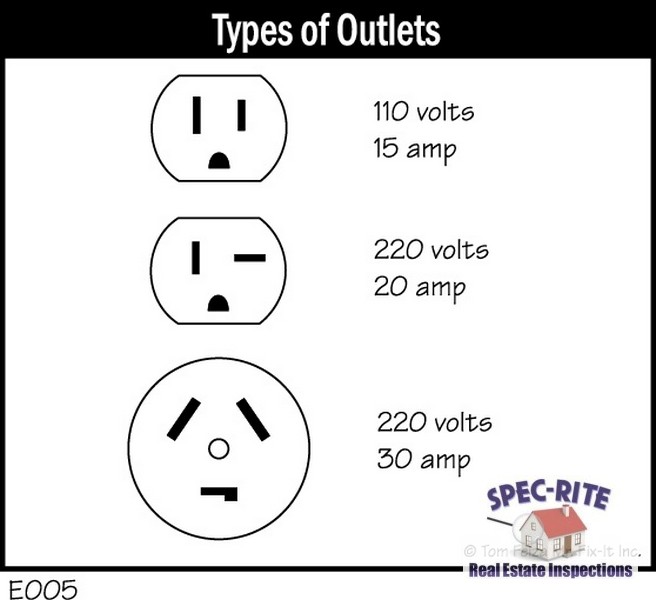
In the good ol' US of A, the standard voltage for most outlets is around 120 volts. Emphasis on the "ish." It can fluctuate a bit, like my mood before my morning coffee. Sometimes it might be a tad higher, sometimes a tad lower. Think of it like ordering a medium latte – sometimes you get a generous pour, sometimes they're a little stingy with the foam.
This 120 volts is what powers most of your everyday appliances. Your lamps, your blenders, your electric toothbrush that makes you feel like you're at the dentist every morning – all running on that sweet, sweet 120V energy. It's the backbone of our electrically powered existence.
Now, some of you might be thinking, "Wait, I thought I heard something about 240 volts somewhere!" And you’d be right! You're not just imagining things, unless you’ve been spending too much time staring directly at light bulbs (don’t do that!).
The Heavy Hitters: 240 Volts
For appliances that need a serious jolt of power – the kind that would make even Thor blush – we're talking 240 volts. These are the big boys: your electric ovens, your clothes dryers, your air conditioners that can turn your living room into the Arctic in five minutes flat. They're like the weightlifters of the appliance world, needing a bigger energy snack to do their thing.
You'll usually find these outlets looking a little different. They’re often shaped differently, with a different number of prongs. This is a *very* good thing, because accidentally plugging your phone charger into a 240V outlet is a quick way to turn it into a very expensive, very small paperweight. Don't try this at home... or anywhere, really.
Think of it like this: 120V is like ordering a single shot of espresso, while 240V is like ordering a triple shot with a Red Bull chaser. You need that extra kick for the heavy lifting.
Around the World in Volt Days
Now, before you pack your American appliances for that dream vacation to Europe, there's a little something you need to know: the rest of the world doesn't necessarily do things our way. Many countries operate on 220-240 volts as their standard. So, that beloved hairdryer you depend on might not work, or worse, could go "poof" in a cloud of smoke. Always check the voltage requirements before plugging anything in overseas. Unless you enjoy the smell of burning electronics, that is.
That’s where voltage converters come in. They're like tiny translators for electricity, converting the local voltage to something your appliance can handle. Think of them as the Rosetta Stone of the electrical world.
Safety First, Friends!
Okay, I know electricity is exciting (I’m saying that ironically), but it's also seriously dangerous. Don't go poking around inside outlets with a fork, no matter how tempting it might be to prove a point. Electricity isn't something to mess with. If you're not sure about something, call a qualified electrician. They’re the superheroes of the electrical world, except instead of capes, they wear tool belts and carry voltmeters.
And one last thing: always use surge protectors. They're like bodyguards for your electronics, protecting them from power surges that can fry them faster than you can say "Oops!" Seriously, spend the extra few bucks. Your electronics (and your wallet) will thank you.
So, there you have it. A (hopefully) entertaining and informative look at the voltage in your outlets. Now go forth and power all the things, responsibly of course! And maybe lay off the disco ball for a bit... your neighbors are starting to complain.