Ever wonder how many types of metal are actually out there? Seriously, it's a rabbit hole of shiny, clangy goodness! We're not just talking gold and silver here, folks. Buckle up!
Metals, Metals Everywhere!
So, what's the *actual* number? Prepare for a bit of wiggle room. Scientists generally agree that there are around 95 naturally occurring elements that can be classified as metals. Yeah, 95! That’s a lot of potentially head-banging material!
But wait! It gets even cooler (and a little more complicated). This number doesn't include those elements *created* in labs. We're talking the synthetic metals! Those are the rebel metal kids. Adding them increases the count a bit.
Think about it: each of those 95 (ish) elements can also be combined to form *alloys*. An alloy is basically a metal mixture. Like making a metal smoothie. Suddenly, the possibilities explode!
Bottom line: giving an exact number is tricky! But let's just say there are hundreds, maybe even thousands, of different types of metal when you factor in alloys. That’s metal mania!
A Quick Metal Cheat Sheet
Okay, okay. 95ish metals is cool and all, but who can name them all? Don't sweat it! Here's a super-simplified rundown of some *major* metal families.
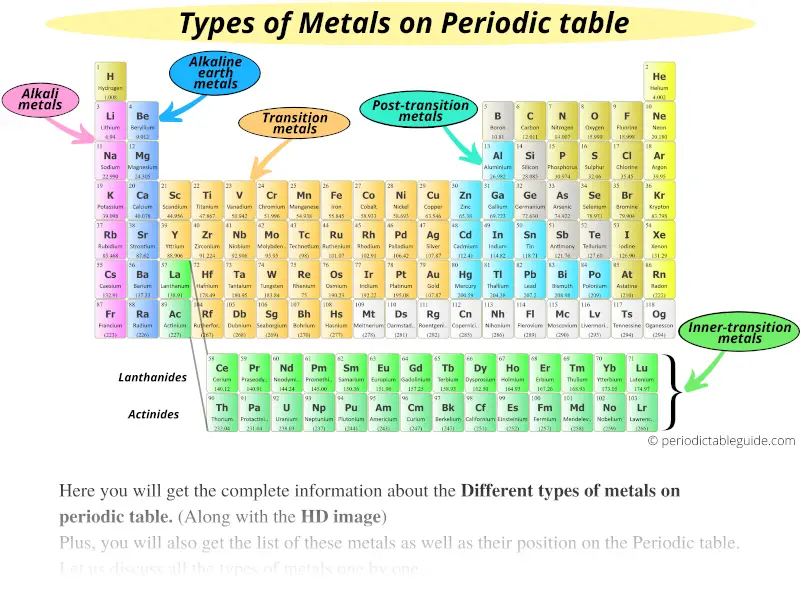
Alkali Metals: Super reactive! Think sodium and potassium. These guys are so eager to react they are never found in their pure form in nature. They’re the party animals of the periodic table. They also react violently with water. Don’t try this at home!
Alkaline Earth Metals: Less reactive than the alkali metals, but still pretty keen on bonding. Calcium and magnesium are key examples. Your bones thank them daily!
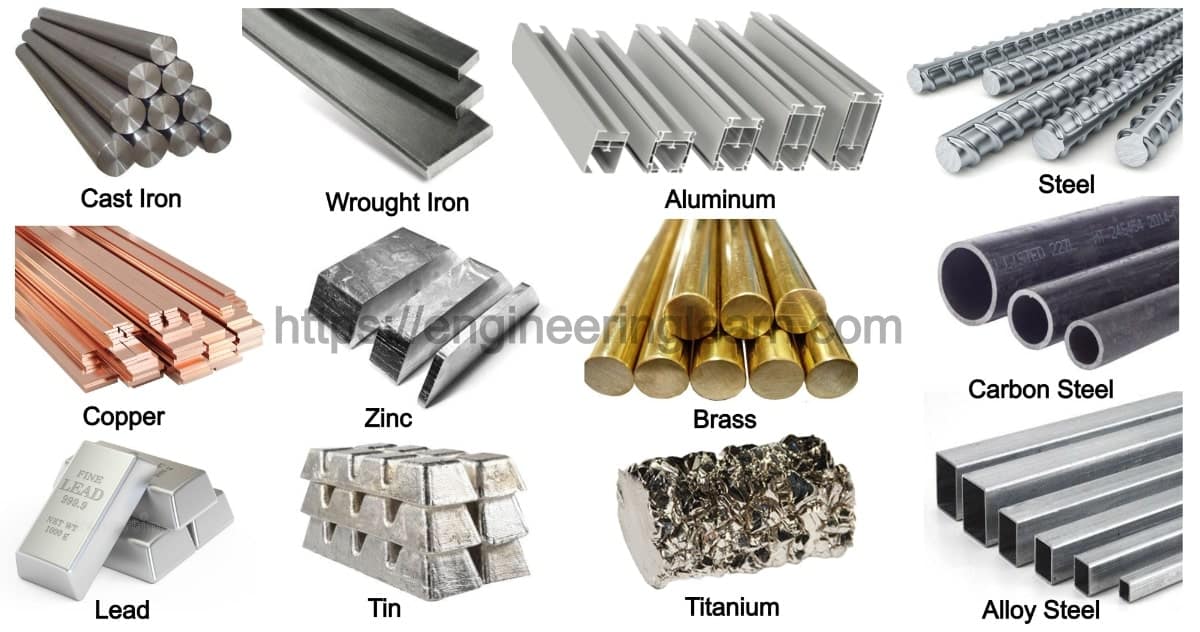
Transition Metals: These are the workhorses! Iron, copper, gold, silver... the classics! They’re strong, versatile, and often very pretty. Many of them are used in jewelry and construction. Talk about metal with multiple talents!
Lanthanides and Actinides: These are the heavy hitters! Often radioactive and found deep in the periodic table. Some, like uranium, are used in nuclear power. *Powerful* stuff.
Basic Metals: These are the dependable building blocks! Aluminum, tin, lead. These are often used in alloys and everyday objects.
Semi-metals (Metalloids): Not quite metal, not quite non-metal. They're the in-betweeners! Silicon and germanium are examples. They're crucial in electronics. The metal world’s diplomats!
Fun Metal Facts (Because Why Not?)
- Gold is so ductile (easily stretched) that you can draw a single ounce of it into a wire that's 50 miles long. Whoa!
- Iron is the most abundant element on Earth by mass. We're swimming in iron!
- Mercury is the only metal that is liquid at room temperature. It’s the coolest liquid around. Literally!
- Many metals are recyclable. So recycle that can of soda!
Why All This Metal Matters
Beyond the fun facts, metals are absolutely essential. They’re in our buildings, our cars, our phones, our bodies… pretty much everything! Understanding different types of metal, even at a basic level, helps us appreciate the world around us.
Plus, it's just cool to know things! Now you can casually drop metal knowledge at your next party. You'll be the star of the show (or at least the person everyone avoids after a while). 😉
So, next time you see something shiny, take a moment to appreciate the amazing diversity of metals. It's a world of elemental wonders waiting to be explored. Go forth and be metal-curious!