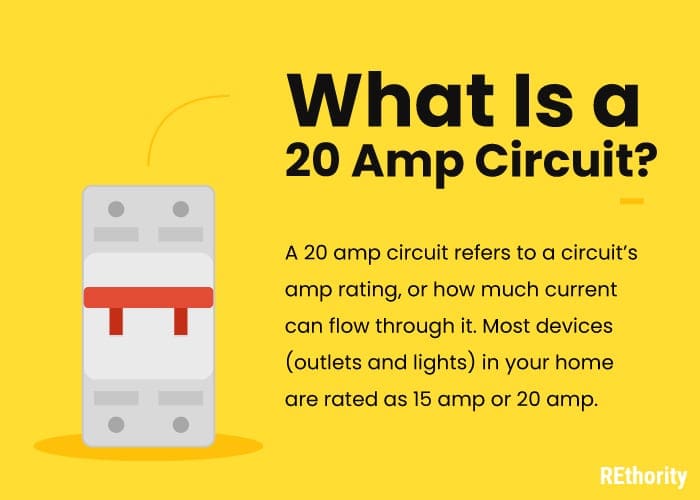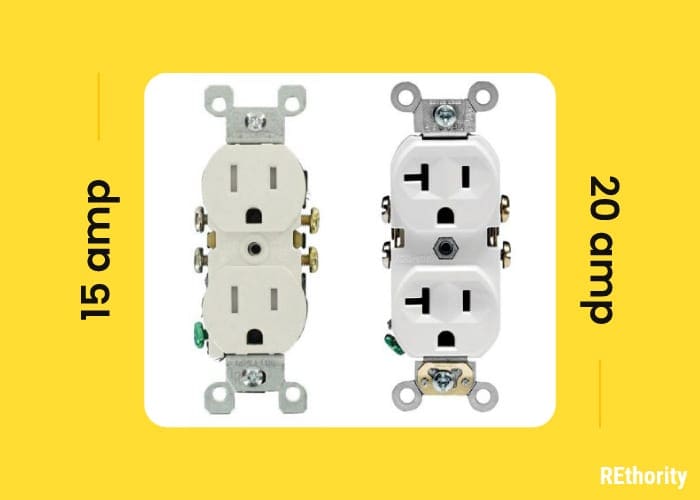
Ever felt like you're playing a real-life version of Tetris with your power cords? Extension cords snaking everywhere, power strips overflowing like a caffeinated river – it's a modern dilemma! And while aesthetics are important (nobody wants a Medusa's head of wires in their living room), understanding your electrical circuits is crucial for safety and preventing that dreaded blown fuse. Today, let's dive into a common question: just how many outlets can you safely put on a 20 amp circuit?
The 80% Rule: Your New Best Friend
The magic number you need to remember is 80%. That's the golden rule in electrical safety. You shouldn't load a circuit to more than 80% of its capacity. Think of it like ordering pizza – you *could* try to eat the whole thing, but you'll probably feel pretty terrible afterwards. Your electrical system feels the same way about being overloaded!
So, what does this 80% rule mean for your 20 amp circuit? Well, 20 amps multiplied by 120 volts (standard household voltage in the US) equals 2400 watts. Then, take 80% of that, and you get 1920 watts. That's the *maximum* you should be pulling from a 20 amp circuit at any given time.
Decoding Appliance Wattage: It's Not As Scary As It Sounds
Now comes the fun part: figuring out the wattage of your appliances. Don't worry, it's usually easier than mastering TikTok dances. Most appliances have a sticker or plate somewhere on them (usually on the back or bottom) that lists the wattage. Look for "Watts" or simply "W".
If you only see amps listed, you can convert amps to watts using the same formula we used earlier: Watts = Amps x Volts. So, an appliance that draws 5 amps would use 600 watts (5 amps x 120 volts = 600 watts).
Practical Tip: Keep a little notebook or use a note-taking app on your phone to jot down the wattage of your frequently used appliances. This will save you time and guesswork later.
The Outlet Equation: No One-Size-Fits-All
There’s no definitive answer to how many outlets you can put on a 20 amp circuit because it all depends on what you're plugging into those outlets. You could technically have 10 outlets on a single 20 amp circuit, but if you're running a power-hungry space heater on one, a blow dryer on another, and charging your phone on a third, you're quickly approaching (or exceeding) that 1920-watt limit.
Consider this: A standard outlet itself doesn't "use" electricity. It's just a portal for electricity to reach your devices. Think of it like a highway exit ramp – the ramp itself isn't using gas, but the cars exiting are. The appliances are the cars, and the circuit is the highway.
Real-World Scenarios: Let's Get Specific
- Home Office: Computer (100W), Monitor (50W), Printer (50W), Desk Lamp (60W) = 260W. You're in good shape! You could easily add a few more devices, but be mindful of things like space heaters.
- Kitchen Counter: Toaster Oven (1200W), Blender (500W), Coffee Maker (1000W). Uh oh! Using the toaster oven and coffee maker simultaneously would exceed the limit and likely trip the breaker. This is why kitchens often have multiple circuits.
Fun Fact: The invention of the circuit breaker in the early 20th century was a game-changer for electrical safety. Before that, fuses were the norm, which had to be manually replaced after blowing. Circuit breakers can simply be reset, making them much more convenient and safer.
Beyond the Numbers: Common Sense and Safety First
While the wattage calculations are important, common sense is your best tool. If you notice lights dimming when you turn on an appliance, or if an outlet feels warm to the touch, those are warning signs that you're overloading the circuit. Unplug something immediately!
Safety First: If you're unsure about any electrical work, always consult a qualified electrician. They can assess your wiring and make recommendations to ensure your home is safe and up to code. Don't try to be a DIY superhero when it comes to electricity.
Modern Living Hack: Smart plugs with energy monitoring capabilities can help you keep track of how much power your devices are using in real time. This is a great way to identify energy hogs and prevent overloads.
A Final Spark of Thought
Understanding the basics of electrical circuits isn't just about avoiding blown fuses; it's about creating a safer, more efficient, and more comfortable living space. By being mindful of wattage and load, you can prevent potential hazards and ensure that your home is powered up and ready for whatever the day throws your way. So, next time you're plugging in that new gadget, take a moment to consider the bigger picture. A little knowledge can go a long way in keeping your electrical system humming smoothly.