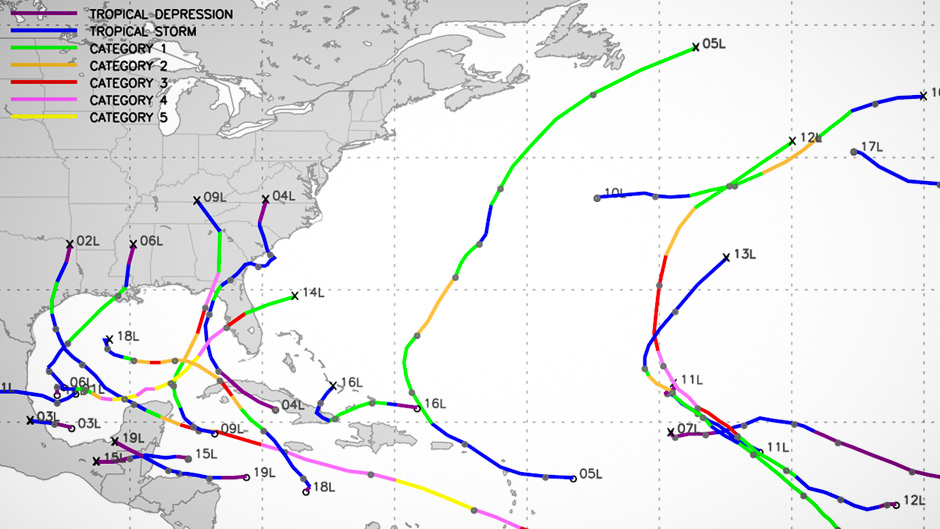
Okay, let's talk hurricanes. Not in a doom-and-gloom, hide-under-the-bed kind of way, but in a prepared, "I know what's up" kind of way. Because knowledge is power, and a well-stocked hurricane kit is… well, practical.
So, the big question on everyone's mind: How many more hurricanes are we expecting in 2024? The short answer? It's complicated. The long answer? Let's dive in.
The Forecast is In (Sort Of)
Meteorologists, those amazing weather wizards, use a combination of factors to predict hurricane seasons. We're talking sea surface temperatures (think bathwater versus ice bath), wind patterns (like the atmospheric jet stream DJ), and even the influence of El Niño and La Niña (those mischievous climate patterns that love to stir things up).
Most major forecasting agencies, like NOAA (National Oceanic and Atmospheric Administration), release their predictions well before hurricane season officially kicks off on June 1st. And, spoiler alert, this year's forecast is looking… *active*. Many are predicting an above-average season. This means potentially more named storms, more hurricanes, and more major hurricanes (Category 3 or higher) than we usually see.
But here's the catch: these are just predictions. Think of it like predicting which songs will be the summer's biggest hits. You can analyze past trends, listen to early releases, but you can't guarantee anything. Remember that one song that came out of nowhere and dominated the charts? Hurricanes can be like that too. They can form unexpectedly, strengthen rapidly, and take unpredictable paths.
Practical Tip #1: Don't just rely on the seasonal forecast. Pay attention to daily and hourly weather updates, especially if you live in a hurricane-prone area.
What Makes This Season Different?
Several factors are contributing to the heightened forecast for 2024. One of the biggest is exceptionally warm sea surface temperatures in the Atlantic Ocean. Warm water is like rocket fuel for hurricanes, providing the energy they need to develop and intensify.
Think of it like this: you can't make a delicious cup of coffee without hot water, right? Similarly, hurricanes need warm ocean water to thrive. And right now, the Atlantic is serving up a serious heatwave.
Also, we are transitioning to La Niña conditions. La Niña tends to weaken the wind shear in the Atlantic, which allows hurricanes to form and strengthen more easily. Imagine wind shear as a chaotic dance floor where it's hard to find your rhythm. Weaker wind shear means a smoother dance floor for hurricanes to waltz across.
Fun Fact: The Saffir-Simpson Hurricane Wind Scale, which categorizes hurricanes from 1 to 5 based on wind speed, was developed in the early 1970s by civil engineer Herbert Saffir and meteorologist Robert Simpson. Talk about a dynamic duo!
Being Prepared: More Than Just Batteries
So, what can you do with this information? Don't panic! Instead, focus on preparedness. Here's a checklist to get you started:
- Create a hurricane kit: Stock up on essentials like water (one gallon per person per day for at least three days), non-perishable food, a flashlight, batteries, a first-aid kit, medications, and a NOAA weather radio.
- Develop a family communication plan: Designate a meeting place and ensure everyone knows how to contact each other if separated.
- Review your insurance policies: Make sure you have adequate coverage for your home and belongings.
- Know your evacuation zone: Familiarize yourself with your local evacuation routes and shelters.
- Secure your property: Trim trees, clear gutters, and consider installing hurricane shutters or reinforcing your windows.
Practical Tip #2: Don't wait until the last minute to prepare! Grocery stores and hardware stores get crowded when a hurricane is approaching. Start preparing now to avoid the stress and potential shortages.
Beyond the Forecast: A Bigger Picture
While the seasonal forecast gives us a general idea of what to expect, it's important to remember that every hurricane is unique. Each storm has its own personality, its own track, and its own potential impacts.
Think of it like snowflakes: no two are exactly alike. Similarly, no two hurricanes will behave in the exact same way.
Practical Tip #3: Stay informed by following reliable sources of information, such as the National Hurricane Center, your local news stations, and emergency management agencies. Avoid spreading misinformation or rumors.
A Final Thought
Ultimately, preparing for hurricane season is about more than just stocking up on supplies. It's about taking responsibility for your safety and the safety of your loved ones. It's about understanding the risks and taking steps to mitigate them.
In a way, being prepared for a hurricane is a metaphor for life itself. We can't control everything that happens to us, but we can control how we respond. We can choose to be proactive, to be resilient, and to be prepared for whatever challenges come our way. So, whether it's a hurricane bearing down or just the daily grind, let's face it with a spirit of preparedness and a healthy dose of optimism.