Ever wondered how many kinds of metal exist? It's a question that can lead you down a fascinating rabbit hole! We're not just talking about gold, silver, and iron. The world of metals is way bigger, and honestly, way cooler than you might think.
Think about it. Metals are everywhere! They're in our phones, our cars, our houses, and even inside our bodies. But how many truly different types are there? Buckle up, because it's a surprisingly complex and interesting question!
The Periodic Table: Your Metal Map
A good starting point is the periodic table. Remember that from science class? It's not just a poster hanging on the wall. It's a map of all the elements, including metals! About 80% of the periodic table is metallic. That's a whole lotta metal!
But hold on. Does that mean there are only around 80 types of metal? Not exactly. Things get a little more nuanced when you consider alloys.
Alloys: Metal Mixing Magic
An alloy is a mixture of two or more elements, at least one of which is a metal. Think of it like mixing ingredients in a recipe. You can combine different metals to create something entirely new with different properties.
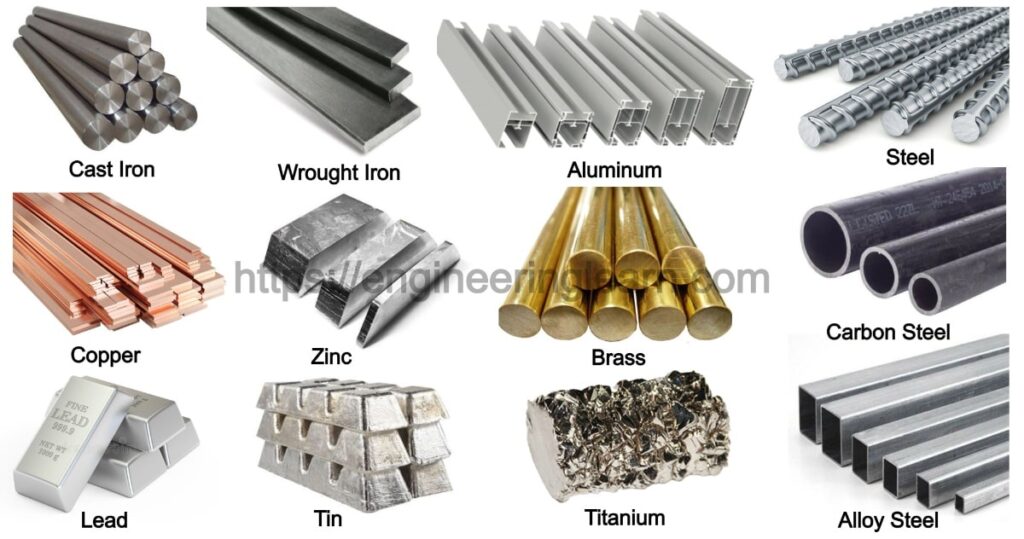
For example, steel is an alloy of iron and carbon. Adding a little carbon to iron makes it much stronger and more durable. Brass is another example. It is an alloy of copper and zinc. You can tweak the amount of each metal in the mixture to achieve the desired characteristics. Isn't that wild?
So, when you factor in alloys, the number of "kinds" of metal explodes! There are literally thousands of different alloys, each with its own unique properties and uses.
New Metals and Future Tech
Scientists are constantly discovering and creating new elements and alloys in the lab. They are always pushing the boundaries of what's possible. These new metals can have incredible properties. Some are super strong, some are incredibly lightweight, and some can even withstand extreme temperatures.
These new materials are crucial for developing new technologies. They're essential for everything from building better batteries to creating more efficient solar panels. They could even revolutionize space travel!
Why Should You Care?
Okay, so maybe you're not a scientist or an engineer. Why should you care about the number of metals? Well, understanding the basics about metals can help you appreciate the world around you. You can see how things are constructed, and you understand their properties and purpose. You can find the metals that you interact with on a daily basis. Knowing about these metals is pretty cool!
Think about it: next time you pick up your phone, you'll know it's not just made of "metal." It's made of a carefully selected combination of different metals and alloys. Each one plays a crucial role in making your phone work.
Also, learning about metal makes you a more informed consumer. Ever wonder why some pots and pans are so much more expensive than others? It often comes down to the type of metal used and its properties. Higher-quality metals are more durable, conduct heat better, and are less likely to react with your food.
So, What's the Answer?
So, how many kinds of metal are there? The short answer is: it's complicated! If we're only talking about pure metallic elements, then it's around 80. But if we include all the alloys that exist (and could exist!), then the number is practically limitless. There are new combinations being discovered and created every day.
In conclusion, it's really the ongoing exploration and development of metal that's captivating! To take a quote from Sir Humphry Davy, a brilliant chemist who discovered several elements,
"Nothing is so proper to physics as the investigation of the causes of common things."This quote highlights how fascinating it is to look deeper into even the most commonplace items around us. The world of metals is a testament to human ingenuity and creativity!
So go forth and explore the fascinating world of metals! You might be surprised by what you discover.