Ever looked at a 12-volt battery and wondered, "Okay, cool, *twelve volts*, but... how much *oomph* does this thing actually have?" You're not alone! It's a super common question, and frankly, it's a question that, once you understand the answer, unlocks a whole new world of DIY projects and practical knowledge. Trust me, this isn't some boring electrical engineering lecture. This is about empowering yourself to understand the energy that powers our lives!
It's About Amps, Baby! (Well, Amp-Hours)
So, you know voltage is like the *pressure* behind the electricity, but what about the *amount* of electricity that's flowing? That's where amps come in. Amps (or, more accurately in this case, amp-hours, abbreviated Ah) measure the battery's capacity – how much current it can deliver over a period of time. Think of it like the size of a gas tank. A bigger tank (more amp-hours) means you can drive further (power your devices longer).
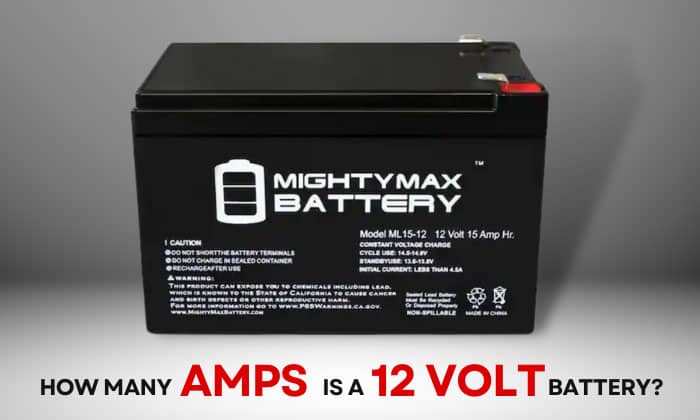
Now, here’s the catch: A "12-volt battery" tells you nothing about its amp-hour rating. It's like knowing a car is a "sedan" – it doesn't tell you how big the engine is or how far it can drive on a tank of gas. You need to look for that Ah number printed on the battery itself. It's usually somewhere prominent. Go ahead, check one you have lying around!
Why is that important? Because the Ah rating directly impacts how long you can power something. A battery with a higher Ah rating can deliver more current for a longer period than one with a lower rating. Simple as that!
Example Time: Powering Your Dreams!
Let's say you have a 12-volt battery rated at 100Ah. And let's say you want to power a 12-volt light that draws 5 amps. How long can you run that light?
Here's the basic math: Hours = Amp-Hours / Amps
So, in this case: Hours = 100Ah / 5 amps = 20 hours. Pretty cool, right? You can run that light for 20 hours straight! (In the real world, there are some efficiency losses, but this is a good starting point.)
See how knowing the amp-hour rating is crucial? Without it, you're just guessing!
Different Batteries, Different Needs
Not all 12-volt batteries are created equal. You'll find them in all sorts of sizes and with vastly different Ah ratings. A tiny 12-volt battery in a remote control car might have a very low Ah rating (maybe even less than 1 Ah), while a massive deep-cycle battery in an RV could have a rating of 100Ah or even more. And a car battery might have a high *cranking* amp rating, designed to deliver a massive burst of power for a short time to start the engine, but a lower amp-hour rating for sustained use.
Understanding the difference is key to choosing the right battery for the job. Don't put that little remote control battery in your RV, and definitely don't try to power your remote with your car battery! (Well, you *could*, but it wouldn't be pretty... or practical.)
Why This Matters: Unleashing Your Inner Inventor!
Okay, so why should you care about all this? Because knowing how many amps a 12-volt battery can deliver unlocks a whole world of possibilities!
- DIY Projects: Want to build a portable power station? Need to power some lights for your camping trip? Understanding amps and amp-hours is essential.
- Emergency Preparedness: A 12-volt battery and an inverter can provide power during an outage. Knowing the battery's capacity helps you plan accordingly.
- Saving Money: Choosing the right battery for your needs can prevent you from buying an overpowered (and overpriced) battery.
- General Understanding: Simply knowing how electrical things work is incredibly empowering!
Think of the possibilities! Imagine building your own off-grid lighting system, powering your favorite gadgets on the go, or simply feeling confident that you understand the technology around you. It's all within reach, and it starts with understanding those little numbers on your battery!
Beyond the Basics: Diving Deeper
This is just the tip of the iceberg, of course. There's a whole world of battery technology, charging techniques, and power management to explore. But hopefully, this article has given you a solid foundation and sparked your curiosity.
Don't be afraid to experiment, research, and ask questions. The more you learn, the more confident you'll become, and the more you'll be able to do. The world of electricity is fascinating, and you have the power to understand it! So go forth, learn, and create! The future is bright... and powered by well-understood amps!