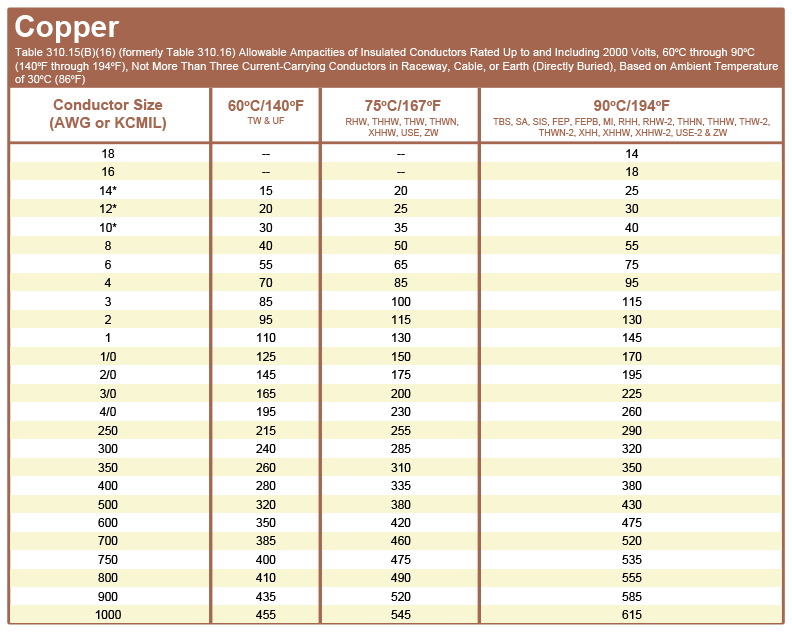
Okay, folks, let's talk copper! Not the shiny penny in your pocket, but the amazing stuff inside those wires powering your life. Specifically, we're diving headfirst into the age-old question: how many amps can good ol' 14-gauge copper wire handle? Get ready for some electrifying (pun intended!) information.
So, What's an Amp Anyway?
Imagine electricity as a raging river. Amps are like the amount of water flowing through that river. The more water, the stronger the current, right? Same with amps! They measure the electrical current. Now, your wires are like the riverbed. If you try to force too much water (amps) through a narrow riverbed (thin wire), things get messy. Like, really, really messy. Think overflowing river... but with sparks! Nobody wants that.
The Magic Number (and a Little Wiggle Room)
Here's the headline: 14-gauge copper wire, when installed correctly and under normal conditions, is generally rated for 15 amps. Bam! There you have it. Case closed? Not quite! Because life isn't always lived under "normal conditions," is it?
Think of it like this: 15 amps is the recommended speed limit. You *could* push it a little faster, but you're risking a ticket... or in this case, a potential fire hazard! That's why it's crucial to know what you're plugging into that circuit.
Real-World Examples (and Exaggerated Warnings!)
Let's get practical. A standard 15-amp circuit is perfect for most bedroom outlets. You can happily plug in your lamp, charge your phone, and even run a small fan without breaking a sweat. But trying to power a whole band's worth of amplifiers AND a disco ball on that same circuit? That's a recipe for disaster. Your wires might start complaining louder than the lead singer's falsetto!
Imagine this: You're using 14-gauge wire on a 20-amp circuit breaker. You plug in your super-powered waffle iron (because who doesn't need perfectly golden waffles at lightning speed?). Suddenly, the wire is working overtime, getting hotter than a griddle on high. It's like asking a chihuahua to pull a sled team! Eventually, something's gotta give. And what gives is usually smoke, melted insulation, and the distinct smell of burnt electricity. Not a good brunch vibe.
Important Safety Note: Seriously, don't overload your circuits. It's not worth the risk. If you're unsure, consult a qualified electrician. They're like the traffic cops of the electrical world, keeping everything running smoothly and safely.
So, What Can You Actually Plug In?
The key is to know your appliances' wattage and do a little math. Most appliances have a label indicating their wattage. Divide the wattage by the voltage (usually 120V in the US) to get the amps. For example, a 600-watt appliance draws 5 amps (600 / 120 = 5).
Now, add up the amperage of everything you plan to plug into that circuit simultaneously. If it's close to 15 amps, you're pushing it. If it's over, you're asking for trouble.
Think of it like packing a suitcase. You *could* try to cram everything you own into it, but eventually, the zipper's going to burst. Same with your electrical circuits. Be reasonable, and your wires will thank you (by not bursting into flames!).
The Moral of the Story?
Fourteen-gauge copper wire is a workhorse, capable of handling a decent amount of power. But it's not invincible. Treat it with respect, understand its limits, and always err on the side of caution. A little knowledge goes a long way in keeping your home safe and your electricity flowing smoothly. Now go forth and conquer your electrical needs... responsibly!