Ever plugged in one too many things and tripped a breaker? We've all been there. It’s a modern-day rite of passage, like accidentally liking your ex's Instagram post from 2012. But understanding how much power your outlets can *actually* handle is less about humiliation and more about safety and convenience. Let's demystify the amp situation, shall we?
The Amp Basics: What's an Amp Anyway?
Think of electricity like water flowing through a pipe. Voltage is the water pressure, and amps (amperes) are the amount of water flowing. Wattage is the total power, calculated by multiplying voltage and amps (Watts = Volts x Amps). So, more amps mean more electrical flow, and that's what powers your devices.
Most standard household outlets in North America run on 120 volts. Knowing this is key to calculating how many watts an outlet can safely deliver. We'll get to that math later, don't worry. It's easier than remembering all the lyrics to that early 2000s pop song you swore you'd forget.
Decoding the Outlet: 15 Amps vs. 20 Amps
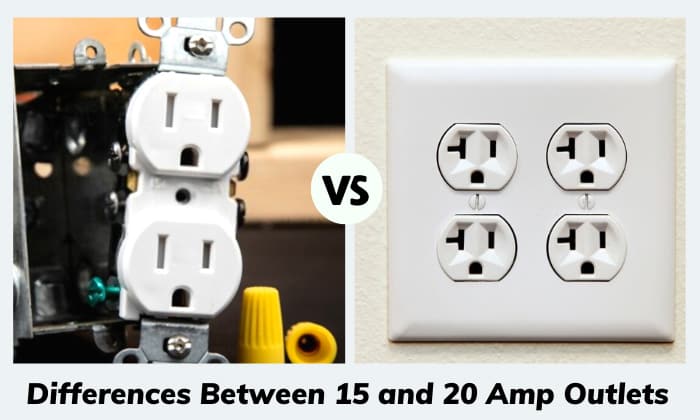
Typically, you'll find two types of outlets in your home: 15-amp and 20-amp. How can you tell the difference? Look closely! A 20-amp outlet often has a T-shaped slot on one side. But the *easiest* way is to check your breaker box! Each circuit breaker should be labeled with its amperage. This is your bible for electrical safety.
So, what does this mean in terms of actual power? Using our handy formula (Watts = Volts x Amps):
- 15-amp outlet: 120 volts x 15 amps = 1800 watts
- 20-amp outlet: 120 volts x 20 amps = 2400 watts
These numbers represent the maximum theoretical load. However, a crucial rule of thumb is to only load a circuit to 80% of its capacity to prevent overheating and potential hazards. This is like leaving a little room in your suitcase so you can bring back souvenirs (or, you know, more shoes).
- 15-amp outlet (80%): 1800 watts x 0.8 = 1440 watts
- 20-amp outlet (80%): 2400 watts x 0.8 = 1920 watts
Therefore, a 15-amp outlet can safely handle about 1440 watts, and a 20-amp outlet can handle about 1920 watts.
Practical Tips: Preventing Electrical Overload
Okay, so we know the math. But how do you apply this in real life? Here are some practical tips to avoid tripping breakers (and potentially starting fires):
- Check the wattage: Look at the labels on your appliances. Hair dryers, space heaters, and power tools are notorious energy hogs. Your phone charger? Not so much.
- Spread the load: Don't plug all your high-wattage devices into the same outlet or even the same circuit. Distribute them around your home.
- Use power strips with surge protection: These not only provide extra outlets but also protect your devices from power surges. However, don’t overload the power strip itself! They have their own wattage limits.
- Consider a whole-house surge protector: Especially if you live in an area prone to lightning storms. This is like having insurance for your electronics.
- Call a professional: If you're consistently tripping breakers, or you’re unsure about your home's wiring, it's time to call an electrician. Don't play electrician unless you *are* an electrician.
Fun Fact: The First Electric Outlet
Did you know that the first electric outlet was invented in the early 1900s? It was a far cry from the sleek, tamper-resistant outlets we have today. Can you imagine trying to plug your iPhone charger into *that*?
Real-World Example: The Home Office
Let's say you're setting up a home office. You have a computer (200 watts), a monitor (50 watts), a printer (300 watts), and a desk lamp (60 watts). That's a total of 610 watts. Perfectly fine for a 15-amp outlet. But then you add a space heater (1500 watts) during those chilly winter months... suddenly you're at 2110 watts. Boom! Breaker tripped. Lesson learned.
Prioritize. Maybe ditch the space heater and wear a sweater. Or move the space heater to a different circuit. The key is to be mindful of your power consumption.
A Moment of Reflection: Power and Responsibility
Understanding how many amps an outlet can handle isn't just about avoiding inconvenience; it's about safety and responsible energy consumption. We live in a world powered by electricity, and knowing how to use it wisely protects our homes, our devices, and even the environment. So, the next time you reach for that extra plug, take a moment to consider the flow of power. A little awareness can go a long way, preventing a blown fuse and ensuring a smoother, brighter day.