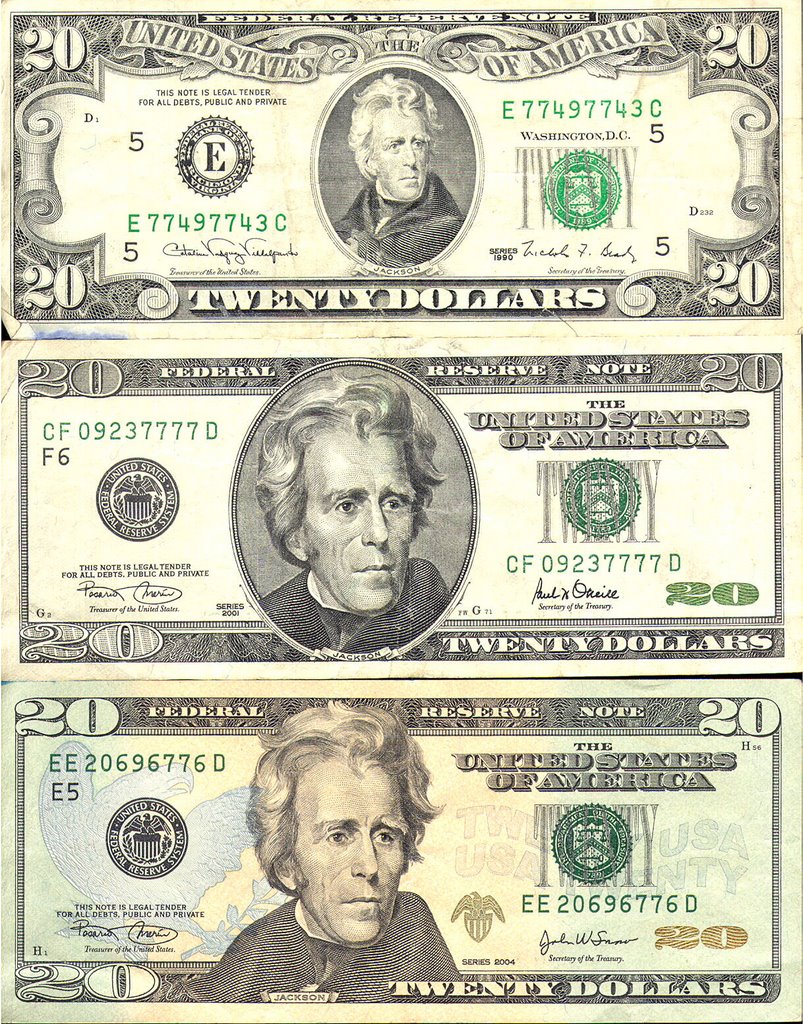
Let's face it, there's something inherently satisfying about thinking about money. Whether you're meticulously planning your budget, dreaming of early retirement, or simply calculating how much you need for that new gadget, numbers and finances have a way of capturing our attention. And at the heart of many financial daydreams (and realities) is the humble $20 bill. It's a useful denomination, not too bulky, not too insignificant. So, how many $20 bills do you need to reach the coveted $2,000 mark? Let's dive in!
Understanding basic monetary calculations is surprisingly vital for everyday life. It's not just about becoming a millionaire (though that's a nice bonus!). It's about making informed decisions, avoiding financial pitfalls, and feeling more confident in your day-to-day transactions. For example, knowing how many $20s make up a certain amount helps you quickly estimate costs. Are you splitting a restaurant bill with friends? Need to tip the movers? Want to know if you have enough cash on hand for a weekend getaway? These simple calculations empower you to manage your finances more effectively.
Think about all the common scenarios where this knowledge comes in handy. Fundraising: You're organizing a charity drive and need to figure out how many $20 donations you need to reach your goal. Saving up: You're putting aside a certain number of $20 bills each week to save for a down payment on a car. Estimating cash withdrawals: You're heading to a flea market and want to withdraw a specific amount of cash, preferably in smaller denominations. Even something as simple as tipping can benefit from quick mental math involving $20 bills.
So, how do we actually calculate the answer? Well, the formula is quite straightforward: Total Amount / Denomination = Number of Bills. In our case, that's $2,000 / $20 = 100. Therefore, you need 100 twenty-dollar bills to make $2,000. Now you know!
To enjoy these types of calculations more effectively, here are a few practical tips:
- Practice regularly: Incorporate mental math into your daily routine. Challenge yourself to estimate costs and calculate change.
- Use online tools: There are numerous online calculators and budgeting apps that can help you visualize and manage your finances.
- Break down complex problems: If you're dealing with larger sums of money, break them down into smaller, more manageable units.
- Visualize the money: Imagine the stack of $20 bills. This can help you better understand the value and make the calculations more concrete.
- Don't be afraid to use a calculator: While mental math is great, there's no shame in using a calculator when you need to be precise.
Ultimately, mastering simple financial calculations is a skill that will benefit you throughout your life. It's about more than just knowing how many $20 bills make $2,000; it's about empowering yourself to make informed decisions and achieve your financial goals. So, go forth and conquer your finances, one $20 bill at a time!