Ever flick a light switch and marvel at the instant illumination? Or perhaps you're charging your phone, utterly reliant on that invisible energy fueling your digital life? We rarely stop to think about it, but the electricity powering our world comes in two distinct flavors: Alternating Current (AC) and Direct Current (DC). Understanding the difference isn't just for engineers; it's about appreciating the clever design that keeps our modern world humming!
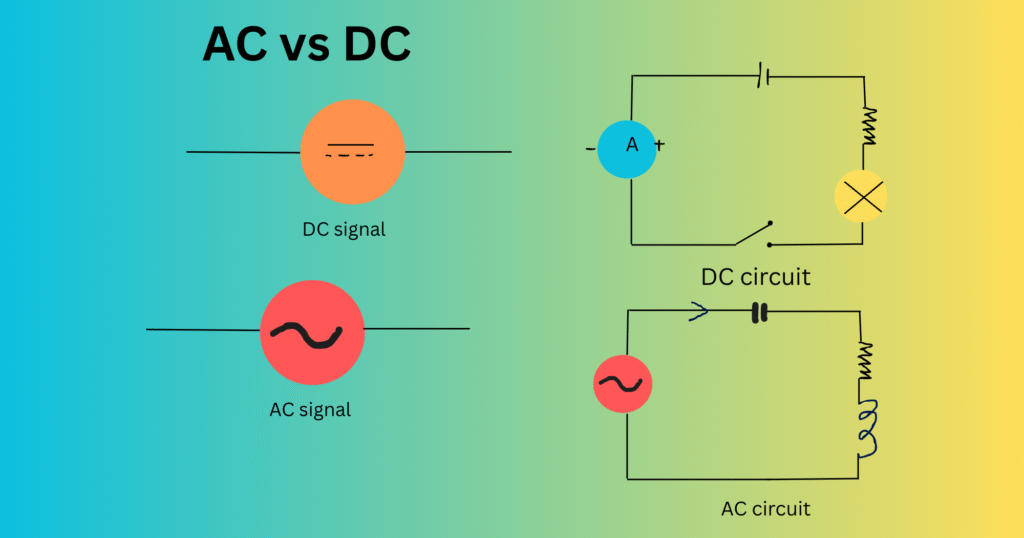
So, what is the difference? Imagine a river. Direct Current, like the water flowing steadily in one direction, is electricity flowing constantly in a single direction. Think of batteries: they consistently supply a positive charge flowing towards a negative charge. This stable, unidirectional flow is great for powering small devices. But what about powering an entire city?
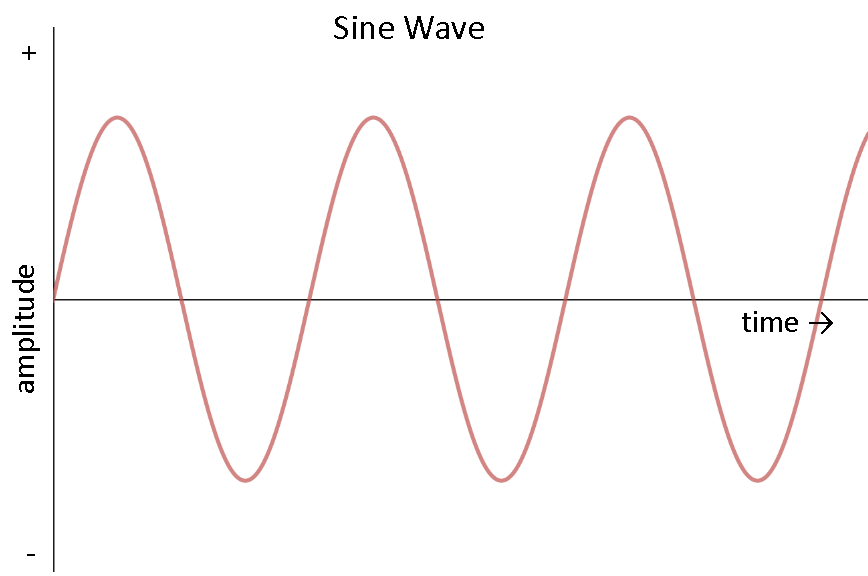
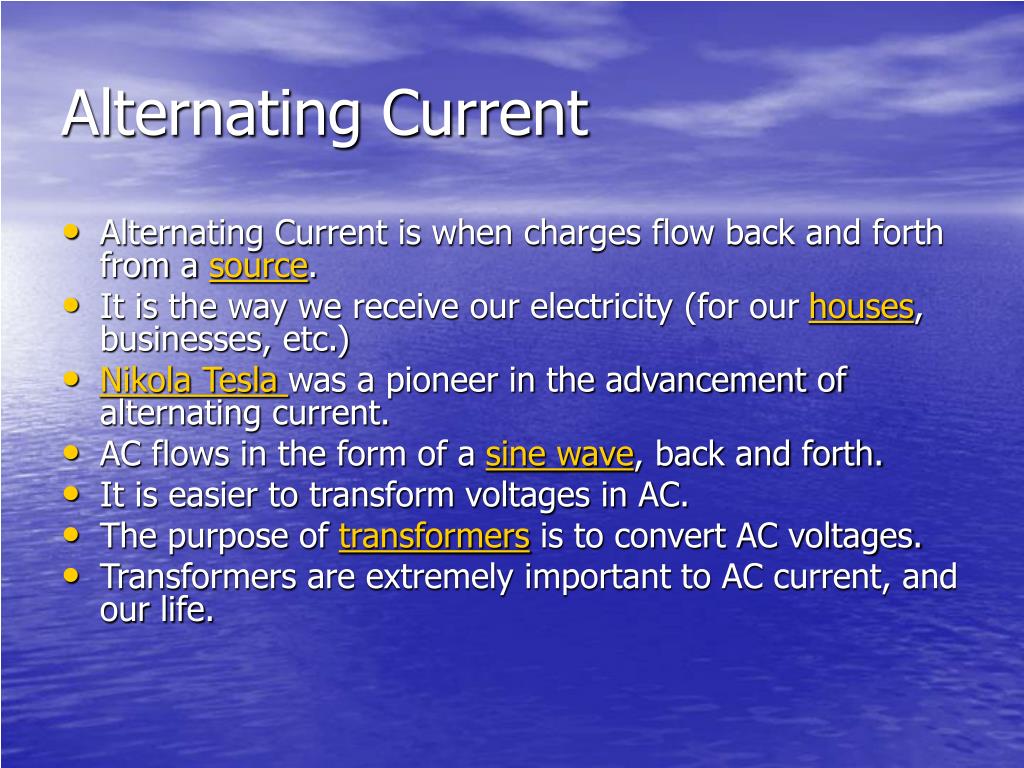
That’s where Alternating Current struts onto the stage. Unlike our steadily flowing river, AC is like a tide, constantly changing direction. The electrons wiggle back and forth, alternating their flow many times per second. This might sound chaotic, but it’s actually incredibly efficient for transmitting power over long distances. Why? Because AC voltage can be easily stepped up or down using transformers. Think of it like gears on a bicycle: you can pedal faster (lower voltage, higher current) to climb a hill, or pedal slower (higher voltage, lower current) to go faster on flat ground. AC allows power companies to transmit electricity at very high voltages (reducing energy loss due to resistance in the wires) and then step it down to safer voltages for our homes.
The benefits of AC are undeniable. It’s the workhorse behind the vast majority of our electrical grid. Without it, we wouldn't have widespread access to electricity, powering everything from our refrigerators to our televisions. Common examples abound: the outlets in your walls provide AC power, used to run appliances like blenders, washing machines, and air conditioners. Power plants generate AC, which is then transmitted across vast networks to reach your home. Meanwhile, DC is essential for smaller, portable electronics. Your laptop, smartphone, and most electronic devices actually use DC power internally, which is why they have power adapters that convert AC from the wall into the required DC voltage.
So how can you appreciate and use these concepts more effectively? While you don't need to become an electrical engineer, understanding the basics can help you make informed decisions. For example, when choosing power strips, look for surge protectors to protect your sensitive electronics from voltage spikes that can occur in AC power grids. Similarly, understanding the voltage and current requirements of your devices can prevent overloading circuits. Pay attention to the “input” label on your device's power adapter; it tells you the voltage range it can accept (often 100-240V, which allows it to work in different countries). You can also explore renewable energy sources, like solar panels, which generate DC power. Investing in a good quality power inverter allows you to convert that DC power into AC, which you can then use to run your household appliances.
Ultimately, recognizing the roles of AC and DC makes us more aware of the incredible technology powering our lives. Next time you flip a switch, take a moment to appreciate the clever engineering that brings light and energy to your fingertips!