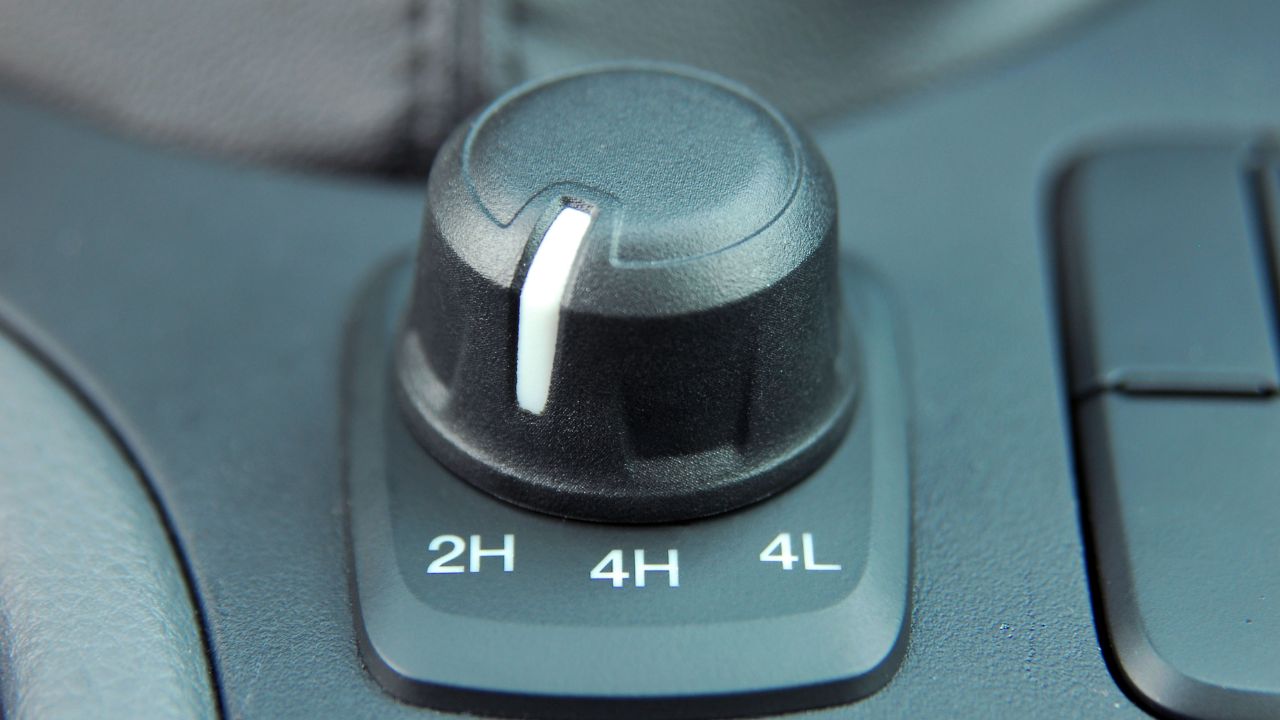
Alright, buckle up buttercup, because we're about to tackle a question that's probably crossed your mind while cruising down a gravel road: How fast can you drive in 4-Wheel Drive High?
The Need for Speed (Sort Of)
Let's be honest, the allure of 4WD High is real. You feel like you're driving a tank, ready to conquer any terrain! You might feel invincible, like you're ready to drive to the moon.
But before you channel your inner Mad Max, let's pump the brakes for just a second. Speed isn't always your best friend when you're in 4-high.
The Great Myth of Unlimited Speed
There's this persistent myth that 4WD High means you can suddenly drive at warp speed on any surface. Think of it like this: just because your car *can* go 150 mph doesn't mean you *should* on your morning commute.
And trust me, attempting to break the sound barrier in 4-high on a bumpy trail is a recipe for disaster. It’s more likely to end with a very confused tow truck driver and a significantly lighter wallet.
We all want to believe we can go 100 miles per hour but trust me we can't!
What the Manual Says (The Boring But Important Part)
Okay, I know, reading the owner's manual is about as exciting as watching paint dry. But seriously, your vehicle's manual is your best friend in this situation.
It's got all the specific recommendations for your make and model. It's like having a personal Yoda whispering wisdom in your ear, except instead of a lightsaber, it's about drivetrain components.
Ignoring your manual is like ignoring a giant flashing warning sign. You'll be sorry.
The Common Sense Speed Limit
Generally speaking, most manufacturers recommend staying below a certain speed while in 4WD High. This usually hovers around 55 mph, but remember, this is a general guideline.
Think of it as the "suggested donation" amount at a museum. You can technically go faster, but it's probably not a great idea.
Use your head out there! It is important.
Why the Speed Limit Exists
So, why can't you just floor it in 4-high? Well, it all boils down to the mechanics of your 4WD system. Remember your vehicles' mechanicals are important.
When you engage 4WD High, you're essentially locking the front and rear axles together. This forces them to spin at the same rate. Imagine trying to run a race with one leg tied to a friend – it's not pretty.
On slippery surfaces like snow, mud, or gravel, this isn't a problem because the tires can slip a little, relieving the stress. But on dry pavement, those tires are gripping, and something has to give.
The Dangers of High-Speed 4WD
Driving too fast in 4WD High on dry pavement can lead to some serious issues. We are talking potentially costly repairs!
We're talking about stress on your drivetrain, potential damage to your axles, and increased wear and tear on your tires. Basically, you're asking your vehicle to do something it wasn't designed to do.
It's like asking your grandma to run a marathon – she might try, but it probably won't end well for anyone involved.
Terrain Matters (A Lot)
The surface you're driving on plays a HUGE role in determining a safe speed. Remember your surfaces are important.
Cruising on a well-maintained gravel road? You can probably get away with going a bit faster than you would on a deeply rutted, muddy trail. It's important to match your speed to the terrain.
Always use your best judgement!
Listen to Your Vehicle
Your vehicle is surprisingly communicative, if you know how to listen. Is there excessive vibration? Are you hearing strange noises? Does the steering feel "off?"
These are all signs that you're pushing things too hard. It's like your car is trying to send you a text message saying, "Dude, slow down!"
Ignoring these signs is like ignoring your stomach growling when you're hungry. You'll eventually regret it.
The Golden Rule: Slow Down and Enjoy the Ride
Ultimately, the best advice is to slow down and enjoy the ride. Driving in 4WD High is about controlled traction, not about breaking speed records. You want a controlled experience not a record breaking experience!
It's about confidently navigating challenging terrain, not about proving how fast you can get from point A to point B. Think about enjoying the journey!
So, take a deep breath, engage 4WD High responsibly, and appreciate the capability of your vehicle. You'll be much happier (and your wallet will thank you) in the long run.
Beyond the Speedometer: Other Considerations
It's not just about how fast you *can* go; it's also about how well you can *control* your vehicle. Your control is super important!
Even if you're within the "safe" speed range, if you're fishtailing all over the place or struggling to maintain a straight line, you're going too fast. Driving is about control not about going fast.
Think of it like trying to ice skate for the first time. Speed doesn't equal skill.
Tire Pressure Tango
Don't forget about your tire pressure! Inflating or deflating your tires can significantly impact your vehicle's performance in 4WD.
Lowering your tire pressure can increase your contact patch, providing better traction on soft surfaces like sand or snow. It's like giving your tires bigger "feet" to grip the ground.
But remember to re-inflate your tires when you hit the pavement to avoid damaging them. Nobody wants a flat tire!
The "Feel" Test: A Seat-of-Your-Pants Approach
Sometimes, the best way to gauge your speed is by simply paying attention to how your vehicle feels. The key is to feel what your vehicle is doing.
Are you bouncing around like a basketball? Is your steering wheel vibrating like crazy? Are you constantly fighting to keep the vehicle on course?
If the answer to any of these questions is "yes," you're probably going too fast. Trust your gut!
The Allure of 4-Low (And Why It's Not For Speed)
Now, let's briefly touch on 4WD Low. This is a completely different beast than 4WD High. It is very different, do not get the two confused!
4-Low is designed for slow, controlled crawling over obstacles. Think of it as the "granny gear" for serious off-roading.
Trying to drive fast in 4-Low is like trying to sprint in quicksand. You'll just end up spinning your wheels and going nowhere fast (literally).
The Importance of Experience
The more experience you have driving in 4WD, the better you'll become at judging safe speeds and handling different terrains. Experience is everything!
Start slow, gradually increase your speed as you gain confidence, and always prioritize safety over speed. Rome wasn't built in a day, and neither is off-roading expertise.
And remember, a little common sense goes a long way!
The Final Verdict (It's Not About the Numbers)
So, how fast *can* you drive in 4WD High? The answer, as you've probably gathered, isn't a simple number. It's more of a feeling, a balance between speed, terrain, and control. It's not a number it's a feeling!
Focus on driving safely, respecting your vehicle's capabilities, and enjoying the adventure. The point is to have fun and to enjoy the ride!
After all, the best off-roading experiences are the ones where you arrive safely with a smile on your face (and a vehicle that's still in one piece).