Ever feel like you're lost in a jumble of numbers and electrical terms? Don't worry, understanding how to convert watts to amps is easier than you think! It's like unlocking a secret code that helps you understand how your devices use electricity. Plus, it can be surprisingly fun, especially when you realize how useful it is for everything from choosing the right lightbulb to making sure you don't overload a circuit.
So, why should you care about this conversion? For beginners, knowing how to calculate watts to amps is the first step in understanding basic electrical safety. It helps you grasp the power consumption of your appliances. For families, this knowledge can save money on your electricity bill by helping you choose more energy-efficient appliances. You'll be able to compare different devices based on their amperage draw. If you're a hobbyist who loves tinkering with electronics or building DIY projects, understanding this relationship is absolutely essential. It allows you to calculate the current draw of your circuits and ensure that you're using the correct power supplies and components.
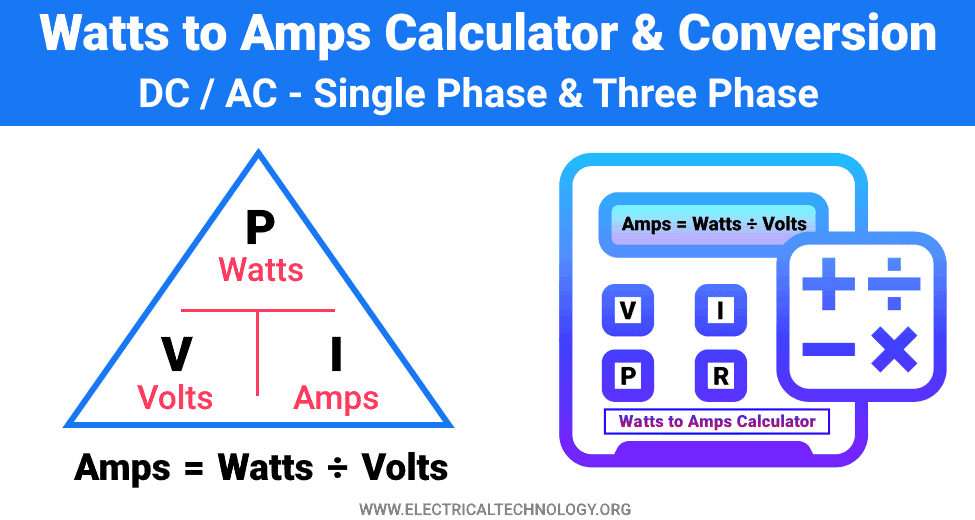
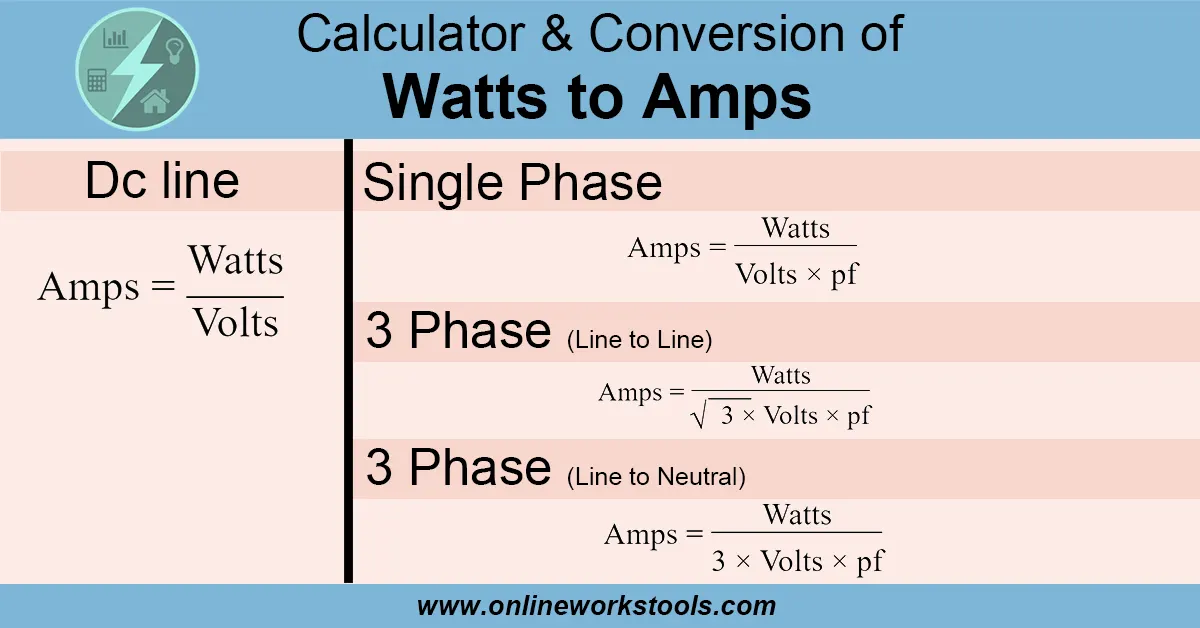
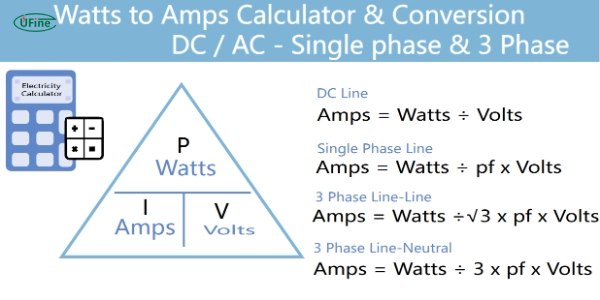
The basic formula you need is pretty simple: Amps = Watts / Volts. Let's break that down. Amps (A) measure the flow of electrical current. Watts (W) measure power. Volts (V) measure electrical potential. Most appliances have a label on the back or bottom indicating their wattage. For example, let's say your lamp has a 60-watt lightbulb. If you plug it into a standard 120-volt outlet in the US, you would calculate the amps as follows: 60 Watts / 120 Volts = 0.5 Amps. That means the lamp is drawing half an amp of current.
Now, here are a few variations and examples to consider. Sometimes you might only know the voltage and resistance. In that case, you'd need to use Ohm's Law (Voltage = Current x Resistance) to find the current, and then use the power formula (Power = Current x Voltage) to find the watts. But for most common household scenarios, the Amps = Watts / Volts formula is all you need. Another common scenario is figuring out how many devices you can safely plug into a single circuit. Most household circuits are rated for 15 or 20 amps. If you have a 15-amp circuit, you shouldn't exceed 1800 watts (15 amps x 120 volts = 1800 watts). Plugging in too many high-wattage appliances can overload the circuit and trip the breaker.
Ready to get started? Here are a few simple tips. First, always double-check the voltage of your outlet. It's typically 120 volts in the US, but some appliances might require 220-240 volts. Second, when calculating total amperage for a circuit, it's always better to err on the side of caution. Don't push it to the absolute limit. Third, use an online calculator if you're unsure. There are plenty of free and easy-to-use watts-to-amps calculators available online. These can be a great resource for checking your calculations.
Calculating watts to amps might seem a bit technical at first, but with a little practice, it becomes second nature. The ability to understand the power needs of your devices and circuits opens up a world of knowledge and control, making you a more informed and energy-conscious consumer. Embrace the power of understanding electricity – it's a truly illuminating experience!