Ever wondered how bridges stay up, or why a bolt snaps under too much pressure? The secret often lies in understanding shear stress! It might sound like something only engineers worry about, but grasping the basics of shear stress can actually be pretty fascinating and surprisingly useful in everyday life. Think about it: you're tearing open a package, cutting vegetables, or even just walking – shear stress is at play. Let's dive into how you can calculate it!
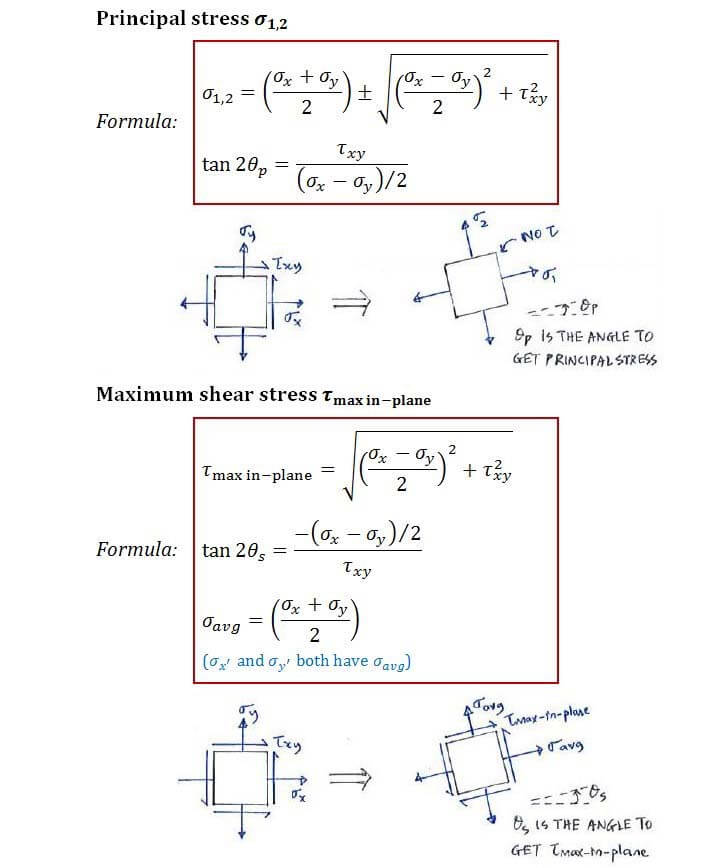
So, what's the big deal with shear stress? Simply put, it's the force that causes one part of a material to slide or deform relative to an adjacent part. Imagine a deck of cards; shear stress is like pushing the top card to the side, making the deck slightly skewed. Understanding shear stress is crucial in engineering because it helps predict how a material will behave under different loads, ensuring structures are safe and reliable. Knowing how to calculate it allows engineers to design everything from buildings and airplanes to the smallest screws and bolts. It's also applicable in fields like geology (understanding earthquakes) and even biology (analyzing cell deformation).
Now for the fun part: the calculation! The formula for shear stress is quite straightforward:
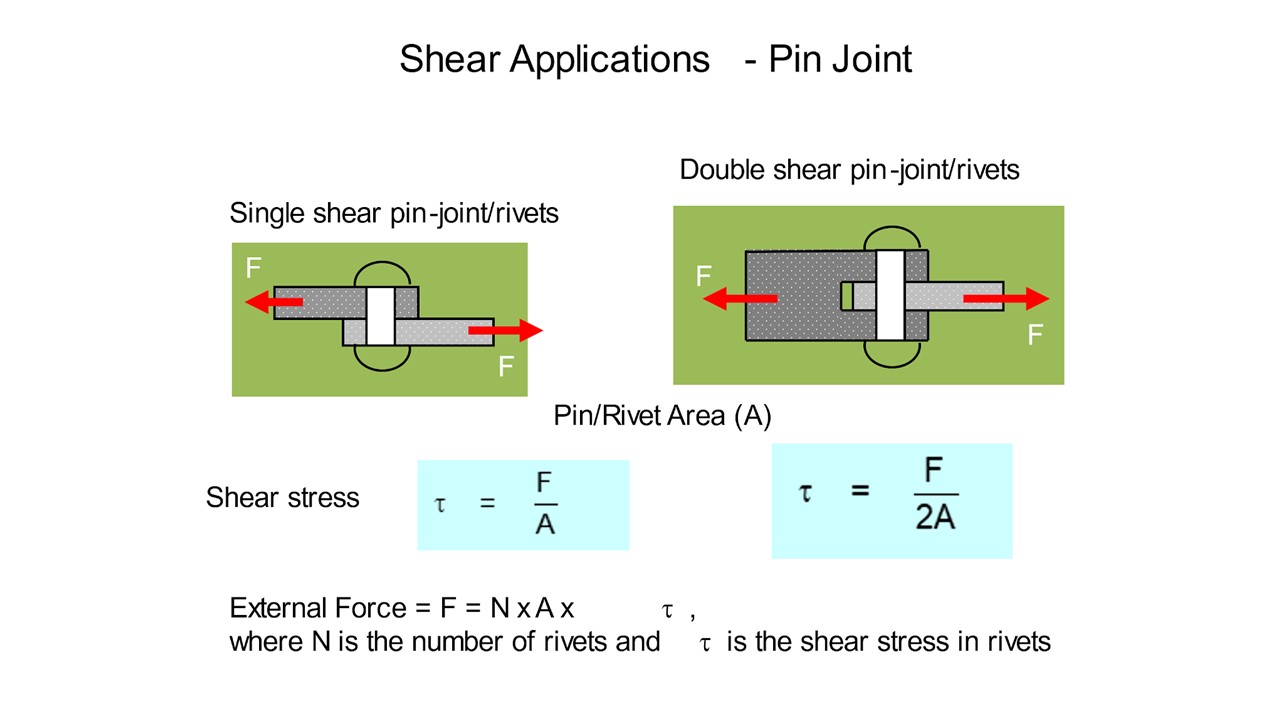
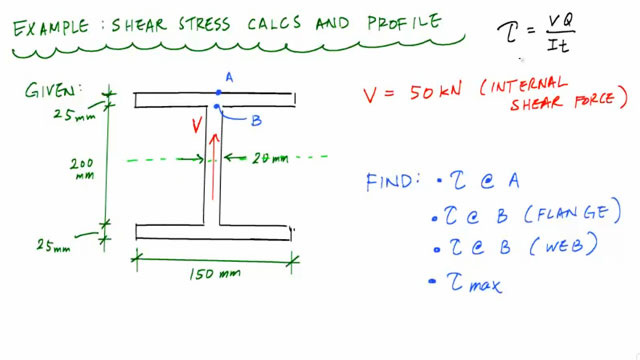
Shear Stress (τ) = Force (F) / Area (A)
Let's break that down:
- τ (tau) represents shear stress. It's usually measured in Pascals (Pa) or pounds per square inch (psi).
- F is the force applied parallel to the surface. This is the key difference between shear stress and normal stress (like tension or compression), where the force is applied perpendicularly. Think of it as the force trying to *cut* the object. The unit of force is typically Newtons (N) or pounds (lbs).
- A is the area of the surface parallel to the force. This is the area experiencing the shearing effect. The unit of area is square meters (m²) or square inches (in²).
Let's look at a simple example. Imagine you're using a pair of scissors to cut a piece of paper. The force you apply with the scissors is causing shear stress on the paper along the cutting edge. Let's say you're applying a force of 10 Newtons (F = 10 N) to a cutting area of 0.001 square meters (A = 0.001 m²). Then the shear stress would be:
τ = 10 N / 0.001 m² = 10,000 Pa
That's a pretty significant shear stress! This explains why the paper cuts.
Another example: Consider a bolt holding two plates together. If a force is applied that tries to slide the plates past each other, the bolt experiences shear stress. The area (A) would be the cross-sectional area of the bolt resisting that sliding force.
Calculating shear stress is a fundamental skill in many areas. By understanding the formula and its components, you can begin to appreciate the forces at play in the world around you. So, the next time you're tearing open a package or admiring a towering skyscraper, remember the concept of shear stress and the simple, yet powerful, formula that helps engineers keep things safe and sound. It’s not just about numbers; it's about understanding how things work!