Okay, let's talk about impact force. You know, that *thing* that happens when stuff hits other stuff. Sounds simple, right? Wrong! It's actually kinda messy.
So, What's This "Impact Force" Thing, Anyway?
Imagine dropping a watermelon. Splat! That, my friends, is impact. Impact force is basically how hard that watermelon *smashes* against the ground.
It's the force of the collision. The bigger the "splat," the bigger the force. At least, that's how I understand it (and I'm sticking to it!).
The "Formula" (Or, How Scientists Try to Confuse Us)
Scientists like to use formulas. They make things look impressive. But honestly, sometimes they just overcomplicate things. Impact force formulas are no exception.
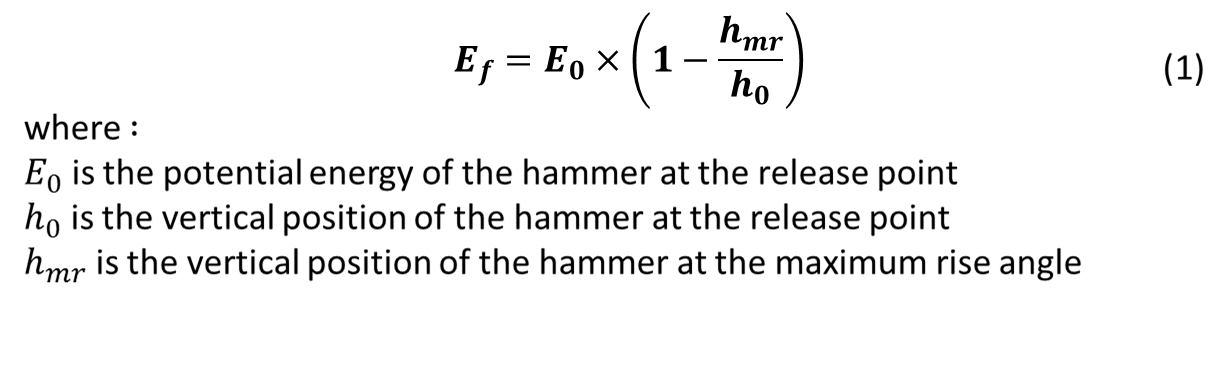
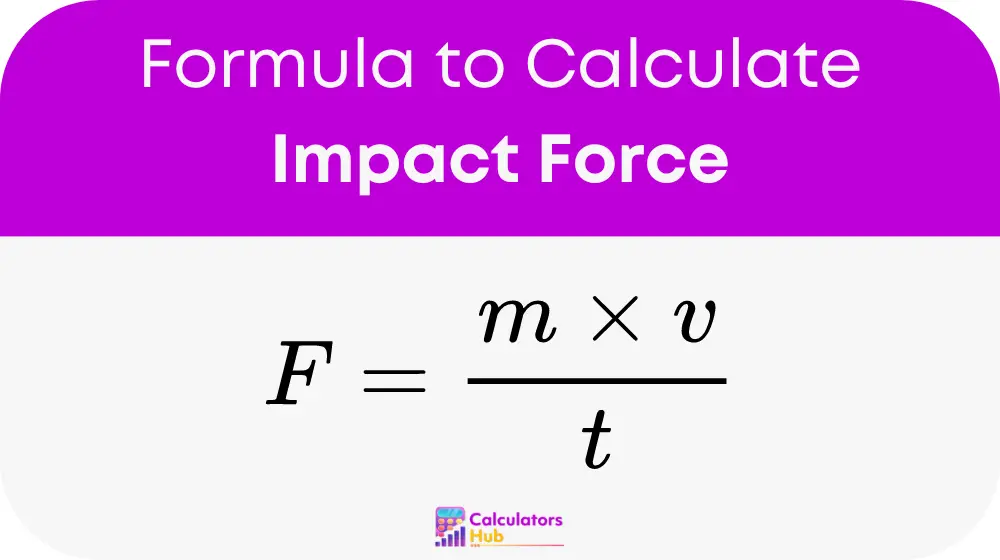
You'll see things like F = m * a. That's Force equals mass times acceleration. Sounds scary, doesn't it?
But wait! It gets worse. There's also the impulse equation. Get ready... Impulse = Force * Time = Change in Momentum. Good luck deciphering that one after a long day!
Here's my (possibly unpopular) opinion: these formulas are great for rocket scientists. But for everyday watermelon-dropping scenarios? Not so much.
The Real-World Way to "Calculate" Impact
Forget the formulas for a second. Let's think practically. How do you *really* figure out impact force?
Well, first, consider the *thing* doing the hitting. Is it a feather or a bowling ball? Mass matters!
Then, think about how fast it's moving. A slow stroll or a full-blown sprint? Speed is key (or rather, acceleration).
The Importance of "Give"
This is where things get interesting. What happens *after* the initial impact? Does the thing hitting (or the thing being hit) *give* a little?
Think about landing on a trampoline versus landing on concrete. The trampoline *gives*, extending the impact time. Less force! Concrete? Not so much.
This "give" is called **impulse**. A longer impact time means a lower peak force. It's like spreading the "splat" out.
My unpopular opinion: Impulse is the unsung hero of impact force. We should all be striving for more "give" in our lives (metaphorically speaking, of course).
Factors That Mess Everything Up (Because Life Isn't Simple)
Okay, so mass, speed, and "give." Seems easy enough, right? Nope. Life loves to throw curveballs.
Consider the shape of the object. A pointy dart will have a different impact than a flat pancake, even if they weigh the same.
Then there's the material. Is it squishy, hard, brittle? All of these things affect how the force is distributed.
And let's not forget the angle of impact. A direct hit is different than a glancing blow. Ugh, physics!
Okay, So How Do We *Actually* Measure It?
Alright, alright. I've been avoiding the "measurement" question. Because honestly, it's tricky.
Scientists use fancy devices called ***force plates*** and ***accelerometers***. These things can detect tiny changes in force and acceleration.
But unless you're running a physics lab in your basement, you probably don't have access to these tools. So, what's a regular person to do?
Well, you can always estimate! Observe the damage. Compare it to previous "splats." Use your gut feeling. It's not scientific, but it's something!
The "Eyeball Test" (My Preferred Method)
This is my patented (not really) method for calculating impact force: the eyeball test.
Simply look at the aftermath of the impact. How big is the dent? How loud was the sound? How much did you cringe?
Then, compare it to similar impacts you've witnessed in the past. Is it a "mild ouch" or a "holy moly, call the paramedics" kind of impact?
My unpopular opinion: the eyeball test is surprisingly accurate. Our brains are pretty good at estimating things based on past experiences.
Examples of Impact Force in Everyday Life
Impact force is everywhere! You encounter it every single day, whether you realize it or not.
Think about walking. Each step you take involves impact. Your foot hits the ground, creating a force. Luckily, your shoes (and your legs) help cushion the blow.
Driving a car? Impact force is a constant concern. Car crashes are all about managing (or rather, *mis*managing) impact forces. Seatbelts and airbags are designed to increase the impact time, reducing the force on your body.
Even something as simple as typing on a keyboard involves impact. Each keystroke creates a tiny force. That's why ergonomic keyboards are important – they minimize the impact on your wrists and fingers.
Sports: The Impact Force Olympics
Sports are basically a celebration of controlled impact. Think about it.
Baseball: Bat hits ball. Huge impact. Football: Players collide. Massive impact. Boxing: Punches land. Devastating impact.
Athletes spend years training to maximize their impact force (when hitting) and minimize it (when being hit). It's a constant battle against physics.
My unpopular opinion: Sports are secretly just a way for us to vicariously experience the thrill of controlled destruction.
So, What Have We Learned?
Impact force is complicated. Formulas are confusing. But understanding the basic principles – mass, speed, and "give" – can help you make sense of the world around you.
And remember, when in doubt, trust the eyeball test. It's surprisingly effective.
Now go forth and observe the world! Just try not to drop too many watermelons in the process.