Ever wondered how engineers ensure that the sleek curve of a car door lines up perfectly with the body, or how a delicate camera lens achieves razor-sharp focus? The secret often lies in a fascinating field called Geometric Dimensioning and Tolerancing, or GD&T for short. While it might sound intimidating, think of it as a precise language that describes the shape and acceptable variations of objects. Today, we're diving into one specific aspect of GD&T: the Profile of a Surface.
So, why bother learning about this? Well, even if you’re not an engineer, understanding the basics can give you a new appreciation for the complexity of the products around you. It's like learning a magic trick – once you know how it's done, you see the world differently. The Profile of a Surface is particularly interesting because it deals with the overall shape of a part. It's about ensuring that a curved or complex surface conforms to its intended design within specified limits.
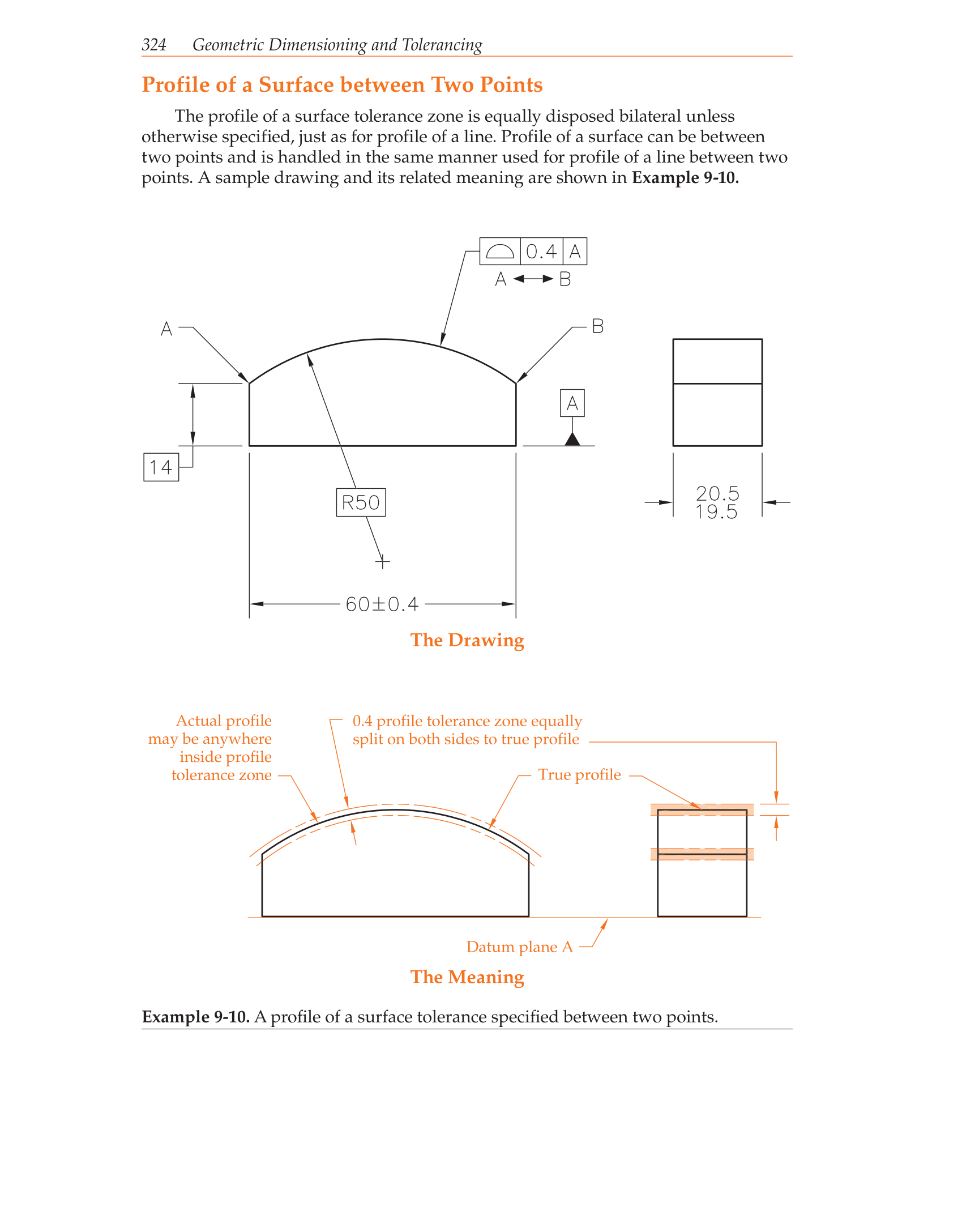
The purpose of the Profile of a Surface is to control the form and size of a surface relative to its true profile, or perfect design shape. The benefit? Reduced scrap, improved functionality, and consistent performance. Instead of just measuring individual points, it assesses the entire surface, making it much more comprehensive than simple dimensional tolerances. Imagine designing a perfectly smooth wing for an airplane. If even slight deviations from the intended shape exist, the plane’s aerodynamic performance could suffer. The Profile of a Surface tolerance helps ensure that the wing's surface closely matches the design, resulting in a safer and more efficient flight. In simpler terms, it helps avoid wobbly chairs, leaky bottles, and ill-fitting parts.
While it's primarily used in manufacturing, the principles behind Profile of a Surface can be found in everyday life. Think about pottery. A potter meticulously shapes clay on a wheel, constantly checking the evolving profile to ensure it matches their vision. They are, in a way, instinctively applying GD&T principles! Even in digital design, software tools use similar concepts to ensure that 3D models are created accurately. In education, engineering students use Profile of a Surface to specify and verify the quality of their designs. They learn to interpret GD&T symbols and apply them to drawings and models, making them more effective communicators in the manufacturing world.
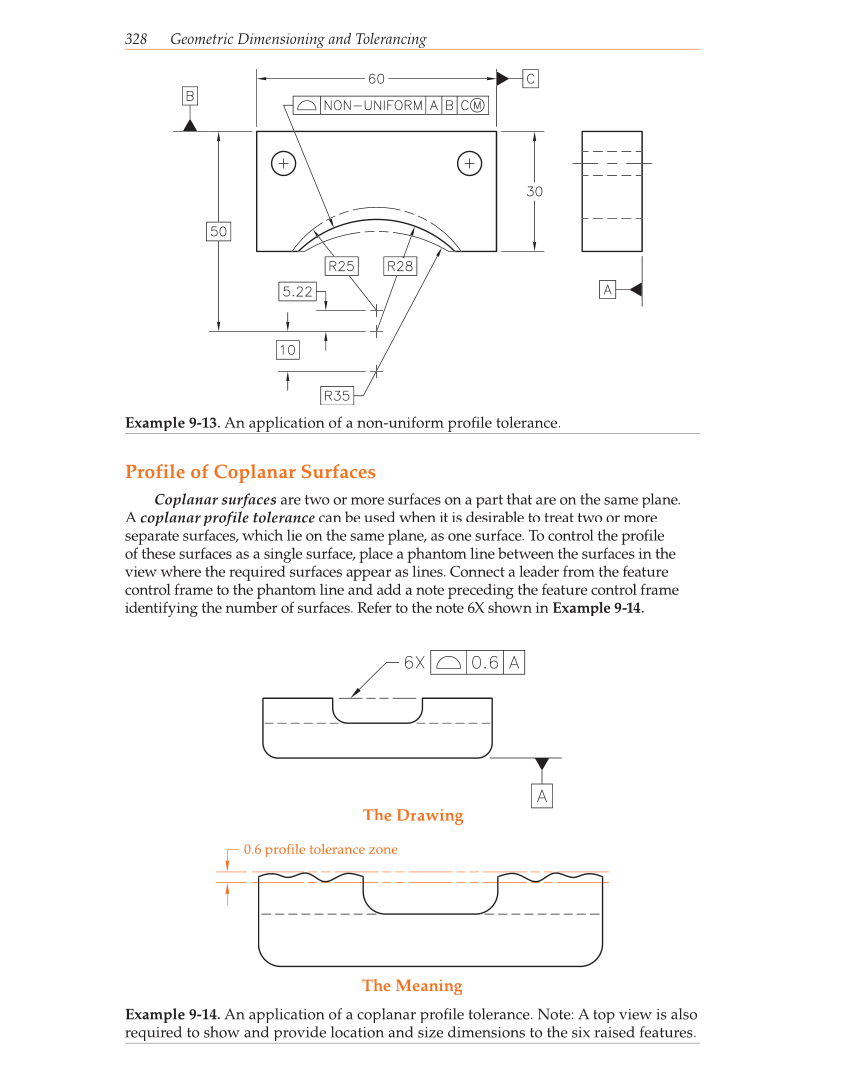
Want to explore this topic further? Start by researching common GD&T symbols. The Profile symbol, which looks like a half circle connected to a line, is a good starting point. You can find plenty of examples online showing how this symbol is used in technical drawings. Look around your house or office for objects with complex shapes. Can you imagine how you would specify the acceptable variation for the surface of a curved lampshade, for instance? You can also find free online GD&T quizzes and tutorials. While mastering GD&T takes time and practice, understanding the basic concepts can be surprisingly rewarding and change the way you look at the world around you.