Okay, so picture this: I'm attempting to grow tomatoes in my backyard. Epic fail, right? Turns out, they need warmth. Like, a lot of warmth. And that got me thinking... Where does that warmth even *come* from? Turns out, the atmosphere plays a huge role – specifically, something called the greenhouse effect. (Spoiler alert: It's not the same as your actual greenhouse, but close!)
Now, hold on a second, before you start picturing Al Gore movies. When we talk about "greenhouse gases," everyone automatically thinks "bad." But here's the kicker: Greenhouse gases are actually essential for life as we know it. Wait, what?
The Good Side of Greenhouse Gases: A Cozy Blanket for Earth
Think of the Earth as a baby chick, and the atmosphere is its blankie. The sun sends energy our way, mostly in the form of visible light. Some of that energy bounces right back into space. But, a chunk of it gets absorbed by the Earth’s surface, warming it up. Now, this warmed-up Earth wants to radiate that heat back out, but guess what? Greenhouse gases (like carbon dioxide, methane, and water vapor – yes, even water vapor!) act like a trap, absorbing some of that outgoing infrared radiation. This process keeps the planet at a habitable temperature. Like, you know, *not* an ice cube.
Without greenhouse gases, the Earth would be a frigid -18 degrees Celsius (that’s roughly 0 degrees Fahrenheit for those of us still clinging to the imperial system). So, basically, we'd all be frozen solid. So, next time you see a tree, thank a greenhouse gas! Especially if it's providing shade on a hot day. Because, irony.
Essentially, they are the planet's natural temperature regulators. They are like the thermostat controlling the overall climate, making sure it's comfortable for living beings.
The Dark Side: Too Much of a Good Thing
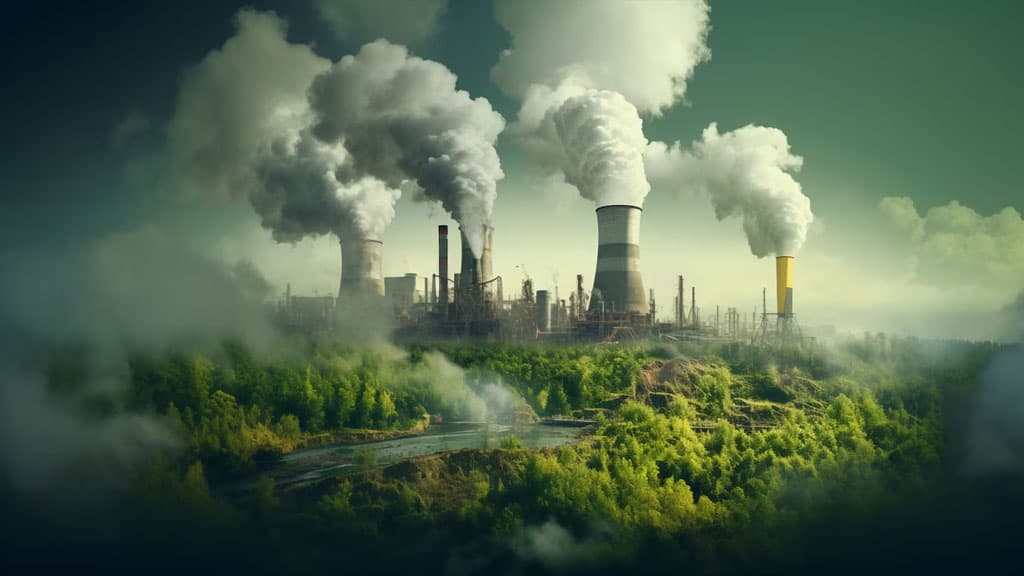
Alright, so here’s where the story takes a turn. Too much of anything, even good things, can be bad, right? Pizza, chocolate, cat videos... Greenhouse gases are no different. For centuries, the amount of greenhouse gases in the atmosphere was relatively stable. Then came the Industrial Revolution. Cue the smoky factories and the mass burning of fossil fuels (coal, oil, and natural gas). That stuff releases a LOT of greenhouse gases, particularly carbon dioxide.
And that, my friends, is the problem. We're pumping these gases into the atmosphere at a rate that's far exceeding what the planet can naturally handle. (It's like constantly turning up the thermostat even though you're already sweating.) This leads to what we call the enhanced greenhouse effect, where more heat is trapped, causing the planet to warm up at an alarming rate.
We're basically creating a thicker blanket, and the baby chick (Earth, remember?) is starting to overheat. This extra warming leads to a whole host of problems: rising sea levels, more extreme weather events (heat waves, droughts, floods), melting glaciers and ice sheets (bye-bye, polar bears!), and disruptions to ecosystems.
The Balancing Act: Finding the Sweet Spot
So, it's not about getting rid of greenhouse gases entirely. That would be disastrous. It's about achieving a balance. We need to reduce our emissions of greenhouse gases to a level that the planet can naturally absorb and process. (Think of it as putting the thermostat back to a reasonable temperature.)
How do we do that? Well, that's the million-dollar question, isn't it? Some obvious strategies include switching to renewable energy sources (solar, wind, hydro), improving energy efficiency, reducing deforestation (trees absorb carbon dioxide, remember?), and developing new technologies to capture and store carbon dioxide. And let's not forget reducing our own carbon footprint, individually and collectively! Every little bit helps. Maybe, just maybe, that tomato plant will have a chance next year.
Because if we do not pay attention, my next story will be about how I tried to grow a cactus instead...