Ever wonder about the juice that powers your world? It's all about electricity, of course! But there's more than one flavor. Let's dive into the electrifying difference between Alternating Current (AC) and Direct Current (DC).
AC: The Current That Likes to Dance
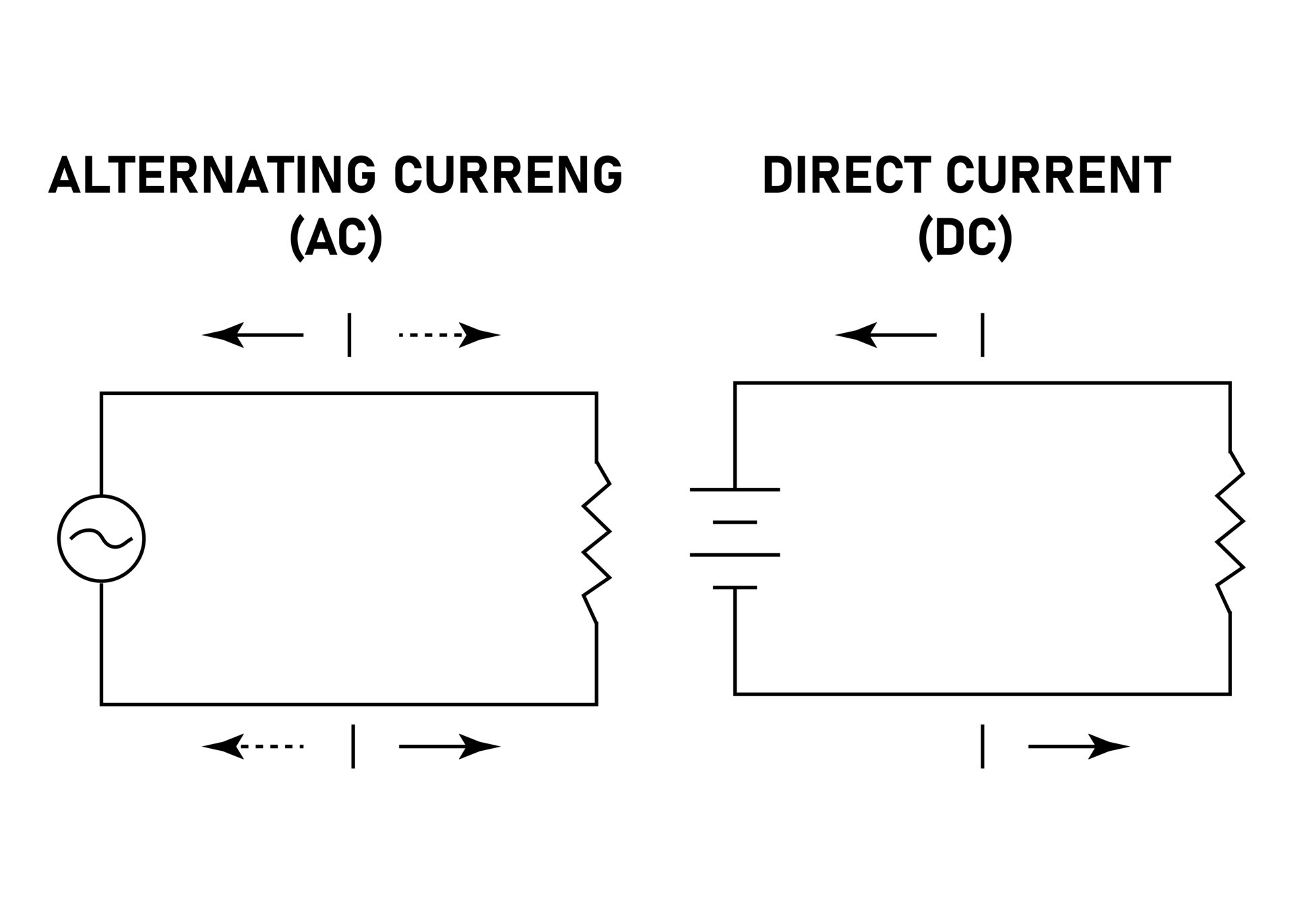
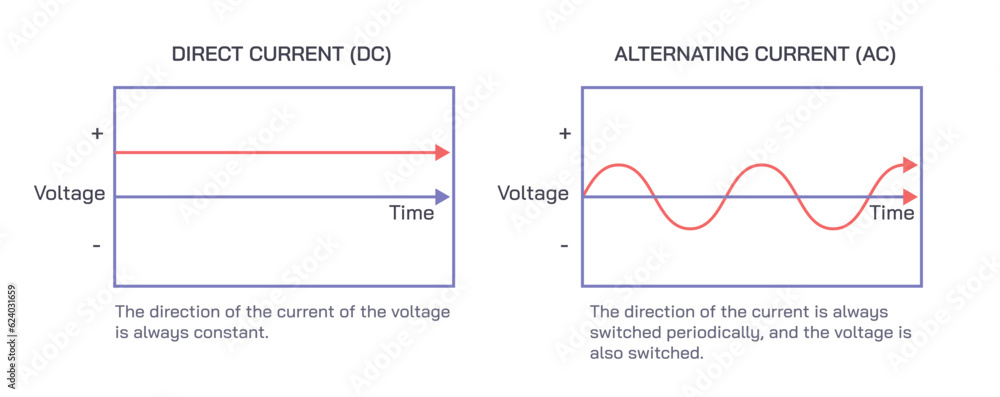
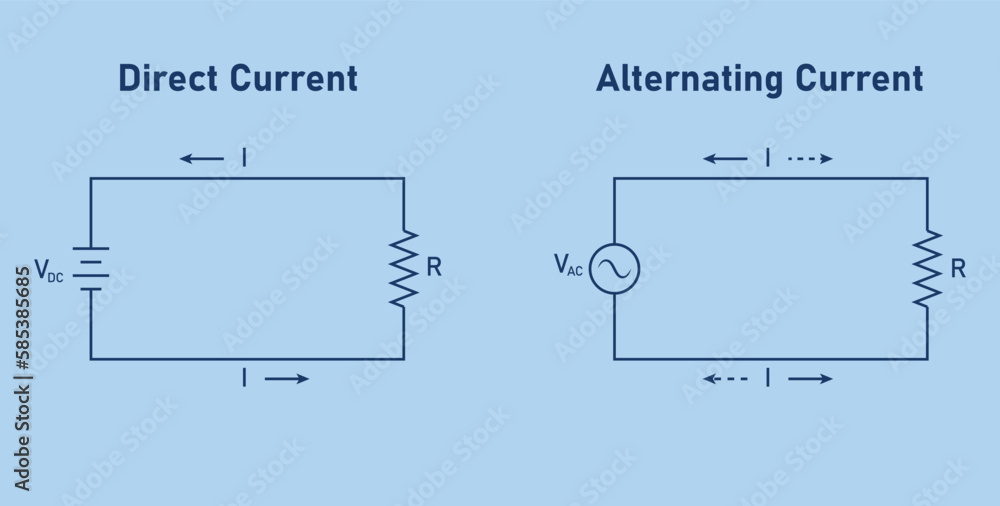
Think of AC as electricity that's always on the move. It's like a tiny electric river constantly changing direction! The electrons aren't lazy; they're rocking back and forth.
Imagine a disco party for electrons! They're swaying and switching sides. This constant change is what we call "alternating."
Why is AC so popular?
AC is the star of the power grid. It's a master of long-distance travel! Think of it as the ultimate delivery service for electricity.
It’s incredibly efficient at being transmitted over vast distances. This is thanks to transformers. These magical devices can easily step up or step down the voltage.
Think of transformers as electricity translators. They convert it to send it across long cables with little energy loss!
AC's ability to be transformed easily makes it economical. It can power entire cities, from your fridge to the streetlights.
Household outlets are usually AC. You can use AC for various uses, like appliances, lamps, and even the TV.
DC: The Steady Stream
Now, let's meet DC, the steady and dependable current. Unlike AC's wild dance, DC flows in one direction only.
Picture a calm and tranquil river. All the electrons are flowing in the same direction. No back-and-forth shenanigans here!
DC is like a straight-arrow of the electricity world. Consistent, reliable, and always heading in the same direction.
Where does DC shine?
DC is the energy source for many portable devices. Batteries are classic examples of DC power sources.
Think of your phone, laptop, and even some electric cars. They all rely on the steady flow of DC electricity.
Electronics love DC. It's perfect for powering sensitive circuits and components. Many electronic devices utilize DC power to operate correctly.
LEDs are also big fans of DC! They require a stable and constant voltage to shine brightly.
AC vs. DC: A Hilarious Showdown
So, AC and DC are like two electricity superheroes, each with unique strengths. Let's compare them to see what makes them special.
Distance
AC is the marathon runner. It can go for miles and miles without losing too much energy. Need to send electricity across states? AC is your champion.
DC is more of a sprinter. It's great for short distances, but loses energy over longer runs. You wouldn't want to power a whole city with DC alone!
Transformation
AC is the shape-shifter. Transformers can easily change its voltage, making it adaptable. This flexibility is a huge advantage for distributing electricity.
DC is a bit less flexible when it comes to voltage changes. It typically requires more complex circuits to alter the voltage.
Usage
AC is the workhorse of our modern world. It powers our homes, offices, and factories. We utilize AC everywhere!
DC is the power behind our portable devices. It keeps our phones buzzing and our laptops running. Think portable power!
A Bit of History: The Current War
Back in the day, there was a fierce competition between AC and DC. This was called the "War of the Currents."
Thomas Edison, a major proponent of DC, believed in its safety and efficiency. He even set up direct current power plants.
Nikola Tesla, a brilliant inventor, championed AC. He pointed out its ability to be transmitted over long distances. Tesla won with the benefits of AC over DC!
Ultimately, AC prevailed because of its transformational advantages. It was more practical for widespread electricity distribution.
Imagine two brilliant minds clashing over their favored current! It was a battle of technology and vision.
Is One Better Than the Other?
It's not about which one is "better." Both AC and DC have their roles to play. They are like two pieces of a puzzle.
AC is ideal for large-scale power distribution. It efficiently powers our cities and towns.
DC is fantastic for portable devices and electronics. It provides the steady power they need to function properly.
Increasingly, there is even some blending happening. High Voltage DC transmission lines are proving useful.
These can move power over extremely long distances with lower losses than AC!
Fun Facts About AC and DC
Did you know that the frequency of AC in most of North America is 60 Hz? That means the current changes direction 60 times per second!
In Europe and other parts of the world, the standard frequency is 50 Hz. Imagine those electrons dancing at a slightly slower pace!
Many devices that run on AC actually convert it to DC internally. Your computer, for example, uses DC power to operate.
The concept of AC and DC isn't limited to electricity. You can find alternating and direct currents in other fields, like fluid dynamics!
So, What's Next?
Understanding the difference between AC and DC is like unlocking a secret code. It helps you understand how electricity powers the world around you.
Whether you're charging your phone or turning on the lights, you're using either AC or DC. It's all part of the electrifying world we live in!
Now that you know the basics, go explore the world of electricity! There's always something new to discover. Who knows, maybe you will become the next Nikola Tesla.