So, you wanna be a welder, huh? That's fantastic! You're thinking about joining the ranks of folks who literally *melt* metal together to build… well, pretty much everything! From skyscrapers that tickle the clouds to race cars that zoom faster than you can say "welding rod," welders are the unsung heroes of creation. But what exactly does it take to become one of these metal maestros? Don't worry, it's not rocket science (though welders *do* work on rockets!). Let's dive into the educational journey of a budding welder, and trust me, it's less about textbooks and more about sparks and getting your hands dirty.
The Great Welding Education Adventure
Forget visions of endless lectures and pop quizzes. The path to becoming a welder is refreshingly practical. Think less Hermione Granger and more… MacGyver with a welding torch!
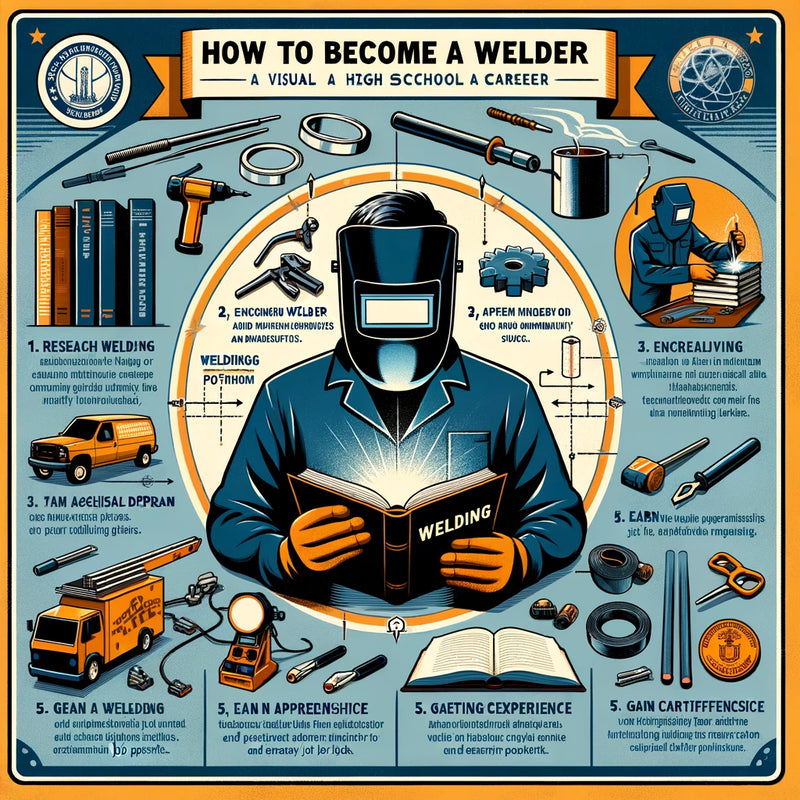
Step 1: High School (or Equivalent) – The Launchpad
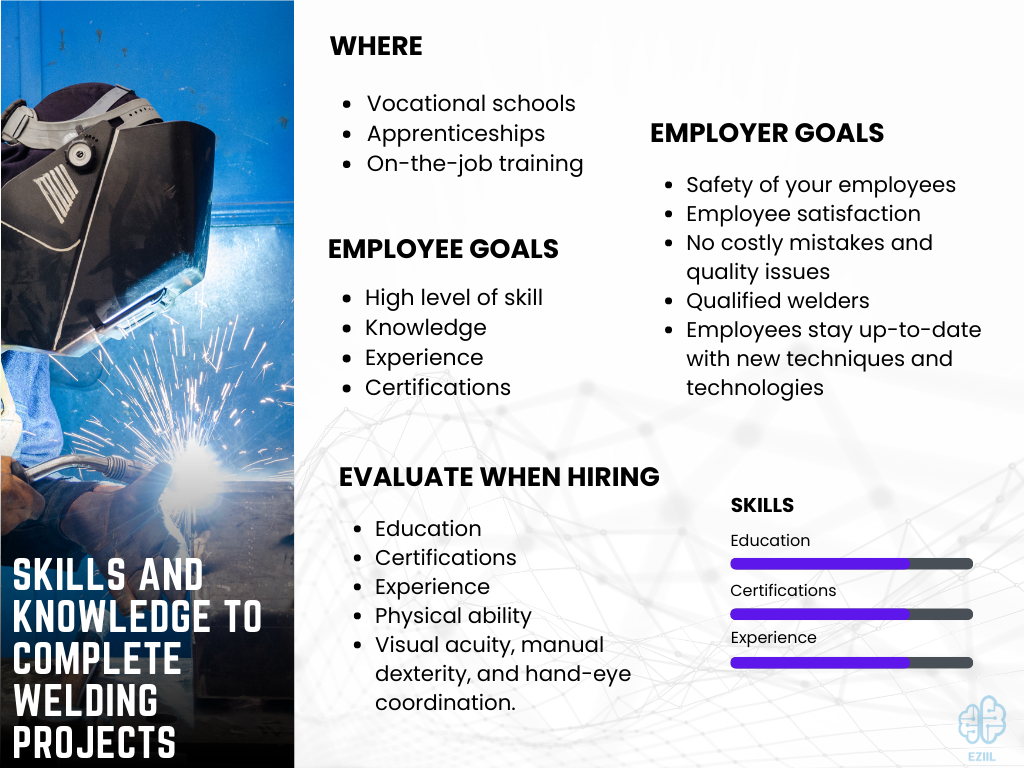
Okay, okay, you do need a *little* bit of traditional education. A high school diploma or GED is generally your starting point. Why? Because it shows you've got the basic reading, writing, and math skills needed to, you know, read blueprints, calculate angles, and not accidentally order 500 tons of the wrong type of steel (that would be a *very* expensive mistake!). Don't sweat it if you weren't top of your class; just having that piece of paper gets your foot in the door. Bonus points if you took shop class, auto mechanics, or any other vocational courses. They'll give you a head start, but they're definitely not mandatory.
Step 2: Vocational Schools, Trade Schools, and Community Colleges – The Welding Dojo
This is where the real fun begins! This is where you transform from a regular human into a welding warrior! Trade schools, vocational schools, and community colleges offer welding programs that range from a few months to a couple of years. This is where you'll learn the fundamentals of different welding processes like SMAW (Shielded Metal Arc Welding), GMAW (Gas Metal Arc Welding), GTAW (Gas Tungsten Arc Welding) – also known as stick, MIG, and TIG, respectively. Sounds like alphabet soup, right? Don't worry, you'll learn to speak fluent Welding-ese in no time! You’ll also get hands-on experience with different types of metal, safety procedures (because safety is *super* important when you're playing with fire!), and reading blueprints.
Think of it like learning a martial art. You start with the basics, practice your stances, and gradually work your way up to more complex techniques. Your instructors are like your Sensei, guiding you and imparting their wisdom (and hopefully preventing you from accidentally welding your own boots to the floor!).
Pro-tip: Look for programs that are certified by the American Welding Society (AWS). It’s like getting a gold star that tells employers, "Hey, this person knows what they're doing!".
Step 3: Apprenticeships – The Welding Internship
Ready to put your skills to the test in the real world? An apprenticeship is like the ultimate welding internship. You get paid to learn on the job, working alongside experienced welders who can share their knowledge and show you the ropes. Apprenticeships typically last for several years and combine on-the-job training with classroom instruction. It’s the perfect way to hone your skills, gain valuable experience, and make connections in the industry. Plus, at the end of it all, you'll have a shiny new certification and a resume that's hotter than a freshly welded joint!
Step 4: Certification – The Welding Passport
Speaking of certifications, they're like your passport to welding success. Different industries and employers require different certifications, so it's important to get certified in the specific welding processes and materials you'll be working with. The AWS is the main organization that offers welding certifications, but there are other organizations as well. Getting certified shows employers that you've met a certain standard of competence and that you're committed to your craft. It’s basically your way of saying, "Trust me, I know what I'm doing! I won't accidentally weld the Queen Mary to a shopping cart!"
So, there you have it! The educational path to becoming a welder is a blend of classroom learning, hands-on training, and real-world experience. It's not always easy, but it's incredibly rewarding. And remember, even the most experienced welders were beginners once. So, grab your welding helmet, fire up your torch, and get ready to create something amazing!
"The only way to do great work is to love what you do." - Someone wise (probably a welder!)
Now go out there and make sparks fly!