Ever heard someone talking about stainless steel and rattling off numbers like 304 and 316? It might sound like robot speak, but it's actually kinda fascinating! Think of these numbers as secret codes, unlocking different superpowers of stainless steel.
The Stainless Steel Superstars
Stainless steel is basically steel with added chromium. This chromium creates a protective layer. This layer prevents rust, making it super durable. But not all stainless steel is created equal!
Introducing 304: The Everyday Hero
Let's start with 304 stainless steel. This is the most common type you'll find. Think of it as your friendly neighborhood stainless steel. It's affordable and versatile.
You'll find 304 in your kitchen sink, your pots and pans, and even in some architectural details. It's great for general use. But it has a weakness: salt!
Enter 316: The Deep-Sea Diver
Now, meet 316 stainless steel. It's 304's tougher, more specialized cousin. What makes it so special? The addition of molybdenum!
Molybdenum gives 316 extra resistance to corrosion, especially from chlorides. Chlorides are found in salt water and other harsh environments. That's why 316 is like a deep-sea diver, ready to tackle tough conditions!
The Showdown: 304 vs. 316
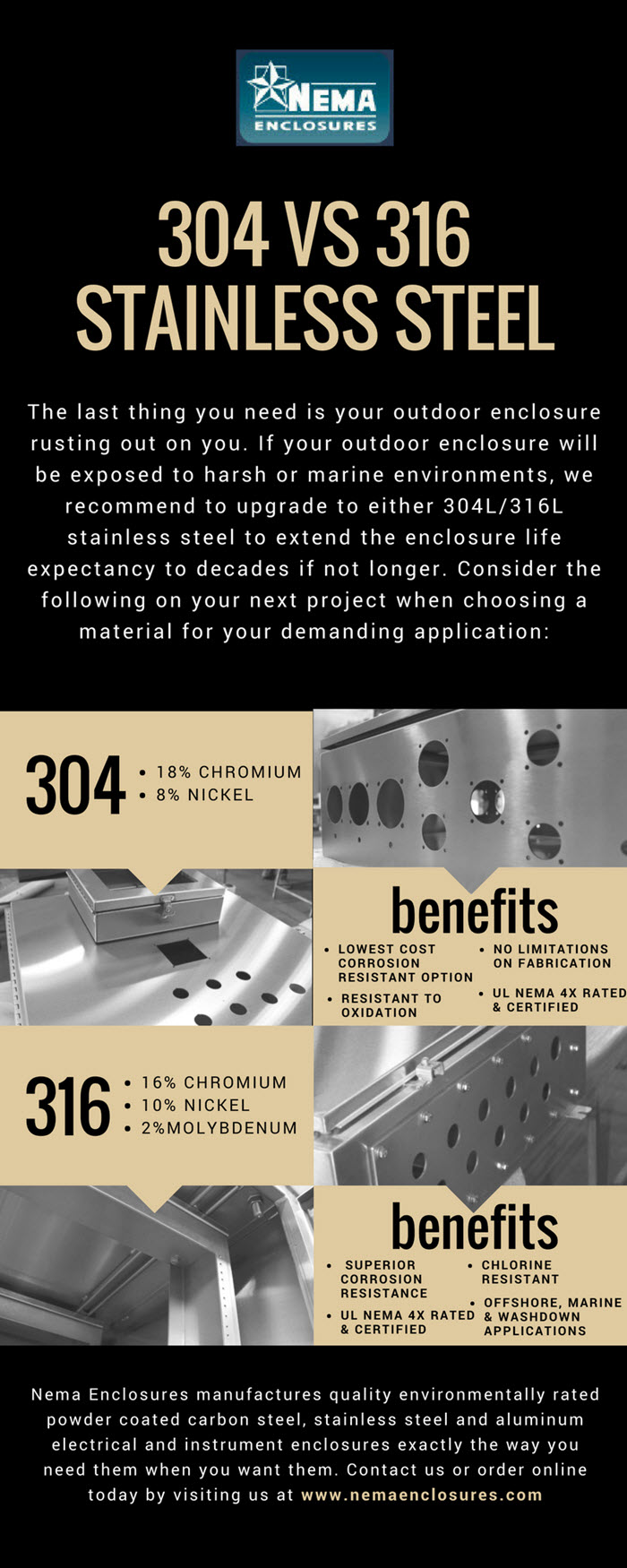
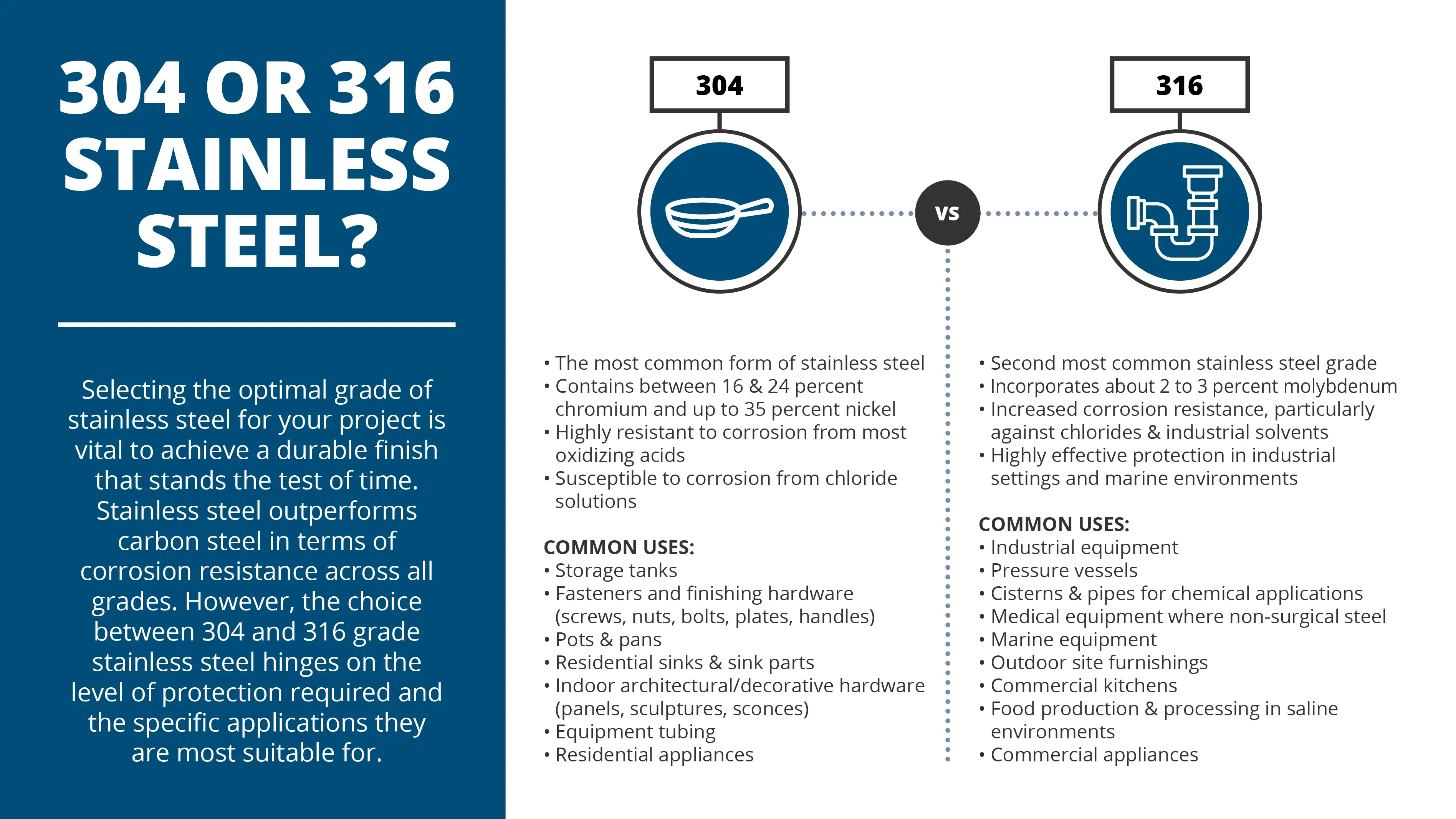
So, what's the real difference between these two stainless steel superheroes? It all boils down to corrosion resistance. 304 is great for everyday use. But 316 shines when facing salty or acidic conditions.
Round 1: Corrosion Resistance
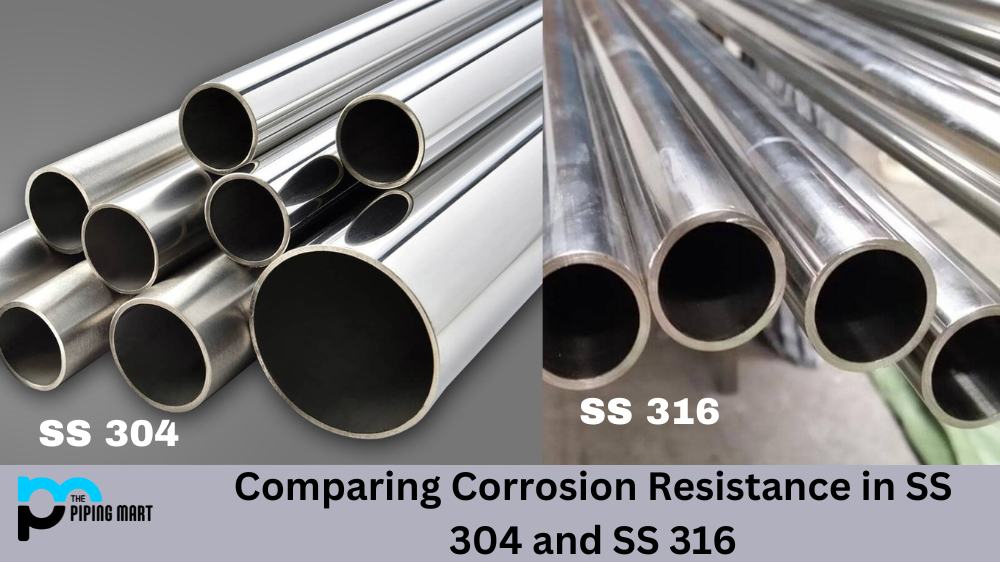
In a typical indoor environment, both 304 and 316 will perform admirably. They resist rust and keep their shine. But when salt enters the picture, 316 takes the lead.
Imagine a coastal environment. The salty air can wreak havoc on metal. 316 stainless steel will stand strong, while 304 might show signs of corrosion over time. Think of boats and marine equipment. They almost always use 316.
Round 2: Temperature
Both 304 and 316 handle high temperatures well. They're often used in applications involving heat. But each has its limits.
Generally, 316 has a slightly better resistance to high-temperature corrosion. This is another benefit of the molybdenum. So, for extreme heat, 316 might be the preferred choice.
Round 3: Cost
Here's where 304 gets a point. It's generally less expensive than 316. This is because molybdenum is a relatively expensive alloy.
If you don't need the extra corrosion resistance of 316, 304 is a budget-friendly option. It's perfect for applications where salt isn't a concern.
Where Do You Find Them?
Knowing where these stainless steel types are used can be pretty interesting. It's like spotting celebrities in the wild! You start to notice them everywhere.
304: The Homebody
As mentioned, 304 is all around your house. It's in your kitchen appliances, cookware, and even some furniture. It's also used in the food and beverage industry.
Think about those gleaming stainless steel countertops. Or the shiny interior of a beer brewing system. Chances are, it's 304. It's a reliable and cost-effective choice for these applications.
316: The Adventurer
316 is found in more demanding environments. It's used in marine applications, chemical processing, and medical equipment. Anywhere that corrosion is a major concern.
Imagine a boat sailing through salty seas. Or a surgical instrument being sterilized. These applications require the superior corrosion resistance of 316. It's the adventurer, always ready for a challenge.
Is One Better Than the Other?
So, is 316 "better" than 304? Not necessarily! It depends on the application. 304 is perfect for many everyday uses. 316 is better suited for harsh environments.
Choosing the right type of stainless steel is like choosing the right tool for the job. You wouldn't use a hammer to screw in a nail. Similarly, you wouldn't use 304 in a highly corrosive environment.
Why Should You Care?
You might be thinking, "Why should I care about the difference between 304 and 316?" Well, understanding the properties of materials can be surprisingly useful!
If you're purchasing stainless steel products, knowing the type of steel can help you make informed decisions. You can ensure that you're getting the right material for your needs. And, it can save you money and headaches in the long run.
Plus, it's just plain cool to know about the different types of materials around you. It's like having a secret superpower. You can impress your friends with your knowledge of stainless steel!
A Little Extra Fun Fact
Did you know that 316L is a variant of 316? The "L" stands for "low carbon." This means it has a lower carbon content, which makes it even more resistant to corrosion after welding.
This is especially important in applications where welding is required. The lower carbon content helps prevent carbide precipitation. This can weaken the steel and make it more susceptible to corrosion.
So, Go Forth and Explore!
The world of stainless steel is surprisingly fascinating. 304 and 316 are just the tip of the iceberg. There are many other types of stainless steel, each with its own unique properties.
Next time you see something made of stainless steel, take a closer look. See if you can figure out what type it is. You might be surprised at what you discover. You might even find the next project that will use the wonders of 304 or 316.
Now that you know the difference between 304 and 316 stainless steel, you're ready to impress your friends and family with your newfound knowledge. Go forth and explore the world of stainless steel!